Events JOIN THE NETWORK · EVENTS
14 Days to doors ·
build the bill now
Headliner

What are the best ways to find affordable artists for a small event?

Support Browse verified acts · lock the slot
Openers Confirm the night · 0% platform commission · artists keep 100%
The short answer

The best ways to find affordable artists for a small event are to book a solo or duo instead of a full band, search listing platforms where local artists publish their prices, ask local venue bookers and music schools for recommendations, and book directly rather than through layered fees. National solo musician cost averages about 429 dollars, so a small event can usually book good live music for a few hundred dollars.

Slat 01 · the gap

Small events overpay for music in three predictable ways, and none of them is the artist's fee.

The first is booking the wrong size of act. A full band for forty guests in a back room is too loud, too big for the space and priced for a stage. National band booking typically lands near 590 dollars with most events between 431 and 809, while a solo musician averages about 429. The gap looks modest on paper, but a band also brings more gear, longer setup and more people to feed, and in a small room none of that improves the evening.

The second is paying fees on both sides of the booking without noticing. Some marketplaces charge the planner a 10 to 12 percent service fee at checkout while also deducting a separate fee from the performer. The planner pays more, the artist receives less, and the difference funds the platform rather than the music.

The third is searching too late and too narrowly. An organiser who starts two weeks out with one web search sees whoever pays to rank, books from a shortlist of three, and accepts the first quote because there is no time to compare. Affordable local talent exists in almost every city, but it rarely appears at the top of a search and it rarely has spare dates at short notice.


Slat 02 · the lineup

Affordability comes from matching the act to the event and cutting layers, not from squeezing the artist.

Fix the budget first. Decide a flat number you can pay regardless of how many guests come, then look only at acts inside it. A budget turns every enquiry into a quick yes or no.

Size the act to the room. For most small events a solo musician or duo is not a compromise, it is the right fit. It is quieter, easier to place, quicker to set up and cheaper, and the guests can still talk.

Look where prices are visible. Listing platforms where artists publish their own rates save the back-and-forth of asking every act what they charge and let you compare like for like.

Book directly where you can. Every intermediary adds a percentage somewhere. That is fine when you need what they provide, such as vetting or a guarantee, but for a small, low-risk event direct booking usually leaves more money for the music.

Pay fairly and put it in writing. Affordable does not mean underpaid. A short agreement covering date, set times, fee, sound and cancellation protects a small budget better than a verbal deal.

iKonX is building the Events side around direct booking: bookable local artists with prices listed up front, contacted directly, with no agent or marketplace in between. The artist keeps 100 percent of the price they set, iKonX takes 0 percent platform commission, and you pay a flat 10 percent on top.

Roadmap honesty: Events is a roadmap side of iKonX, launching soon. It solves finding and contacting acts, not contracts or payments.

Slots open · the bill is filling

100%
of the fee goes to the act · iKonX takes 0% platform commission
Available
0
gatekeepers between you and the act you want to book
Available
10%
flat fee the buyer pays on top · no broker cut, no surprises
Active
See iKonX in action

The whole network lives in one app.

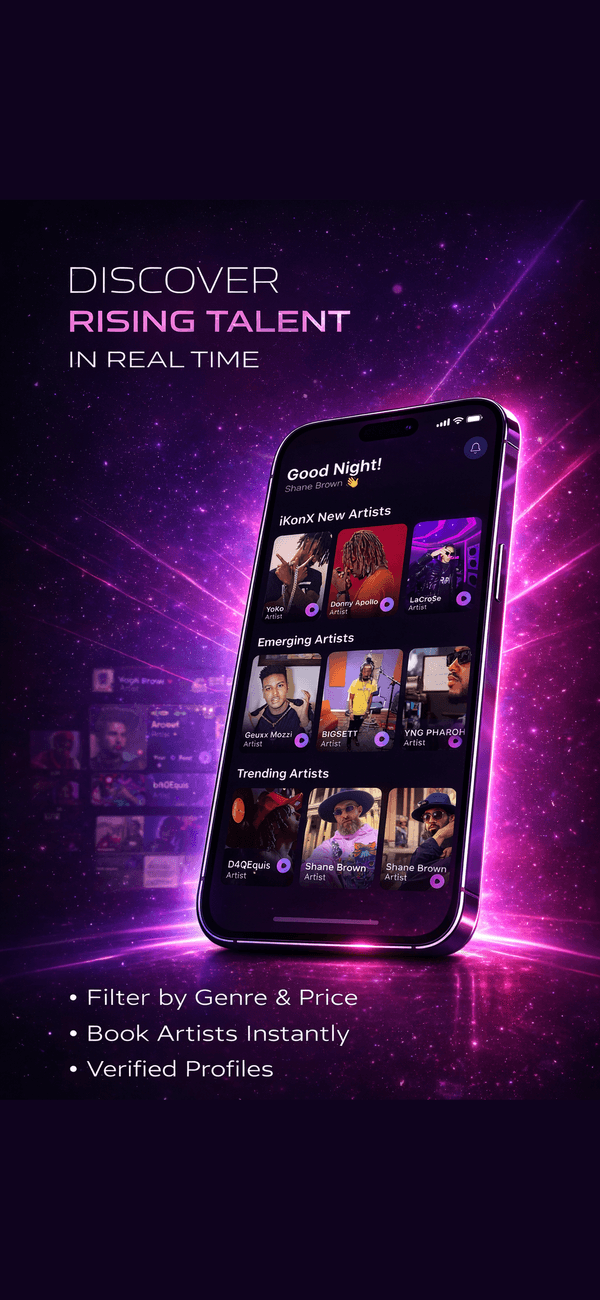
iKonX puts every side of the music business in your pocket. Artists set their own price and keep 100% of it · iKonX takes 0% platform commission. Browse, message, and book straight from the app.

The iKonX app on an iPhone showing the artist discovery screen · where music meets business with 0% platform commission

The 7 best ways to find affordable artists for a small event

  1. 01Date locked
    Set the night and the room. Everything on the bill hangs off this one fixed point.
  2. 02Stages set
    Decide the stages and the zones. Map where each act plays before you book a single name.
  3. 03Acts confirmed
    Browse verified artists, agree the fee directly, and lock each slot. The act keeps 100% of the price they set.
  4. 04Run of show
    Order the bill headliner to opener, set the set-times, and share the night with the whole lineup.
  5. 05Doors
    Confirm and pay through iKonX, then open the doors on a lineup you built act by act.
  1. Book a solo act or duo instead of a band. The single biggest saving available. National solo musician cost averages about 429 dollars against a band typically near 590, before the extra gear, setup time and hospitality a band needs. For a dinner, a small party or a reception, one strong singer-songwriter or an acoustic duo usually suits the room better anyway.
  2. Search listing platforms where artists publish their prices. When the rate is visible up front you can filter to your budget in minutes instead of waiting on quotes. Everyone listed has already decided they want paid work, which removes the slowest question in every other channel. Ask for a recent live clip before you confirm.
  3. Ask local venue bookers for names. The people who book bars, restaurants and small venues every week know which affordable acts turn up on time and hold a room. One message to two of them often produces a better shortlist than an afternoon of searching, and it costs nothing.
  4. Contact music schools and college music departments. Many connect students and recent graduates with paid local work, and their players are often excellent for background sets, cocktail hours and acoustic or classical ensembles. Expect reliability and musicianship, and pay a fair rate even when it is lower than a touring act's.
  5. Book directly and watch the fees on both sides. Marketplaces are convenient and reviewed, but some charge the planner a 10 to 12 percent service fee while also deducting a fee from the performer. On a small booking, knowing the total you pay and the amount the artist actually receives matters more than the headline rate.
  6. Choose a shorter set or an off-peak date. Rates move with duration and demand. A one-hour set on a weekday afternoon costs less than three hours on a Saturday night in peak season. If the music is there to set the mood during arrival or a meal, one well-placed hour often does the job.
  7. Ask acts you already trust for referrals. A musician you have booked before knows other reliable players at a similar price point, and a recommendation carries their own reputation. It is the fastest route to a second good option when your first choice is unavailable.
The stage map
Main stage
Your headliner act · the top of the bill
Second stage
Support acts · the build-up sets
Opener slot
Local openers · the night's first names

What each approach saves and what it costs you

#ApproachWhere the saving comes fromTrade-off
1Solo or duo instead of a bandLower fee, less gear and setupLess volume, suits small rooms
2Listing platforms with pricesFilter to budget instantlyVet with a live clip
3Local venue bookersFree, pre-vetted namesDepends on their network
4Music schoolsLower rates, strong musicianshipLess stagecraft
5Direct bookingNo layered service feesYou handle the agreement
6Shorter set or off-peak dateLower rate for less timeLess music overall
7Referrals from trusted actsReliable acts at a known priceNeeds an existing relationship

Price and fee figures are dated and sourced. National solo musician cost averages about 429 dollars with most bookings between 313 and 586 dollars, varying by duration, event type, skill, travel and union status (thumbtack.com, 2025-10-20). National band booking typically lands near 590 dollars with most events between 431 and 809 (thumbtack.com, 2025). GigSalad charges event planners a 10 to 12 percent service fee on the total booking price at checkout (help.gigsalad.com, 2026) and deducts a 5 percent performer fee on a free membership or 2.5 percent on a paid one (help.gigsalad.com, 2026). Booking agents typically take 10 to 20 percent of the artist's gross fee (matadortalent.com, 2025). Savings and trade-offs in the table are editorial judgements, not measured data. The only fixed claim here is the iKonX model: the artist keeps 100 percent of the price they set, iKonX takes 0 percent platform commission, and the buyer pays a flat 10 percent on top. iKonX is free to download and explore, full access to paid features is a flat 9.99 dollars a month, and the only payout deduction is a low, sub-5% withdrawal fee, below the industry standard.

Affordable artists for small events: FAQ

How much does it cost to hire a musician for a small event?

National solo musician cost averages about 429 dollars with most bookings between 313 and 586 dollars, and a band typically lands near 590 with most events between 431 and 809. City, set length, date and travel move these numbers. For most small events, a solo act or duo for one to two hours sits at the lower end of that range.

What is the cheapest type of live music for a small event?

Usually a solo musician or an acoustic duo. They cost less than a band, need less gear and setup, and suit a small room better because guests can still hear each other. Music-school players are another affordable option for background sets and cocktail hours, provided you still pay a fair rate.

Is it cheaper to book an artist directly or through a marketplace?

Direct booking is usually cheaper because no service fee is added. Some marketplaces charge the planner a 10 to 12 percent fee at checkout and also deduct a fee from the performer. A marketplace can still be worth it when you need reviews or payment protection, but compare the total you pay and what the artist receives.

How far ahead should I book an artist for a small event?

Four to eight weeks is comfortable for most local acts, and longer for Saturdays in peak season. Starting early is itself a cost saving, because it gives you time to compare several acts instead of accepting the first available quote at short notice.

Does iKonX charge a fee to book affordable artists?

The artist keeps 100 percent of the price they set and iKonX takes 0 percent platform commission, with you paying a flat 10 percent on top, so there is no second fee hidden on the artist's side. The only deduction for the artist is a low, sub-5% withdrawal fee, below the industry standard, when moving earnings to a bank. iKonX is free to download and explore, full access is a flat 9.99 dollars a month, and Events is a roadmap side, launching soon.

Build the night, act by act.

iKonX is building an Events side where you find bookable local artists with prices listed up front. Artists keep 100 percent of the price they set, and iKonX takes 0 percent commission.

The iKonX app on a phone

Download the iKonX App

Download on theApp Store
Coming Soon onGoogle Play

DOWNLOAD THE FREE PDF TODAY:

The Festival Lineup Planner

A run-of-show grid, a stage-and-set-time worksheet, and a multi-act budget template for building a festival or showcase lineup end to end.

Get the free PDF ->