How to get booked for shows as an independent artist (without a booking agent)
No platform commission on the price you list · the buyer pays a flat 10% on top.
To get booked for shows as an independent artist, prove you can draw a crowd, then pitch genre-fit venues with a tight EPK and a ticket estimate. Start on door deals, then earn guarantees. On iKonX you set your own fee and keep 100 percent: iKonX takes 0 percent commission and the buyer pays a flat 10 percent on top.
Most independent artists do not lose gigs because their music is weak. They lose gigs because nobody at the venue knows whether they can put bodies in the room. A talent buyer is not booking a sound, they are booking a draw, and the artists who stay home are usually the ones who pitched their art instead of their audience. The song was great. The email still went unanswered.
The standard advice does not solve this, it just adds a gatekeeper. A booking agent can open doors, but agents take roughly 10 to 20 percent of your fee and rarely sign an act that cannot already sell tickets, so the artists who need representation most are the ones who cannot get it yet. Generic gig marketplaces bury musicians under wedding-band listings and still skim a service fee off every booking. And selling yourself over Instagram DMs leaves you with no profile, no payment protection, and no proof of past attendance when the next promoter asks what you can draw.
So the real question is not how to find a stage. It is how to show a venue you can fill one, get the deal in writing, and collect your fee without a middleman taking a recurring cut of a show you booked yourself.
List it. Price it. Keep it.
The fix is three moves: build provable draw, pitch the venues that already book your genre, and run the booking on a platform built for music that does not take a slice of your fee. That last move is the one most artists never make. On the gig marketplaces, the platform is paid out of your work, so the fee you negotiate is never the fee you keep.
That is the gap iKonX closes. You list your live booking service, you set your own fee, and the talent buyer pays before the date is locked. On iKonX the artist earns 100 percent of the fee they set and iKonX takes 0 percent platform commission. The buyer pays a flat 10 percent on top, so the number you quote is the number you walk away with.
Because the booking lives inside the app, you also build the one thing promoters keep asking for: a track record. Every confirmed show, every fee, every repeat booking becomes proof you can draw, which is exactly what the next venue wants to see. No agent taking a recurring percentage of deals you sourced. No DM ghosting after you hold a date. The stage is yours, the fee is yours, and so is the proof you can fill the room next time.
The whole network lives in one app.
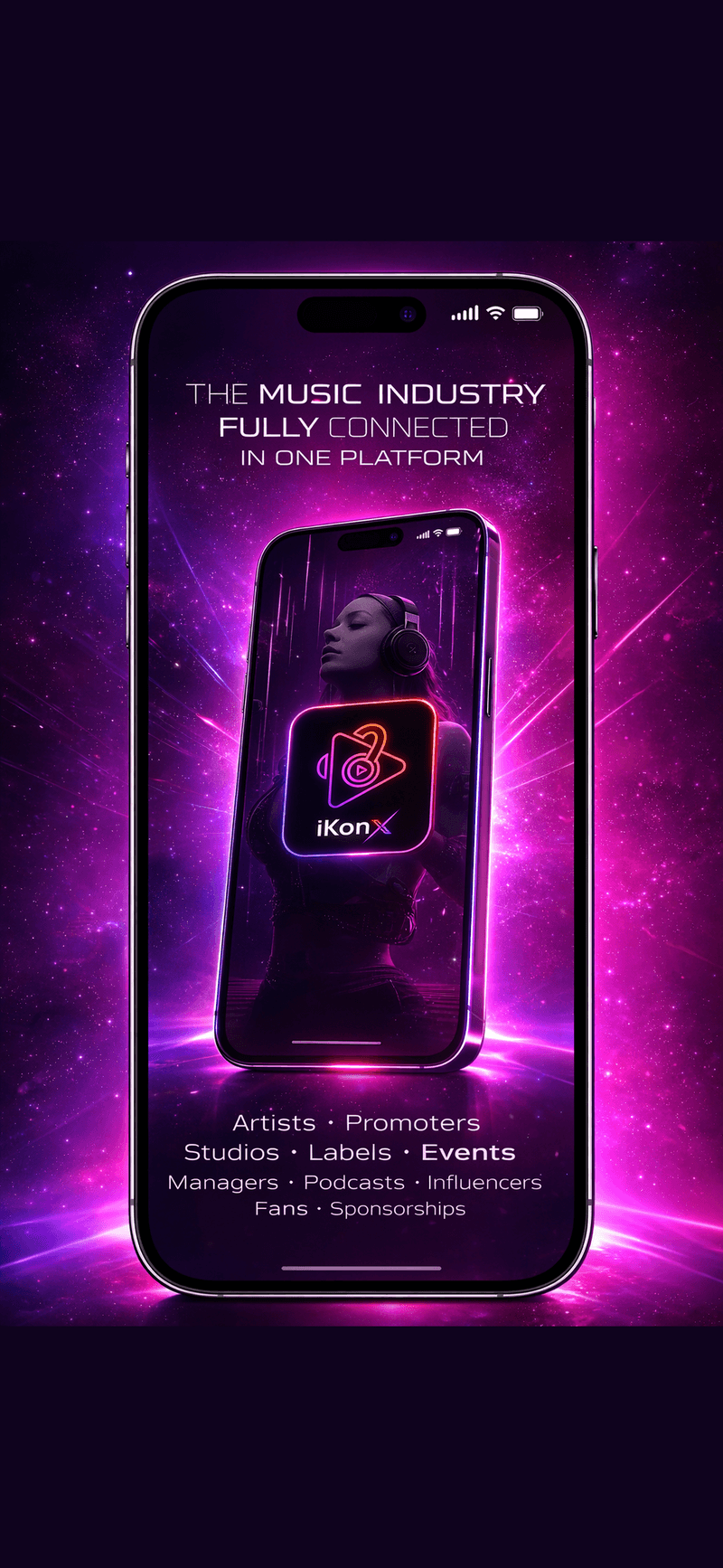
iKonX puts every side of the music business in your pocket. Artists set their own price and keep 100% of it · iKonX takes 0% platform commission. Browse, message, and book straight from the app.

How to get booked for shows, step by step
- Prove you can draw before you pitch. A talent buyer's first question is how many tickets you can sell, not how good you sound. Play free local sets, grow an email and SMS list, and track real attendance so you can say a concrete number: 25, 50, 200. Your draw is your leverage, and it is the single thing that turns a cold pitch into a confirmed date.
- Build a tight EPK. Put your best two or three songs, one live performance video, two or three promo photos, a short bio, and your draw stats on a single page. A clean electronic press kit makes a booker's decision easy. If you only have a polished rehearsal clip to start, use it, then replace it with real live footage as soon as you have it.
- Target venues that already book your genre. Do not pitch every room in town. Research venues that host your style and audience, then build a simple spreadsheet of venue name, capacity, talent buyer contact, and the kind of acts they book. A genre-fit pitch to ten right venues beats a generic blast to a hundred wrong ones.
- Send a short, specific pitch. Keep the subject line plain, like "Booking inquiry: [Your name] for [month]." In three or four sentences, name a recent show or artist they hosted that matches you, link your EPK, give a flexible date window, and state your ticket draw. Pitch the draw, not the dream.
- Know the deal types before you negotiate. Most early shows are a door deal, where you keep a percentage of ticket sales (artists commonly take 65 to 85 percent of the net door). A guarantee is a flat fee the venue owes you no matter the turnout. A guarantee versus percentage gives you whichever is higher, which is the lowest-risk deal for you. Start on door splits and earn your way to guarantees as your draw grows.
- Get the booking in writing. Confirm the date, set time, fee or split, load-in, soundcheck, and the headliner-or-support slot in writing before you promote. A clear agreement is what protects your fee if the turnout, the schedule, or the split is questioned on the night.
- Promote like the result is on you. The venue is trusting your draw, so do the work: post the date, email and text your list, and tag the venue and any co-bills. Selling your share of the room is what gets you re-booked at a better deal next time.
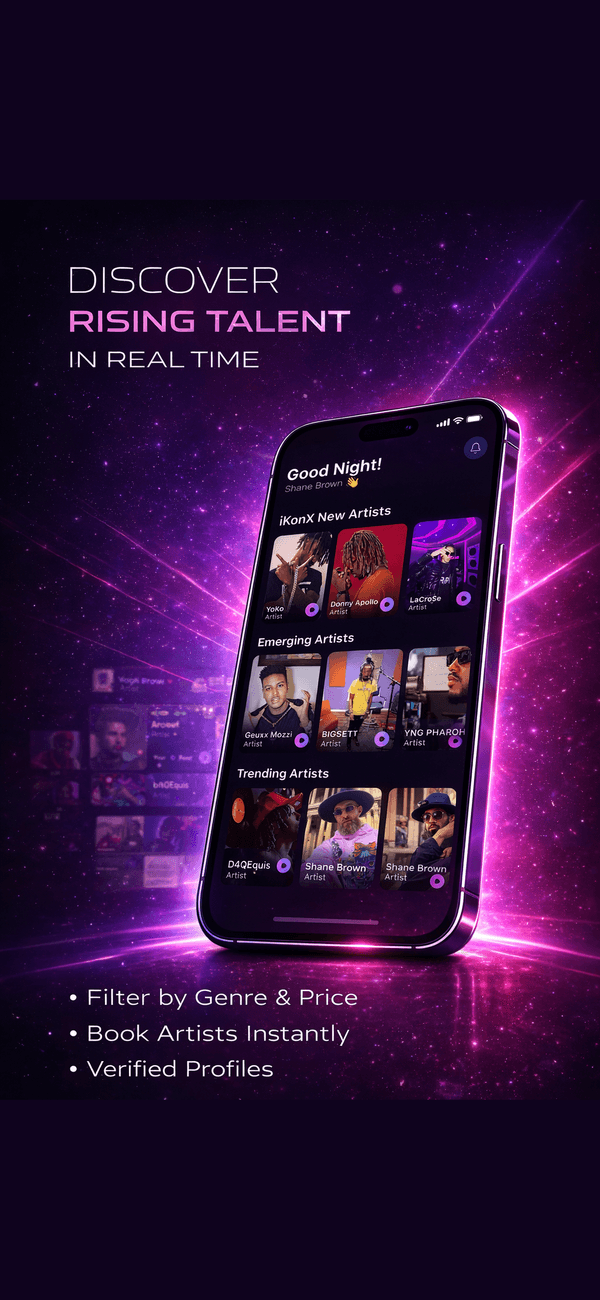
- List your booking service where buyers can pay you. You do not have to live in cold DMs. Listing your live service on a music platform like iKonX lets booking-ready buyers find you, see your fee, and pay on the spot, with the money collected before you commit the date and no agent skimming the top.
Where your show fee actually goes: the honest comparison
| How you book the show | Who handles payment | What it costs you |
|---|---|---|
| iKonX | Built in, collected up front | 0% platform commission · you keep 100% of your fee · buyer pays a flat 10% on top |
| GigSalad (free member) | Built in, on the marketplace | 5% provider service fee on confirmed bookings, plus the planner pays a separate ~10% to 12% on top |
| GigSalad (paid member) | Built in, on the marketplace | 2.5% provider fee, plus a paid membership cost and the planner's separate ~10% to 12% |
| Booking agent | Manual, after the show | Roughly 10% to 20% of your fee, ongoing, and most won't sign you until you already draw |
| Venue door deal (no platform) | Cash at settlement | 0% platform fee, but you keep only ~65% to 85% of the net door and the venue keeps the rest |
| Instagram or DM bookings | None · you chase it | 0% fee but zero payment protection and no track record if they ghost |
Competitor figures are sourced and dated: GigSalad charges providers a 5% service fee on free memberships and 2.5% on paid memberships, with the event planner paying a separate ~10% to 12% on top (help.gigsalad.com, last updated May 20, 2026). Booking-agent commissions of roughly 10% to 20% of the artist fee are standard 2025-2026 industry figures (stagent.com, matadortalent.com). Door-split ranges of roughly 65% to 85% to the artist and typical guarantee-versus-percentage structures are documented booking conventions (diymusician.cdbaby.com, band-vans.net, 2025-2026). Venue guarantee ranges by capacity are directional and vary by market. The only fixed claim is the iKonX model: artists keep 100% of the fee they set, iKonX takes 0% platform commission, and the buyer pays a flat 10% on top. iKonX is free to download and explore, with full access to paid features a flat $9.99/month, and the only payout deduction is a low, sub-5% withdrawal fee, below the industry standard.
Verified artists, real profiles
Getting booked for shows FAQ
How do I get booked for shows as an unsigned artist?
Lead with proof you can draw a crowd, then pitch venues that already book your genre with a tight EPK and a clear ticket estimate. Most first shows are door deals, where you keep a percentage of ticket sales, so play free local sets to build a list and real attendance numbers first. On iKonX you can list your booking service, set your fee, and have buyers pay you on the spot, which also builds the track record promoters keep asking for.
How much do venues pay independent artists per show?
It depends on your draw and the deal. Early-stage artists often start on door splits, keeping roughly 65 to 85 percent of the net ticket revenue rather than a flat fee. As you prove a draw, venues offer guarantees, which are flat fees that scale with room size and your ability to sell tickets. The number is tied to how many people you bring, so growing your audience is what raises your pay.
What is the difference between a guarantee and a door deal?
A guarantee is a flat fee the venue pays you no matter how many people show up. A door deal pays you a percentage of ticket sales, commonly 65 to 85 percent of the net door, which means your pay rises and falls with turnout. The safest structure is a guarantee versus percentage, where you get whichever is higher. Start on door deals when you are new to a market and earn guarantees as your draw grows.
Do I need a booking agent to get gigs?
No, especially early on. Booking agents take roughly 10 to 20 percent of your fee and most will not sign an act that cannot already sell tickets, so the artists who want representation most often cannot get it yet. You can book your own shows by pitching venues directly and listing your live service on a music platform like iKonX, where buyers find you, pay your fee, and you keep 100 percent of what you set with no agent skimming the top.
Does iKonX take a commission on my show fee?
No. The artist earns 100 percent of the fee they set and iKonX takes 0 percent platform commission. The buyer pays a flat 10 percent on top of your price, so the number you quote is the number you keep. The only deduction is a low, sub-5 percent withdrawal fee when you transfer your earnings out, below the industry standard, and it is a standard bank and transfer cost, never an iKonX commission on your fee. iKonX is free to download and explore; full access to paid features across all ten sides of the network is a flat 9.99 dollars a month.
How do I write a pitch email to a venue?
Keep it short and specific. Use a plain subject line like "Booking inquiry: your name for the month," then in three or four sentences reference a recent show or artist the venue hosted that matches your style, link your EPK, offer a flexible date window, and state how many tickets you expect to sell. Bookers are saying yes to a draw, not a description, so put your attendance number in the email.
Explore the connected sides of the network
Built for the working artist.
Build your draw, list your booking service, and keep every dollar you earn on stage. Download iKonX and book shows where the gatekeepers used to stand.

DOWNLOAD THE FREE PDF TODAY:
Indie Feature Pricing Cheat-Sheet
What to charge for a feature verse with no following · the price math, plainly.
Get the free PDF ->