The fix is to treat your lineup like a budget you allocate on purpose, source talent from more than one channel, and book the emerging tier directly instead of through a chain of introductions. A common festival rule is the 60/40 split: roughly 60 percent of the talent budget to headliners and 40 percent across emerging and local acts, with emerging fees often landing in the 500 to 3,000 dollar range per act, per Ticket Fairy's 2026 talent budgeting guide. That 40 percent is where direct sourcing wins, because that is where the agent rolodex stops helping you and a searchable pool of bookable artists starts.
It also matters because the emerging tier is what gives a festival its identity. Ones To Watch, an editorial curator that scouts emerging-artist lineups, makes the point that headliners get people through the gate, but it is often the lesser-known acts earlier in the day that create the atmosphere people remember. A lineup where a casual attendee recognizes a few names and still discovers new favorites is the one that builds a reputation, and a few up-and-coming bookings can pay off again if those acts break later. You cannot get that mix from one channel, which is why sourcing the undercard directly, instead of accepting whatever your agent happens to represent, is the part that compounds.
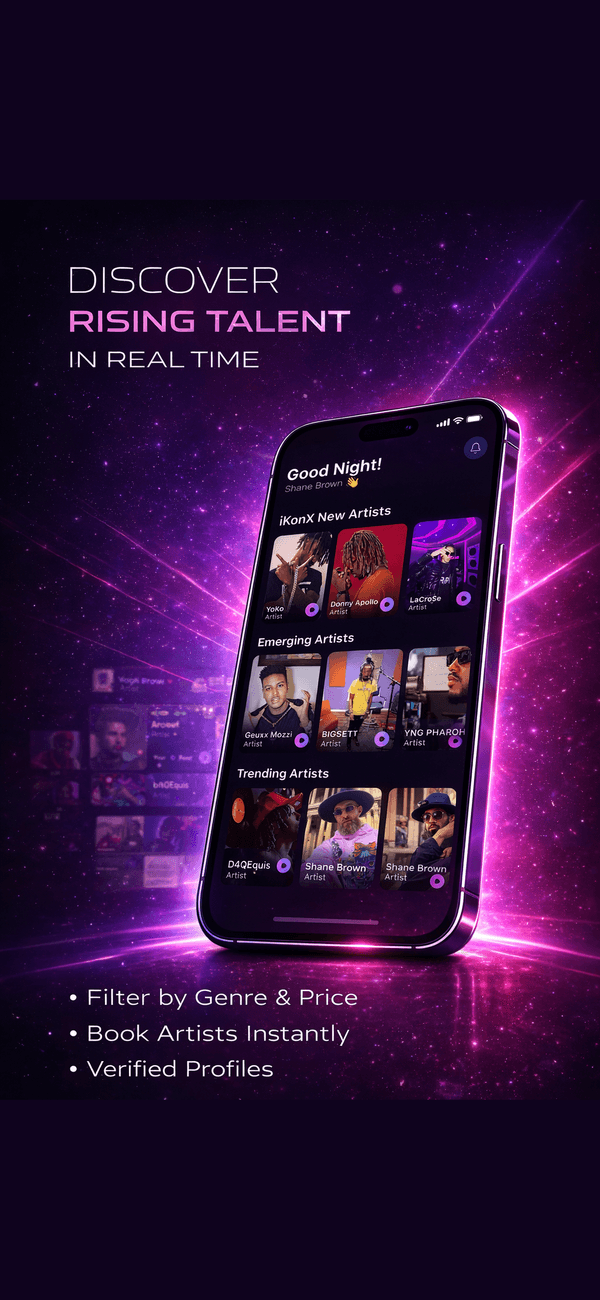
That direct tier is exactly what iKonX is building. The Events side of the network will let a festival organizer search bookable indie artists with transparent pricing and reach them directly, with no agent introduction required. On iKonX the artist sets their own price and earns 100 percent of it, iKonX takes 0 percent platform commission, and the buyer pays a flat 10 percent on top. So the number the act lists is the number they earn, and your talent budget goes to the bill, not to a broker in the middle. Because every side of the network shares one login, the artist a fan discovered, the studio that recorded them, and the act you book for your stage are no longer separate searches across separate apps.