How to run a profitable open mic night
An open mic makes its money at the bar, not the door, so profit comes from keeping the room full for three hours. Pay a real host, cap the list and run strict time limits, book one paid feature act to anchor the middle of the night, and track bar spend per head every week. Same night, same time, every week.
The open mic is the most misunderstood night on a venue calendar. It looks free, so it gets treated as free, and then it quietly loses money for six months before someone kills it. What went wrong was never the talent. It was the arithmetic.
Here is the failure pattern. Twenty-two performers sign up. Each brings nobody. Each plays until someone stops them, and nobody stops them. The room is at its fullest at 8:40pm, when every performer is waiting to go on, and it empties out one person at a time as each one finishes their set and leaves. By 10:30pm the bar is serving four people and one of them is the sound guy. The night ran three hours, had twenty-two acts, and sold nine drinks.
Then there is the licensing question that gets ignored until a letter arrives. Venues that publicly perform music, live or recorded, generally need public performance licenses from the PROs, ASCAP and BMI among them, and the narrow statutory exemptions in 17 U.S.C. 110(5) are about certain transmissions and receptions rather than a blanket free pass for live performance in a bar. A room full of people playing cover songs is a public performance of somebody's composition. Budget for that as a fixed cost of having live music at all, not as a surprise.
How to run the night, step by step
Open mics are profitable when you stop running them as charity and start running them as a show that happens to have a rotating cast. Four levers do the work.
Lever one is the host. An unpaid host is why the night dies. A paid host keeps the list honest, cuts people off cleanly, keeps the energy between acts, and makes the room feel like a show rather than a queue. Pay them, every week, and pay them the same. It is the highest-return line item on the night.
Lever two is the format. Cap the sign-up list at a number you can actually get through, and enforce a hard time limit, two songs or ten minutes, whichever comes first. A capped, on-time list means the night has a shape, and a night with a shape has a headline moment instead of a slow leak. Slot performers so the strongest are late, because the whole game is keeping people in the room past 10pm.
Lever three is a paid feature act. One booked artist, paid a real fee, playing a 30-minute set in the middle or near the end. This is the anchor. It gives the audience a reason to stay, gives the performers a reason to stay and watch, and gives you something to promote that is not just a list. The feature act is the single change that turns an open mic into a night.
Lever four is measurement. Bar spend per head, week over week. Not attendance. Not the vibe. Fifty people who buy one soda is a worse night than eighteen who stay three hours. Once you have four weeks of numbers you will know exactly what the feature act is worth.
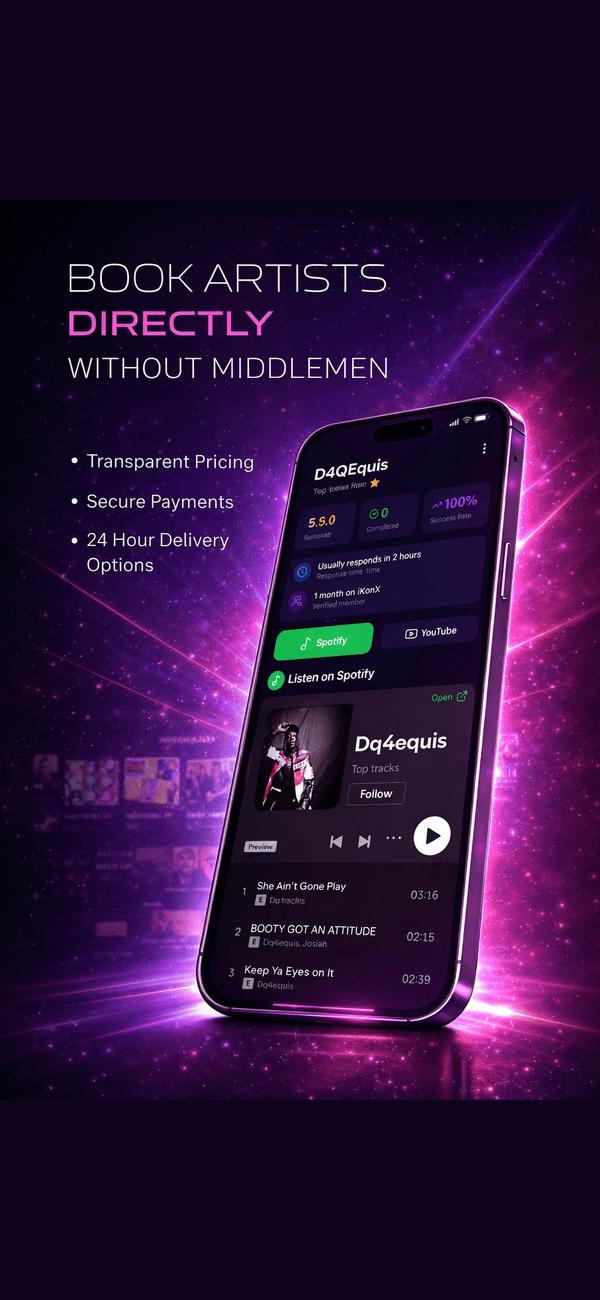
The honest state of iKonX today: it is a live, downloadable app where promoters and artists connect and pay each other directly, and a venue-side event workflow with recurring-night rosters and sign-up management is on the roadmap. What already works is the part a recurring night needs most: you find the feature act and the host, you pay them directly at 0 percent platform commission, and the artist keeps 100 percent of the price they set while you pay a flat 10 percent on top. iKonX is free to download and explore, full access to paid features is a flat 9.99 dollars a month, and the only artist-side deduction is a low, sub-5 percent withdrawal fee.
Empty date
You have a room and a night with nothing on it yet.
Browse artists
Search verified indie acts with transparent pricing. No agent, no gatekeeper.
Lock the fee
Agree the price the artist set. They keep 100% · you pay a flat 10% on top.
Confirm + pay
Message direct, confirm the details, and pay securely in the app.
Doors open
The act shows up, the room fills, you book the room and keep the night.
Move this week · the good dates fill fastest.
The whole network lives in one app.
iKonX puts every side of the music business in your pocket. Artists set their own price and keep 100% of it · iKonX takes 0% platform commission. Browse, message, and book straight from the app.

Transparent booking fees, no surprises
$300 to $600
A local indie act for a small private show or pop-up.
100% to artist$600 to $1.5k
A headline slot or support for a ticketed venue night.
You pay flat 10%$1.5k and up
A lineup placement scaled to the act and the draw.
No broker cutThe open mic that loses money vs. the one that pays for itself
| Free-for-all open mic | Hosted, capped, anchored night | |
|---|---|---|
| Host | Volunteer, or nobody | Paid, every week, same person |
| The list | Unlimited, no clock | Capped slots, two songs or ten minutes, enforced |
| Room at 10:30pm | Empty, everyone played and left | Full, the feature act is on |
| What you promote | An open mic | A named artist, plus an open mic |
| The number you watch | How many signed up | Bar spend per head |
| Paying the feature and the host | Cash, if you remember | Direct through iKonX · they keep 100% of the fee at 0% platform commission |
Sources and dates. ASCAP licensing (live, July 2026): businesses and venues that publicly perform copyrighted music, whether live or recorded, generally need a public performance license. BMI licensing: the same requirement applies for music in the BMI repertoire, and venues typically need licenses from multiple performing rights organizations to cover the music they play. 17 U.S.C. 110(5): the statutory exemptions are narrow and are directed at certain transmissions and receptions, subject to equipment and size conditions, and are not a general exemption for live performance in a venue. Format rules and the bar-spend-per-head metric are operating practice, not published statistics. Practical guidance, not legal advice. The iKonX model is the only fixed claim: artists keep 100% of the price they set, iKonX takes 0% platform commission, the buyer pays a flat 10% on top, iKonX is free to download and explore, full access to paid features is a flat $9.99/month, and the only payout deduction is a low, sub-5% withdrawal fee, below the industry standard.
Open mic night FAQ
How does an open mic night actually make money?
At the bar, not the door. The entire job is keeping the room full for three hours instead of letting it drain one performer at a time. That means a paid host, a capped list with a hard clock, and one paid feature act anchoring the second half so people have a reason to stay past 10pm.
Should I pay a host for an open mic?
Yes, and it is the highest-return line on the budget. A paid host runs the list, cuts sets off cleanly, and keeps the energy between acts so the night feels like a show rather than a queue. Unpaid volunteer hosts are the most common cause of an open mic that quietly dies.
How long should each performer get?
Two songs or ten minutes, whichever comes first, announced up front and enforced without apology. Cap the total number of slots at what you can genuinely get through, and put the strongest acts late so the room stays full when the bar is busiest.
Is a paid feature act worth it at an open mic?
It is usually the change that turns the night around. Thirty minutes from a booked artist gives the audience a reason to stay, gives the performers a reason to watch each other, and gives you something promotable that is not just a sign-up sheet. Find and pay them on iKonX, where the artist keeps 100 percent of the fee at 0 percent platform commission.
Do I need a music license for an open mic?
Generally yes. Venues that publicly perform music usually need public performance licenses from the performing rights organizations, and the exemptions in 17 U.S.C. 110(5) are narrow and aimed at certain transmissions rather than live performance in a bar. Budget it as a fixed cost of hosting live music. Not legal advice.
How do I know if the night is working?
Bar spend per head, tracked weekly. Attendance lies, because fifty people nursing one soda is a worse night than eighteen who stay three hours. Four weeks of that ratio will tell you exactly what the host and the feature act are worth, and whether the format needs tightening.
Explore the connected sides of the network
Book the room. Keep the night.
Pay the host, cap the list, anchor the night with a real act. Download iKonX and pay the artists who keep your room full, directly.

DOWNLOAD THE FREE PDF TODAY:
The Indie Booking Kit
Offer templates, a fee-range guide, and a doors-to-payout checklist for booking an indie act.
Get the free PDF ->