How Do You Promote a Concert or Show on a Small Budget?
Promote a concert on a small budget by going free-reach first and paid second: lock the date and ticket link early, post the act's own content across every artist and venue account, send two or three plain email blasts to your list, then spend a small geo-targeted boost in the final two weeks. Sell advance tickets, because a meaningful share of small-show sales land in the last week. Book the act direct on iKonX so the artist keeps 100 percent of the fee, iKonX takes 0 percent commission, and your budget goes to filling seats instead of the middle.
The hard part of promoting a small show is not the marketing. It is that the money disappears before you ever buy an audience. By the time you have paid the act, the venue, the sound engineer, and the ticketing fees, the promotion line on the budget is whatever change is left in the jar. So the question is never really how to promote a concert. It is how to promote one when the answer to the marketing-budget question is almost nothing.
Ticketing alone quietly takes a real bite. Eventbrite's published structure layers a percentage service fee plus a flat per-ticket fee plus payment processing on top of every sale, which on a low-priced ticket can run into double-digit percentages of the face value before a single flyer is printed. The fees are usually passed to the fan, which means a 15-dollar ticket can show up at checkout closer to 18, and every dollar of that markup is a dollar of resistance between you and a full room. Promoters who do not read the fine print learn this on settlement night.
The other trap is paying for reach you did not need. It is tempting to throw a small ad budget at a wide audience and hope. But a local show is won on warm reach first, the act's own followers, the venue's regulars, your email list, before a single paid dollar is spent. Spend the money before you have exhausted the free reach and you are buying strangers when you still had fans you never asked.
How to promote a concert on a small budget, step by step
The spend-light version is simple: stack free reach, sell tickets in advance, and reserve a small paid boost for the final stretch when intent is highest. Start with the asset you already control. The act has an audience, the venue has an audience, and you have a list. Coordinated posts from all of those accounts in the same week move more tickets than any boosted post to cold strangers, and they cost nothing but coordination.
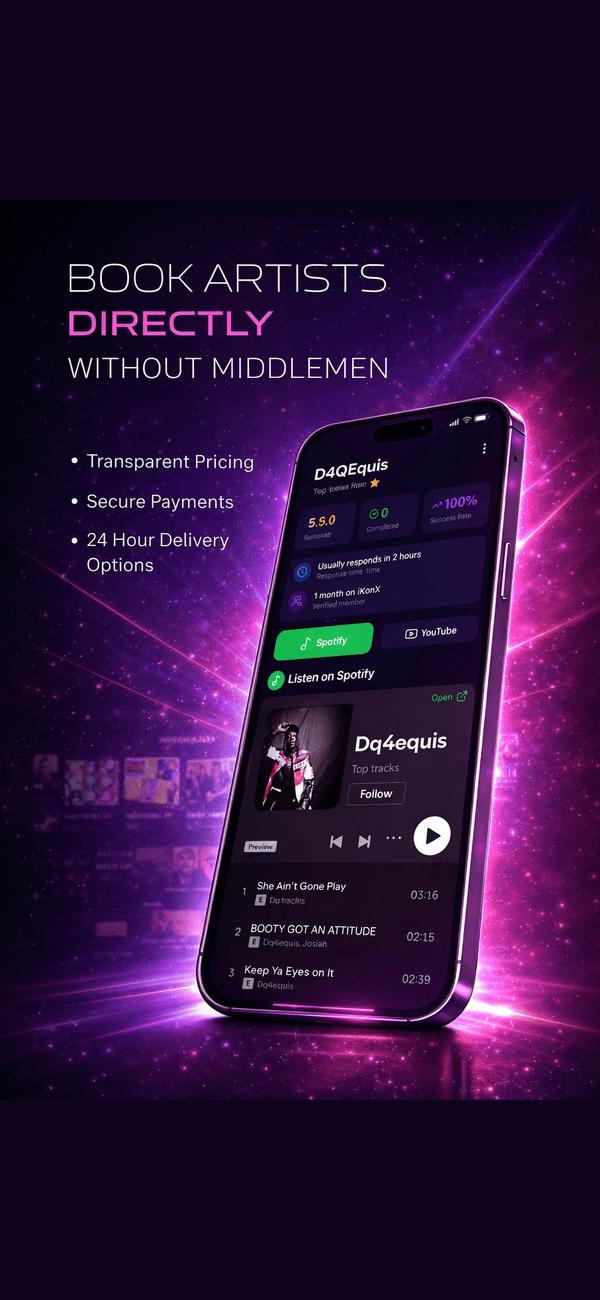
Lock the booking and the fee early so the act is invested in promoting too. This is where the platform you book on matters more than it looks. When you book direct on iKonX, the artist sets their price and keeps 100 percent of it, because iKonX takes 0 percent platform commission. You as the buyer pay a flat 10 percent on top, and that is the whole cost: no agency markup skimming the middle, no surprise on settlement night. The number you agree is the number that moves. iKonX is building the promoter side of the network so that finding a local act, agreeing terms, and locking the date happen in one place, on the same side of the table as the artist who has every reason to help you sell the room out.
Then spend the little money you have where it converts. A small, tightly geo-targeted social boost in the last two weeks, aimed at people within driving distance of the venue and fans of similar acts, beats a big spray to a wide audience every time. The cheapest ticket sale is the one you got for free from a fan reshare; the second cheapest is the warm local boost. Save the budget for those two.
Empty date
You have a room and a night with nothing on it yet.
Browse artists
Search verified indie acts with transparent pricing. No agent, no gatekeeper.
Lock the fee
Agree the price the artist set. They keep 100% · you pay a flat 10% on top.
Confirm + pay
Message direct, confirm the details, and pay securely in the app.
Doors open
The act shows up, the room fills, you book the room and keep the night.
Move this week · the good dates fill fastest.
The whole network lives in one app.
iKonX puts every side of the music business in your pocket. Artists set their own price and keep 100% of it · iKonX takes 0% platform commission. Browse, message, and book straight from the app.

Transparent booking fees, no surprises
$300 to $600
A local indie act for a small private show or pop-up.
100% to artist$600 to $1.5k
A headline slot or support for a ticketed venue night.
You pay flat 10%$1.5k and up
A lineup placement scaled to the act and the draw.
No broker cutWhere your promotion dollar goes, by platform
| What you are paying for | The cut | What it means for a small show |
|---|---|---|
| iKonX (book the act direct) | 0% platform commission · artist keeps 100% of the fee · buyer pays a flat 10% on top | The fee you agree is the fee that moves · no broker skim · budget stays free for promotion |
| Eventbrite (ticketing) | Percentage service fee + flat per-ticket fee + payment processing, usually passed to the fan | On a low-priced ticket the stacked fees can read as double-digit % at checkout · price accordingly |
| Cameo (a celebrity shoutout) | Cameo takes a 25% cut · the talent keeps about 75% | A promo video runs through a general celebrity catalog, not a local music booking · a quarter goes to the platform |
| BeatStars (if also licensing music) | Free plan keeps 70% (a 30% cut) plus a 12% buyer service fee on the marketplace | Built for beats, not bookings · two fees stack: the seller cut and the buyer fee |
| Paid social boost (Meta / TikTok) | You pay per impression or click · no fee to the act | Worth it only after free reach is exhausted and only when tightly geo-targeted |
Fee figures are dated and vary by deal (verified June 2026). Eventbrite fee structure layers a percentage service fee plus a flat per-ticket fee plus payment processing, typically passed to the attendee, per eventbrite.com pricing (2025-2026); exact rates vary by country and package, so confirm on your account before pricing tickets. Cameo 25 percent platform cut with talent keeping about 75 percent per Cameo published model (2025). BeatStars free plan keeps 70 percent (a 30 percent cut) plus a 12 percent buyer marketplace service fee announced August 7 2023 and still in effect (2025-2026); these apply to music sales, not show bookings, and are a cost-of-the-middleman comparison only. Email and ticket-timing figures are industry benchmarks that vary by show and market. The only fixed claim is the iKonX model: artists keep 100 percent of the price they set, iKonX takes 0 percent platform commission, and the buyer pays a flat 10 percent on top. iKonX is free to download and explore, with full access to paid features a flat 9.99 dollars a month, and the only payout deduction is a low, sub-5 percent withdrawal fee, below the industry standard.
Small-budget concert promotion FAQ
How do you promote a concert with almost no money?
Go free-reach first, paid second. Lock the date and ticket link, then get the act, the venue, the opener, and your own accounts all posting the same link in the same week, because a reshare from the headliner is the highest-converting and cheapest promotion you have. Send two or three plain email blasts to your list. Only in the final two weeks spend a small, tightly geo-targeted social boost aimed at people near the venue. Booking the act direct on iKonX keeps your budget free for promotion, because the artist keeps 100 percent of the fee and iKonX takes 0 percent commission, with the buyer paying a flat 10 percent on top.
What is the cheapest way to sell tickets to a small show?
The cheapest sale is the free one: a reshare from the act to their own followers and a plain email to your list. After that, read the ticketing fees before you pick a tool, since a percentage service fee plus a flat per-ticket fee plus payment processing can add a meaningful double-digit percentage to a low-priced ticket that the fan feels at checkout. Price the ticket knowing the real out-the-door number, and reserve any paid spend for a tight local boost in the final stretch.
How far in advance should I start promoting a concert?
Start locking the date, act, and ticket link six weeks out, then build a countdown: announce early, run steady free-reach posts and email reminders through the middle, and save your small paid boost plus a last-call push for the final two weeks. A large share of small-show tickets sell in the closing days, so a slow start is normal, but the closing week is where the result is decided. Do not coast into it.
Should I pay for ads to promote a local show?
Only after you have exhausted free reach, and only if you target tightly. A wide spray to cold strangers burns a small budget fast. A focused boost aimed at a short radius around the venue plus fans of comparable acts, run in the final two weeks when ticket intent peaks, spends less and converts better. Track cost-per-ticket rather than impressions, and turn off anything that is not actually selling.
Does iKonX charge the promoter a commission to book an act?
No. The artist sets their price and keeps 100 percent of it, and iKonX takes 0 percent platform commission. As the buyer, the promoter pays a flat 10 percent on top of the agreed fee, so the number you agree is the number that moves, with no agency markup skimming the middle. The only deduction is a low, sub-5 percent withdrawal fee when the artist transfers earnings out, below the industry standard. iKonX is free to download and explore; full access to paid features across the network is a flat 9.99 dollars a month.
Is the promoter or the artist supposed to do the promotion?
Both, and that is the point of locking the booking early. When the act is confirmed and invested, their reshare to their own followers does more than any boosted post, because it is warm and it is free. Send the artist ready-made captions and artwork so posting is frictionless. Booking direct on iKonX puts you and the artist on the same side of the table, with a clear fee and a shared interest in selling the room out, which makes co-promotion natural rather than something you have to chase.
Explore the connected sides of the network
Book the room. Keep the night.
Book the act direct, agree the fee in the open, and put your budget into filling the room instead of into the middle. Download iKonX and start on the same side of the table.

DOWNLOAD THE FREE PDF TODAY:
The Indie Booking Kit
Offer templates, a fee-range guide, and a doors-to-payout checklist for booking an indie act.
Get the free PDF ->