How to get a sponsor for a music festival
Brands reach independent artists directly on iKonX. Two parties, one transparent table, zero broker in the middle.
Lead with the audience, not the lineup, because brands are buying a demographic they cannot reach cheaply anywhere else. Sell an activation rather than a logo, pitch nine to twelve months ahead of the gates because that is when brand budgets are actually set, tier your packages, and report results afterwards. If your festival runs under a nonprofit, learn the line between a qualified sponsorship payment and taxable advertising before you write the deck.
Most festival sponsorship decks are a lineup poster with a price list stapled to the back, and they fail for one reason: a brand does not care who is playing. A brand cares who is watching. When your deck opens with the headliner, you have led with the thing the sponsor is least interested in, and you have quietly told them that you do not know who your own audience is.
The second failure is timing. Festival organisers pitch in the spring for a summer event, which is roughly six months after the brand set its annual budget. There is no money left, and there is no mechanism to create any. The brands that sponsor festivals plan on an annual cycle, and the sponsorship you want for next August is a conversation that should be happening this autumn. Being early is not a nice touch, it is the entire strategy.
The third failure is selling logos. A logo on a banner is worth almost nothing and every brand knows it, because it is not measurable and nobody photographs it. What brands will pay real money for is an activation: a thing at your festival that people queue for, stand in, take a photo of, and post. Sampling. A shaded lounge on a brutal afternoon. A charging station. A stage that carries their name. That is a media buy with a footprint, and it can be measured, which is why it can be priced.
Then there are the rules people find out about the hard way. If your festival is run by a nonprofit, section 513(i) of the Internal Revenue Code treats a qualified sponsorship payment as outside unrelated business taxable income, but that safe harbour only covers an acknowledgement of the sponsor. The moment you include qualitative claims about their product, pricing information, or a call to action, it becomes advertising, and advertising income can be taxable. And if you are chasing an alcohol brand, the federal tied-house rules under 27 U.S.C. 205(b) and 27 CFR Part 6 restrict an industry member from giving a thing of value to a retailer, which is exactly the shape a bar-adjacent festival sponsorship can accidentally take.
Build the sponsorship the way the brand's marketing director has to justify it internally, and you will be the easiest yes on their list.
Open with the audience. Attendance, the age band, the split, the cities and postal codes they travel from, the spend per head on site, the social reach across your channels and your artists, and last year's numbers with photographic evidence. If this is year one and you have none of that, say so plainly and sell the year-one price honestly. A first-year festival with an honest deck and a small number is far more fundable than a first-year festival pretending to be its fifth.
Then design the activation, do not sell the banner. Give the brand a physical footprint that solves a problem your attendees actually have. A cold-drink station in August. A shaded seating area. Charging lockers. A water refill point. The brand gets a queue of people voluntarily standing in their space, and you get a sponsor who can show their boss a photo of it. Price the footprint, not the logo.
Then tier it. Presenting partner, stage sponsor, activation partner, supporting partner. Each tier is a different real thing, not the same thing at a different price, and it lets a brand with a small budget say yes now and grow next year. Most of your long-term sponsors will start at the bottom tier.
Pitch nine to twelve months out, ask for a meeting rather than a cheque, and go local before you go national. A regional beverage distributor, a local bank, a car dealership, and a university will all pick up the phone in a way that a national brand's inbox will not.
Then report. A one-page post-event report with attendance, footfall through their activation, impressions, and photographs is the single highest-return document you will produce all year, because renewing a sponsor costs a fraction of finding one. And pay the artists on the day, because a festival with a reputation for late payment cannot book a lineup worth sponsoring. That is the half iKonX is being built for: direct, dated payment to every performer, where the artist keeps 100 percent of the price they set, iKonX takes 0 percent platform commission, and the buyer pays a flat 10 percent on top. iKonX is free to download and explore, and full access to paid features is a flat $9.99 a month. Straight about the boundary: iKonX does not broker sponsorships and does not sell your inventory. It pays your lineup.
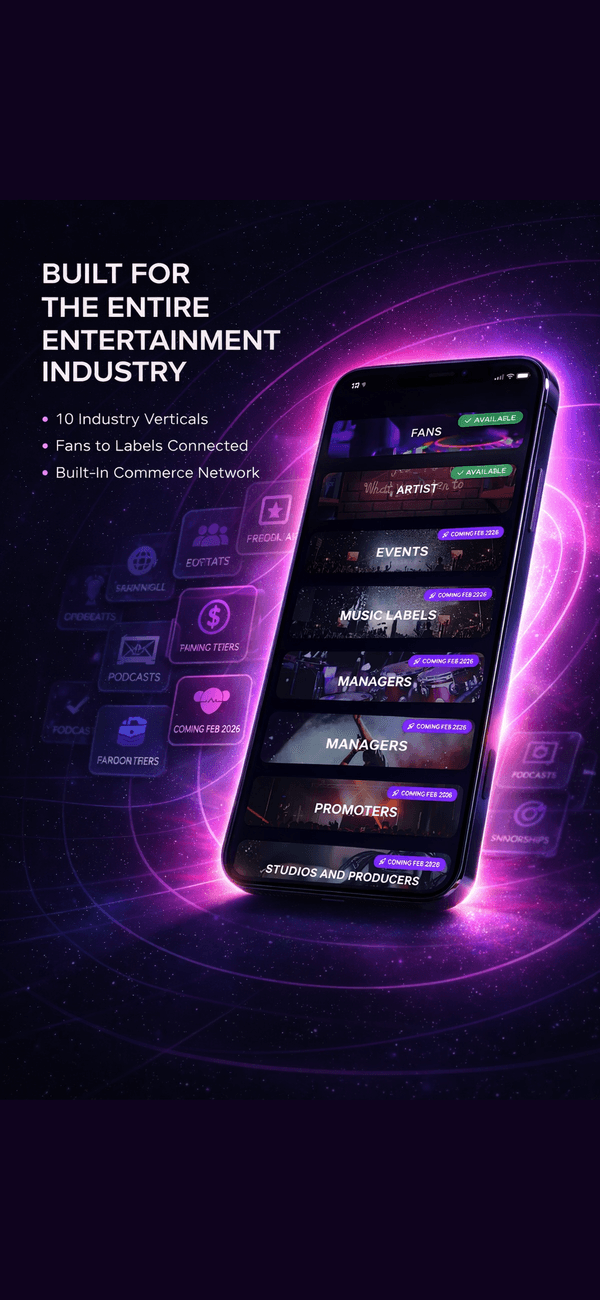
The whole network lives in one app.
iKonX puts every side of the music business in your pocket. Artists set their own price and keep 100% of it · iKonX takes 0% platform commission. Browse, message, and book straight from the app.

How to land a festival sponsor, step by step
- Open the deck with the audience, not the lineup. Attendance, age band, gender split, the cities and postal codes people travel from, on-site spend per head, and your combined social reach including the artists. Last year's numbers with photos. If it is year one, say so and price it honestly. Brands are buying a demographic, and a deck that leads with a headliner tells them you have not measured your own crowd.
- Sell an activation, not a logo. A banner is unmeasurable and nobody photographs it. A cold-drink station in August, a shaded lounge, charging lockers, a water refill point, a named stage: these are footprints people queue for, stand in, and post. Price the footprint. That is what a marketing director can defend to their boss with a photograph.
- Pitch nine to twelve months before the gates open. Brand budgets are set annually, and a spring pitch for a summer festival arrives six months after the money was allocated. The sponsorship you want for next August is a conversation you have this autumn. Being early is not politeness, it is the whole strategy, and it is the single most common thing organisers get wrong.
- Tier the packages so a small brand can say yes now. Presenting partner, stage sponsor, activation partner, supporting partner, each a genuinely different thing rather than the same thing at four prices. Most of your best long-term sponsors will start at the bottom tier and climb. Go local first: a regional distributor, a bank, a dealership, or a university will take the meeting a national inbox will not.
- Know the rules before you draft the offer. If a nonprofit runs the festival, 26 U.S.C. 513(i) keeps a qualified sponsorship payment out of unrelated business taxable income, but only for an acknowledgement. Add qualitative claims, pricing, or a call to action and it becomes advertising, which can be taxable. For alcohol brands, the federal tied-house rules at 27 U.S.C. 205(b) and 27 CFR Part 6 restrict industry members giving things of value to retailers. Get this checked. Practical guidance, not legal advice.
Three festival sponsorship shapes (and what a brand will actually pay for)
| Logo on the banner | Named stage | Physical activation | |
|---|---|---|---|
| What the brand gets | Almost nothing measurable | Repeated verbal and visual mentions | A queue of people standing in their space |
| Can they measure it | No, and they know it | Partly, via mentions and photos | Yes, footfall, samples, scans, posts |
| Renews next year | Rarely | Often | Most reliably, if you report on it |
| Effort for you | None, which is why it is worth nothing | Low | Real, it needs space, power, and staff |
| Nonprofit tax note | Acknowledgement can be a qualified sponsorship payment under 26 U.S.C. 513(i) · qualitative claims, pricing, or a call to action turn it into advertising | ||
Sources and dates. 26 U.S.C. 513(i) (live, July 2026): a qualified sponsorship payment received by a tax-exempt organisation is not treated as unrelated trade or business income, where the payment carries no arrangement or expectation of substantial return benefit other than the use or acknowledgement of the sponsor's name, logo, or product lines. Advertising, including qualitative or comparative language, price information, and calls to action, is expressly not an acknowledgement, and Treasury Regulation 1.513-4 sets out the distinction. 27 U.S.C. 205(b) and 27 CFR Part 6 (federal tied-house rules): an industry member is restricted from inducing a retailer to purchase its products to the exclusion of others, including by furnishing things of value, which is directly relevant to alcohol brand sponsorship of events tied to retail licensees. 16 CFR Part 255 (FTC Endorsement Guides) applies to sponsored content published by the festival or its artists. Sponsorship timing (nine to twelve months) and package structure are market observation from 2026, not published statistics. Practical guidance, not legal advice. The iKonX model is the only fixed claim here: artists keep 100% of the price they set, iKonX takes 0% platform commission, the buyer pays a flat 10% on top, iKonX is free to download and explore, full access to paid features is a flat $9.99/month, and the only payout deduction is a low, sub-5% withdrawal fee, below the industry standard.
Festival sponsorship FAQ
How far in advance should I pitch festival sponsors?
Nine to twelve months before the gates open. Brand budgets are set on an annual cycle, so a spring pitch for a summer festival lands about six months after the money was allocated and there is no mechanism to create more. The sponsorship you want for next August is a conversation you should be having this autumn.
What should the sponsorship deck actually contain?
The audience first. Attendance, age band, where people travel from, spend per head, and your combined social reach including your artists' channels. Then last year's photographs and results. Then the activation options and the tiers. The lineup goes near the end, because the brand is buying your crowd, not your headliner.
How do I get a sponsor for a first-year festival with no data?
Say so, and price it honestly. Sell the year-one rate as exactly that, offer a genuinely valuable activation footprint, and promise a real post-event report. A first-year festival with an honest deck and a small number is far more fundable than one pretending to be in its fifth year, because the brand will find out either way and only one of those gets renewed.
Why do brands want an activation instead of a banner?
Because a banner cannot be measured and an activation can. A cold-drink station, a shaded lounge, charging lockers, or a water refill point gives them footfall, samples handed out, scans, and photographs of real people voluntarily standing in their space. That is what a marketing director takes to their boss when they ask to renew.
Are there tax rules on festival sponsorship money?
If a tax-exempt organisation runs the festival, yes, and they matter. Under 26 U.S.C. 513(i) a qualified sponsorship payment is not unrelated business taxable income, but the safe harbour only covers acknowledging the sponsor. Qualitative claims about their product, pricing, or a call to action turn it into advertising, which can be taxable. Alcohol sponsors bring separate federal tied-house rules. Get an accountant and a lawyer on this one. Practical guidance, not legal advice.
How does iKonX fit into running a sponsored festival?
It does not broker sponsorships or sell your inventory. It pays your lineup, directly and on the day, which is what keeps a festival bookable in year two. The artist keeps 100 percent of the price they set, iKonX takes 0 percent platform commission, and the buyer pays a flat 10 percent on top. iKonX is free to download and explore, full access to paid features is a flat $9.99 a month, and the only payout deduction is a low, sub-5 percent withdrawal fee, below the industry standard.
Explore the connected sides of the network
Show business is a business. No broker.
Lead with the audience, sell the activation, and pitch a year early. Download iKonX and pay every performer on your lineup directly, on the day.

DOWNLOAD THE FREE PDF TODAY:
The Brand-Artist Sponsorship Proposal Template
A fill-in proposal a brand and an artist can agree on with no broker in the middle.
Get the free PDF ->