How to write a music sponsorship proposal that brands say yes to
Brands reach independent artists directly on iKonX. Two parties, one transparent table, zero broker in the middle.
To write a music sponsorship proposal, build a focused one-page pitch with five parts: who you are, your audience data, the deliverables you offer, a clear price, and a single call to action. Lead with engagement, not follower count. Personalized pitches get a 45 percent response rate versus 12 percent for generic ones.
Most artists never lose a sponsorship because their music was not good enough. They lose it because the pitch never landed. A vague email that says we have a big audience and would love to work together gives a brand nothing to say yes to, so it gets ignored. The deals at the independent level almost never come from a brand discovering you. They come because you pitched, with a proposal a marketing manager can actually act on. Waiting to be found is not a strategy.
The numbers make the gap plain. Personalized sponsorship pitches earn a 45 percent response rate, while generic ones land around 12 percent, per InfluenceFlow's 2026 pitch-email benchmarks. Brands now expect real performance data before they will even consider a partnership, so a proposal built on adjectives instead of numbers reads as a non-starter. And 73 percent of sponsors decide within seven days of first contact, which means a weak first proposal is rarely revisited. You usually get one clean shot to make the offer concrete.
The harder problem sits underneath all of that. Even when an artist writes a strong proposal and a brand says yes, the old structure quietly eats the deal. Route a sponsorship through a manager and a booking agent and a chain of brokers takes a cut before a dollar reaches the music, which is exactly why small, winnable deals so often were not worth anyone's time.
The fix is a proposal built like a business document, not a fan letter, paired with a place to close the deal directly so the budget actually reaches you. The proposal itself is a focused one-page pitch: who you are, who your audience is in hard numbers, the exact deliverables you will provide, a clear price, and one call to action. It is not your full EPK and not a press kit. It is a short, specific offer a brand can read in two minutes and act on.
That is the half most artists can write today. The half that has been missing is a way to close the deal without a broker skimming the budget on the way to the music. That is what iKonX is building toward. When sponsorships open, a brand will be able to find an independent artist whose audience matches its customers, agree on the deliverables and the price in one place, and pay directly. The artist will keep 100 percent of the price they set, iKonX will take 0 percent platform commission, and the buyer will pay a flat 10 percent on top.
Going direct is what makes a tight proposal pay off. A 500 dollar deal a local brand would never run through a 20 percent agent is suddenly worth running, because nobody is taking a cut on the way to you. We are building iKonX so the artist who can write a clean, numbers-first proposal and the brand that wants exactly that audience can find each other and shake hands.
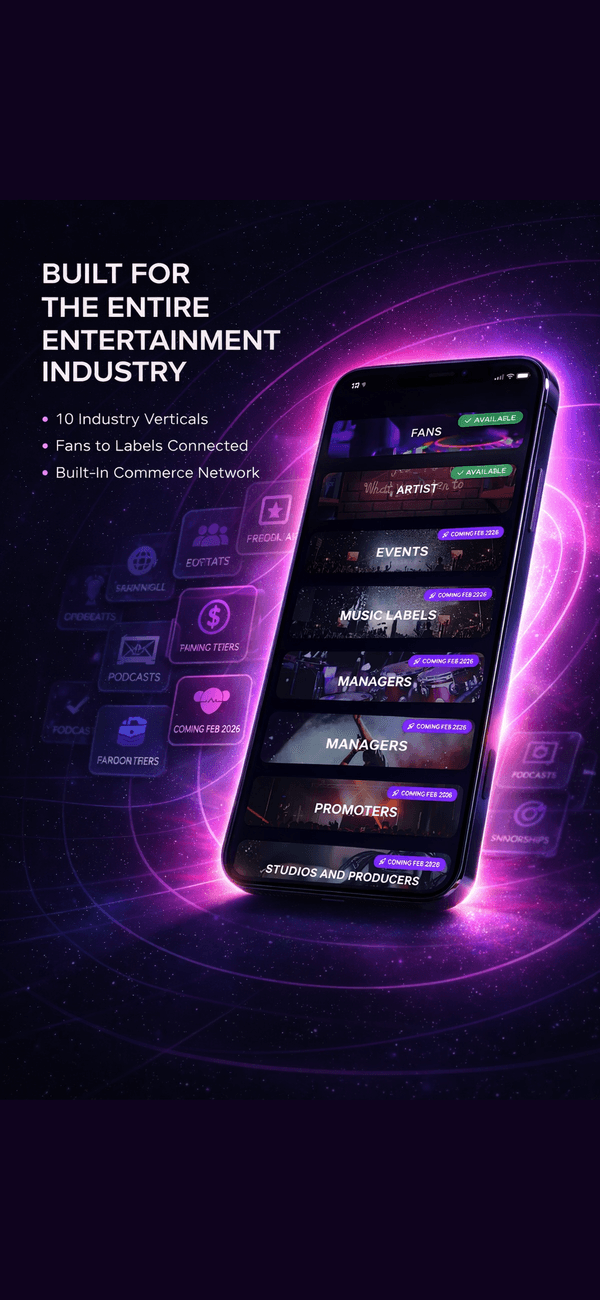
The whole network lives in one app.
iKonX puts every side of the music business in your pocket. Artists set their own price and keep 100% of it · iKonX takes 0% platform commission. Browse, message, and book straight from the app.

How to write a music sponsorship proposal, step by step
- Open with a personalized hook, not a template. Name the brand, name why you fit its customers, and make clear you researched it. Personalized pitches earn a 45 percent response rate against roughly 12 percent for generic blasts, per InfluenceFlow's 2026 benchmarks. The whole email should run 150 to 250 words: a hook, your value, your proof, and one ask.
- Prove the audience with real numbers. Pull hard data, not adjectives: monthly listeners from Spotify for Artists, engagement rate, saves and shares, email list size, and your audience's age, location, and interests. Lead with engagement over raw follower count, because that is what brands buy. A focused account with 8 percent-plus engagement can command 30 to 50 percent premium pricing.
- List concrete, countable deliverables. Vague offers kill deals. Spell out exactly what the brand gets: a set number of social posts, an email mention, a logo on the merch table for a 3-show run, a product integration in your next video. Numbers, not promises. This is the section a marketing manager scans first.
- Price the package off the value, then anchor it. Add up the value of every deliverable, then price the package at roughly 70 to 80 percent of that total so the brand sees a clear deal. Realistic first numbers: 100 to 500 dollars for a social post under 10,000 followers, 1,000 to 5,000 dollars for a regional tour, and 500 to 10,000 dollars for an in-kind product or gear deal. Offer 2 to 3 simple tiers so the brand can pick its level.
- Add proof and a single call to action. Include past coverage, a testimonial, or results from a prior deal, then end with one clear ask: a 15-minute call or a yes to a named tier. One CTA converts better than three. Send it as a clean one-page PDF to the actual marketing contact, not a generic info inbox.
- Time it right and follow up on a schedule. September through November is the strongest window, because brands are planning next year's budgets. Pitch in January and the budget is often already allocated. Then follow up on a cadence: a 4-touch sequence over about 21 days, since 73 percent of sponsors decide within seven days of first contact. After four touches with no reply, move to the next brand.
- Close the deal directly and keep the budget in the music. Lock the deliverables, dates, usage rights, and payment in writing, and get paid up front before the work starts. Going direct means no agency markup eating the fee. On iKonX, when sponsorships open the artist will keep 100 percent of the price they set and iKonX will take 0 percent platform commission, so the proposal you wrote pays out in full.
What lands inside the proposal: the one-pager checklist
| Proposal section | What to put in it | Why brands need it |
|---|---|---|
| Hook | Brand name, the audience fit, why you researched them | Personalized pitches get a 45% response rate vs ~12% for generic |
| Audience proof | Monthly listeners, engagement rate, list size, age/location/interests | 87% of brands now expect performance metrics before they consider a deal |
| Deliverables | Number of posts, email mentions, shows, logo placements, integrations | Countable deliverables let a brand price the ROI, not guess at it |
| Price + tiers | Package priced at ~70-80% of total deliverable value, 2-3 tiers | A clear number and a perceived deal are what get a fast yes |
| Proof + one CTA | Past coverage or results, then a single ask (a call or a tier) | One CTA converts better; 73% of sponsors decide within 7 days |
Sources and dates: personalized pitches earn a 45% response rate vs ~12% for generic, the 4-touch / 21-day follow-up cadence, the 73% decide-within-7-days figure, the September to November timing window, and the 150-250 word pitch length are all per InfluenceFlow's 2026 sponsorship-pitch email guide (influenceflow.io). The 87% of brands requiring performance metrics is a directional 2025-2026 creator-economy benchmark cited in InfluenceFlow's pitch guidance. The price-at-70-80% of deliverable value math and the demographics-from-Spotify-for-Artists checklist are per Orphiq's music sponsorship guide (orphiq.com, May 17, 2026). Engagement above 8% commanding a 30-50% premium is per InfluenceFlow's 2025 pricing benchmarks. Pay ranges (regional tour $1,000-$5,000, social post $100-$500 under 10K, in-kind $500-$10,000) are per Orphiq (May 2026). Ranges vary by deal. The only fixed claim is the iKonX model: artists keep 100% of the price they set, iKonX takes 0% platform commission, and the buyer pays a flat 10% on top. iKonX is free to download and explore, with full access a flat $9.99/month, and the only payout deduction is a low, sub-5% withdrawal fee, below the industry standard.
Music sponsorship proposal FAQ
What should a music sponsorship proposal include?
Five parts on one page: who you are, your audience in hard numbers (monthly listeners, engagement rate, list size, and demographics from Spotify for Artists and your socials), the exact deliverables you offer, a clear price with 2 to 3 tiers, and one call to action. Keep it concrete and countable. A proposal built on adjectives instead of numbers reads as a non-starter, since brands now expect real performance data before they consider a deal.
How long should a music sponsorship proposal be?
Short. The pitch email itself should run 150 to 250 words built around a hook, your value, your proof, and one ask, per InfluenceFlow's 2026 guide, with a clean one-page PDF attached. A sponsorship proposal is a business document, not your full EPK or press kit. A marketing manager should be able to read it in about two minutes and know exactly what they get and what it costs.
How do I price a music sponsorship proposal?
Add up the value of every deliverable, then price the package at roughly 70 to 80 percent of that total so the brand sees a clear deal, per Orphiq's 2026 guide. Realistic first numbers are 100 to 500 dollars for a social post under 10,000 followers, 1,000 to 5,000 dollars for a regional tour sponsorship, and 500 to 10,000 dollars for an in-kind product or gear deal. Offer 2 to 3 tiers so the brand can pick its level.
When is the best time to send a sponsorship proposal?
September through November is the strongest window, because that is when companies plan next year's sponsorships and the budgets are still available, per InfluenceFlow's 2026 guide. Pitch in January and the budget is often already allocated. After you send, follow up on a 4-touch cadence over about 21 days, since 73 percent of sponsors decide within seven days of first contact and a stalled proposal is rarely revisited.
Does iKonX take a commission on a sponsorship deal?
No. When sponsorships open, the artist will keep 100 percent of the price they set and iKonX will take 0 percent platform commission. The buyer pays a flat 10 percent on top of the artist's price. Only a low, sub-5 percent withdrawal fee, below the industry standard, applies when an artist transfers earnings out, and it is a routine transfer fee, never a commission on the deal. iKonX is free to download and explore; full access to paid features is a flat 9.99 dollars a month.
Do I need a manager or agent to send a sponsorship proposal?
No. Writing and sending the proposal yourself is the entire point of going direct. Managers commonly take 15 to 20 percent of an artist's gross and booking agents take another 10 to 20 percent, per 2025 industry guides, so brokering a small sponsorship through them can erase the fee. Dealing directly with the brand keeps your full sponsorship spend in the music, which is exactly what makes a self-sent proposal worth writing.
Explore the connected sides of the network
Show business is a business. No broker.
Write the proposal, price the deliverables, and keep every dollar a brand pays you. Download iKonX to be ready the moment sponsorships open, where you set your price and deal with brands directly instead of routing the budget through a broker.

DOWNLOAD THE FREE PDF TODAY:
The Brand-Artist Sponsorship Proposal Template
A fill-in proposal a brand and an artist can agree on with no broker in the middle.
Get the free PDF ->