How brands sponsor musicians, and how to be the artist they pick
Brands reach independent artists directly on iKonX. Two parties, one transparent table, zero broker in the middle.
Brands sponsor musicians by paying for access to a trusted audience, and they pick the artist whose listeners match their customers. The selection is a scorecard: audience fit, engagement rate, brand-alignment, and reliability. Follower count is not the deciding factor. Creators with engagement above 5 percent can command 40 to 60 percent premium rates.
Most artists picture brand sponsorship backward. They imagine a brand scrolling for the biggest follower count, picking the artist with the most numbers, and writing a check. So they wait, grow their following, and assume the deals will start once they are big enough. That picture costs musicians real money, because it is not how brands actually choose. Brands do not buy a follower count. They buy access to an audience that trusts the artist, and they run a quiet, repeatable evaluation to decide whose audience is worth paying for.
The result is that a smaller artist with a loyal, engaged audience routinely gets picked over a larger artist with a passive one. Brands consistently weigh engagement and audience loyalty over raw reach, and creators with engagement rates above 5 percent can command 40 to 60 percent premium rates compared to industry averages, per InfluenceFlow's 2026 pricing guide. The artist who understands what the brand is actually scoring can position to win. The artist who only chases follower numbers stays invisible to the exact brands that would happily pay them.
So the real question is not how big you have to be. It is how brands decide, what they put on their scorecard, and how to be the artist they pick.
Brand sponsorship is a selection process, and the selection runs on four things: audience fit, engagement, brand-alignment, and reliability. Audience fit asks whether your listeners look like the brand's customers. Engagement asks whether those listeners actually care, measured in saves, shares, and comments, not just follows. Brand-alignment asks whether you genuinely connect with the product, because audiences punish a partnership that feels fake. Reliability asks whether you will deliver what you promised, on time, and report the results. An artist who scores well on all four is the one a brand picks, regardless of size.
Once you know the scorecard, the way to get picked is to show your work and make yourself easy to deal with directly. Pull your real audience data from Spotify for Artists and your social analytics, lead with engagement instead of reach, and pick brands whose customers genuinely overlap with your fans. Then get yourself somewhere a brand can find you and close the deal without a manager or agent standing between the budget and the music. That is what we are building iKonX toward. When sponsorships open, a brand will be able to find an independent artist whose audience fits its customers, agree on the deliverables and price in one place, and pay directly. The artist will keep 100 percent of the price they set, iKonX will take 0 percent platform commission, and the buyer will pay a flat 10 percent on top. The whole budget goes to the partnership, not to a chain of brokers, which is exactly what makes the smaller, well-matched deals worth doing.
The whole network lives in one app.
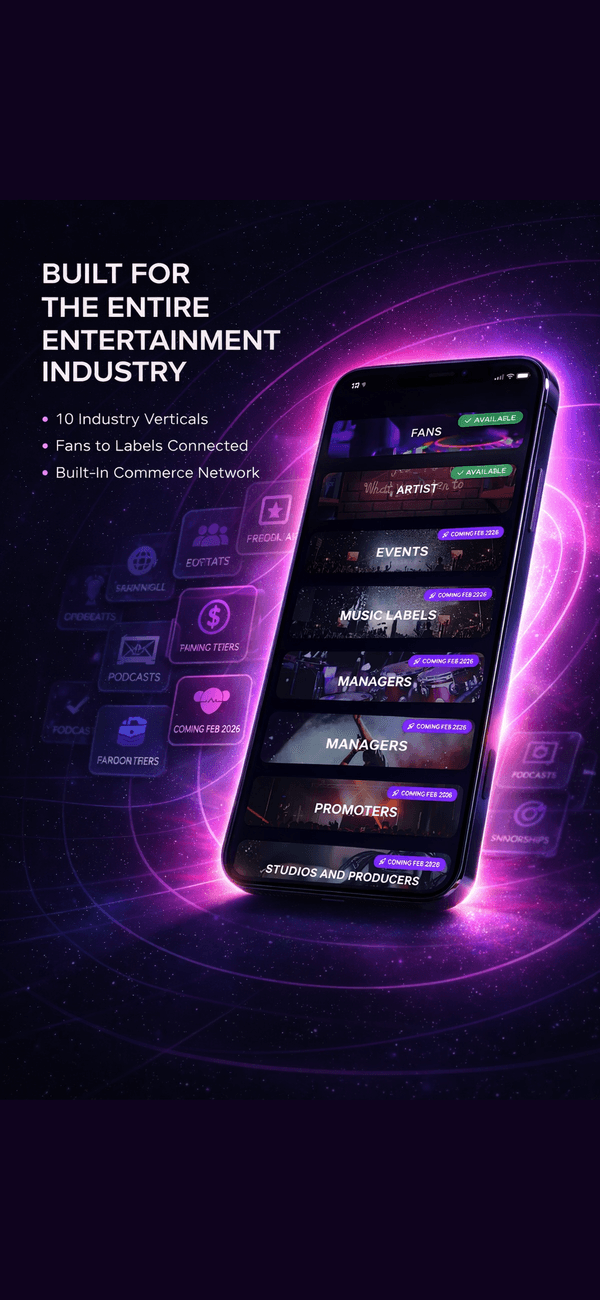
iKonX puts every side of the music business in your pocket. Artists set their own price and keep 100% of it · iKonX takes 0% platform commission. Browse, message, and book straight from the app.

How to be the musician a brand picks, step by step
- Know the four things a brand scores. Before you pitch anyone, understand what the brand is evaluating: audience fit, engagement, brand-alignment, and reliability. Every choice you make in your pitch should speak to one of those four. Brands want authenticity, audience overlap, and proof you will deliver, not a vanity follower number, so frame everything you send around what they are actually scoring.
- Lead with engagement, not reach. Pull your real numbers: engagement rate, saves, shares, comment quality, and who your audience actually is. A tight account with 5 percent-plus engagement can command 40 to 60 percent premium pricing over the average, so a small, devoted audience is a feature, not a weakness. Put the engagement story at the top of everything you send.
- Pull your audience data from the source. Use Spotify for Artists and your social analytics to document your fanbase: age range, location, gender split, top cities, and interests. A brand sponsoring you wants to know how many people will see them, what those people look like, and whether they buy. Real demographic data, not a guess, is what moves you from maybe to yes.
- Send a one-page business pitch, not just an EPK. An EPK and a bio catch attention, but the document that wins a sponsorship is a one-page business proposal: who your audience is, the exact deliverable, the price, and what the brand gets in return. Frame it around mutual benefit, not your needs. It is a business case, so make the brand's win obvious.
- Pick brands your audience already trusts. Do not pitch the biggest brand you can name. Pitch the ones whose customers look like your listeners: the local roaster, the gear shop, the niche apparel label. Brand-alignment is on the scorecard, and a partnership that feels authentic to your fans outperforms a bigger logo that feels bought. Start where the fit is obvious.
- Prove reliability before you ask for more. Deliver exactly what you promised, on time, and report the results: reach, engagement, sign-ups, sales. A clean first sponsorship with real numbers is the single best case study for the next, bigger one. Reliability is what turns a one-off deal into a renewable, year-over-year partnership.
- Close the deal directly. Agree the deliverables, dates, usage rights, and payment in writing, and get paid before you do the work. Going direct means no agency markup eating the budget, which is what makes the smaller, well-matched deals worth running. On iKonX, when sponsorships open, the artist will keep 100 percent of the price they set and iKonX will take 0 percent platform commission.
What a sponsorship actually pays, and what reaches you: the honest comparison
| How the deal reaches you | Who stands in the middle | What it costs the deal |
|---|---|---|
| iKonX | No broker · brand and artist deal directly | 0% platform commission · the artist keeps 100% of the price they set · buyer pays a flat 10% on top |
| Through a manager | The artist's manager | Roughly 15% to 20% of the artist's gross, ongoing |
| Through a booking agent | A booking or talent agent | Roughly 10% to 20% of the fee |
| Cameo (paid shoutouts) | The platform | Talent keeps 75% · Cameo takes 25% · on iOS Apple takes 30% first |
| BeatStars (selling beats) | The marketplace + app store | A 12% buyer marketplace service fee applies, and in-app sales lose roughly 30% to the app store first |
Sources and pay context, dated: a single sponsored social post commonly runs 100 to 500 dollars on Instagram and 200 to 1,000 dollars on TikTok for a nano-tier artist (1,000 to 10,000 followers), and creators with engagement above 5 percent can command 40 to 60 percent premium rates, per InfluenceFlow's 2026 sponsored-post pricing guide. Regional tour sponsorships commonly run 1,000 to 5,000 dollars per Orphiq's music sponsorship guide (May 17, 2026). Manager commission of 15 to 20 percent per Matador Talent's 2025 agent commission guide; booking agent 10 to 20 percent per Stagent's 2025 guide; Cameo talent keeps 75 percent (Cameo 25 percent, Apple 30 percent first on iOS) per Cameo's Talent Offer Terms and Influencer Marketing Hub (2025); BeatStars 12 percent buyer marketplace service fee per help.beatstars.com (2025). Ranges vary by deal. The only fixed claim is the iKonX model: artists keep 100% of the price they set, iKonX takes 0% platform commission, and the buyer pays a flat 10% on top. iKonX is free to download and explore, with full access to paid features a flat $9.99/month, and the only payout deduction is a low, sub-5% withdrawal fee, below the industry standard.
How brands pick artists to sponsor FAQ
How do brands decide which musicians to sponsor?
Brands run a four-factor selection: audience fit (do your listeners look like their customers), engagement (do those listeners actually care, in saves, shares, and comments), brand-alignment (do you genuinely connect with the product), and reliability (will you deliver and report results). Follower count is not the deciding factor. Brands consistently weigh engagement and audience loyalty over raw reach, so a small, devoted audience can win over a large, passive one.
What do brands look for when sponsoring a musician?
Authenticity, audience overlap, and proof you will deliver, not a vanity follower number. A brand wants to know how many people will see it, what those people look like demographically, and whether they buy. Creators with engagement above 5 percent can command 40 to 60 percent premium rates, per InfluenceFlow's 2026 pricing guide, which is why engagement and audience fit sit at the top of the scorecard.
Does follower count or engagement matter more for sponsorship?
Engagement. Brands buy access to a trusting audience, not a reach number, and a tight account with high engagement regularly out-earns a much larger account with weak engagement. Creators with engagement rates above 5 percent can charge 40 to 60 percent premium pricing over the average, per InfluenceFlow's 2026 sponsored-post guide. Lead with your engagement rate and audience fit, not your follower total.
What should I put in a pitch to get a brand to pick me?
A one-page business proposal, not just an EPK. Include who your audience is (age range, location, interests, pulled from Spotify for Artists and your social analytics), your engagement numbers, one clear deliverable, the price, and what the brand gets in return. Frame it around the brand's win, not your needs. The EPK catches attention; the business case is what closes the deal.
How much do brands pay to sponsor a musician?
It depends on the deliverable and your engagement. A single sponsored social post commonly runs 100 to 500 dollars on Instagram and 200 to 1,000 dollars on TikTok for a nano-tier artist, per InfluenceFlow's 2026 guide, and a regional tour sponsorship commonly runs 1,000 to 5,000 dollars, per Orphiq (May 2026). Strong engagement adds a 40 to 60 percent premium, so the same audience earns more when it is genuinely engaged.
Does iKonX take a commission on a sponsorship deal?
No. When sponsorships open, the artist will earn 100 percent of the price they set and iKonX will take 0 percent platform commission. The buyer pays a flat 10 percent on top of the artist's price. Only a low, sub-5 percent withdrawal fee, below the industry standard, applies when an artist transfers earnings out, and it is a routine transfer fee, never a commission on the deal. iKonX is free to download and explore; full access to paid features across all ten sides of the network is a flat 9.99 dollars a month.
Explore the connected sides of the network
Show business is a business. No broker.
Show a brand the audience it actually wants, set your price, and keep every dollar of the deal. Download iKonX to be ready the moment sponsorships open, where you deal with brands directly instead of waiting on a gatekeeper.

DOWNLOAD THE FREE PDF TODAY:
The Brand-Artist Sponsorship Proposal Template
A fill-in proposal a brand and an artist can agree on with no broker in the middle.
Get the free PDF ->