How to get a musician to perform live on your podcast
Book original songs the artist owns or controls, not covers, because a podcast is an on-demand download and there is no compulsory licence that covers it. Then give the artist a reason worth showing up for: a real audio setup, a clip package they can post, and a fee. Get written permission covering the performance, the episode, and the clips, signed before you record.
How the conversation gets made
Find by sound
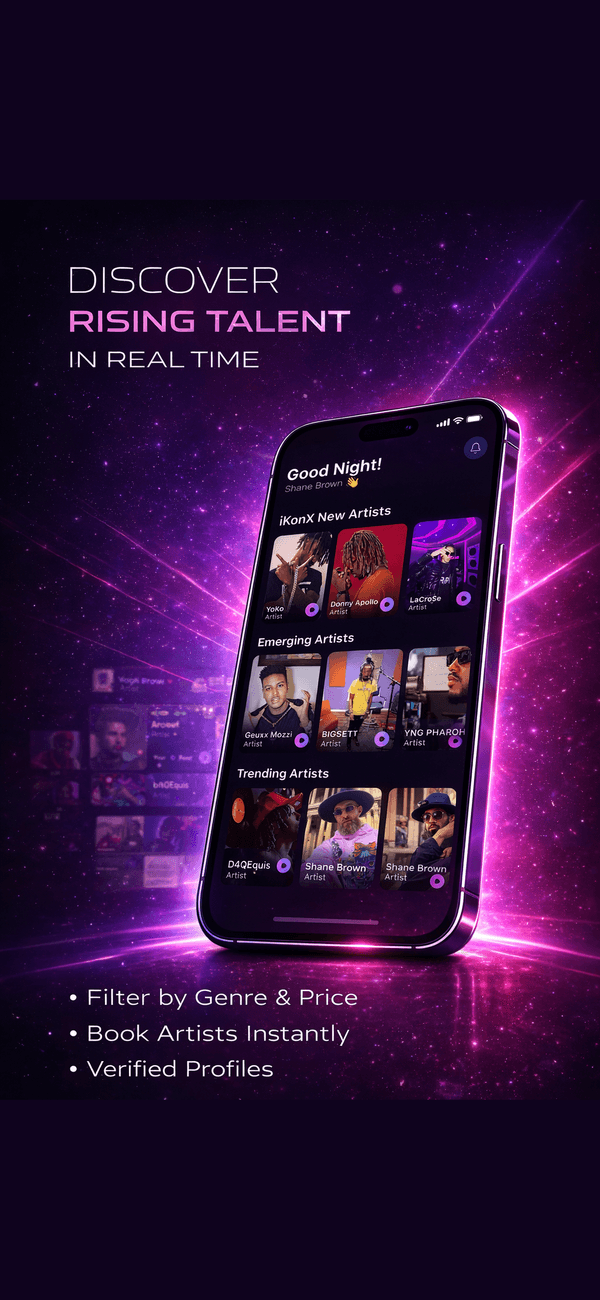
Search verified music artists by the sound your audience already loves · no publicist gate, no cold list.
Contact direct
Message the artist on-platform. The conversation starts with the person who will sit in the chair.
Book the slot
Agree the terms and lock the date. The artist keeps 100% of what they set · you pay a flat 10%.
Almost every podcast that has ever gotten a live performance wrong got the booking right and the licence wrong. The artist says yes, they turn up with a guitar, they play a cover of a song everyone loves, it is the best five minutes the show has ever recorded, and it is also the segment that can get the episode pulled.
Here is why, and it surprises people who assume there must be a licence for this. The compulsory mechanical licence in 17 U.S.C. 115 covers making and distributing phonorecords of a nondramatic musical work, and the blanket licence created by the Music Modernization Act covers digital music providers making covered activities like interactive streams and digital downloads of sound recordings. A podcast episode is generally not that. The statutory licence in 17 U.S.C. 114 covers certain non-interactive digital audio transmissions, which is what SoundExchange administers for webcasters. A podcast, sitting on demand in a feed, is not that either. Which means for a cover song on a podcast, there is no statutory shortcut. You are looking at a direct licence from the publisher, negotiated by you, at whatever price they name, if they answer at all.
The second failure is smaller and far more common: the artist shows up and the show cannot record them properly. One mic, no DI, a laptop, and a host who has never mixed an instrument in their life. The performance is the reason the artist agreed, the clip is the reason it was worth their afternoon, and a bad recording destroys the only thing they were being paid in. Do that once and the local music scene finds out.
Book the performance around what you can actually clear and actually record, and the whole thing gets simple.
Original material first. When the artist performs their own song, and they own or control both the composition and the performance, the permission you need is a permission they can personally give you, in writing, in one page. That is a completely different universe from chasing a publisher for a sync-style licence on a cover. If the song is co-written or published, the artist may not control all of it, so ask the direct question: do you control this song, and can you grant me permission to include it. If the answer is complicated, pick a different song.
Then make the offer worth an afternoon. Artists do not travel to a podcast for exposure. They travel for a clip: a properly recorded, properly shot, vertically-cropped ninety seconds they can post everywhere for the next six months. Say that out loud in the pitch, promise the raw files, and deliver them. That single line converts more music guests than any audience number you could quote.
Get the room right. A dedicated mic on the instrument, a DI where there is a pickup, a separate vocal mic, headphones, and a level check that happens before the guest is sitting there waiting. If you cannot do that, book the interview and skip the performance, or bring in an engineer for the afternoon. A performance you cannot record is not a segment, it is a favour you wasted.
Then pay the guest and paper it. One page: the artist grants you permission to record and distribute the performance in the episode and in promotional clips, they confirm they control the material, and the fee is stated. Pay it on time, directly. That is the half iKonX is being built for: the artist keeps 100 percent of the fee they set, iKonX takes 0 percent platform commission, and the buyer pays a flat 10 percent on top. iKonX is free to download and explore, and full access to paid features is a flat $9.99 a month. Straight about the boundary: iKonX does not clear music, issue licences, or replace a lawyer for a cover song. It handles the fee.
The whole network lives in one app.
iKonX puts every side of the music business in your pocket. Artists set their own price and keep 100% of it · iKonX takes 0% platform commission. Browse, message, and book straight from the app.

The best guest isn't the most famous · it's the one your audience discovers here first.
How to book a live performance on your podcast, step by step
How do small podcasts land notable guests without a booking agent or a budget?
- Ask for original material and confirm they control it. Ask directly: is this your song, do you control the composition and the recording, and can you grant me permission to include it in the episode and in clips? Co-writes and published songs get complicated fast. If the answer is not a clean yes, pick a different song. This one question prevents nearly every licensing problem a podcast can have.
- Do not book covers unless you have cleared them properly. There is no compulsory licence that covers a cover song on a podcast. 17 U.S.C. 115 covers phonorecords and the MMA blanket licence covers digital music providers, and 17 U.S.C. 114 covers non-interactive transmissions like webcasting. A podcast episode sitting on demand in a feed is generally none of those. A cover means a direct licence from the publisher, at their price. Practical guidance, not legal advice.
- Sell the clip, not the exposure. Artists do not travel for a plug. They travel for a properly recorded, properly shot ninety-second clip they can post for six months. Say it in the pitch: dedicated audio, multi-angle video, vertical crop, raw files delivered within a week. That single promise books more music guests than any download number you could name.
- Build the room before they arrive. A dedicated instrument mic, a DI for anything with a pickup, a separate vocal mic, headphones, and a level check done before the guest is sitting there waiting on you. If you genuinely cannot record a performance well, book the interview and skip the performance, or hire an engineer for the afternoon. A badly recorded session destroys the only thing the artist came for.
- Paper it and pay it. One page signed before you hit record: permission to record and distribute the performance in the episode and in promotional clips, a confirmation that the artist controls the material, and the fee. Then pay the fee on the day, directly through iKonX, where the artist keeps 100 percent of what they set. A guest who gets paid on time tells other artists. So does one who does not.
Three kinds of live podcast performance (and what each one requires)
| Artist's own song, they control it | Artist's own song, published or co-written | A cover of someone else's song | |
|---|---|---|---|
| Who can grant permission | The artist, on one page | The artist plus the publisher or co-writers | The publisher, and only if they answer |
| Statutory shortcut available | Not needed, you have direct permission | No | No, 115 and 114 do not cover podcasts |
| Time to clear | Same day | Weeks, sometimes | Weeks to never |
| Risk if you skip it | Low, but still get it signed | Real | The episode gets pulled |
| What to do | Book it | Ask the direct question first | Pick a different song |
| Paying the guest | Same in all three: pay directly on iKonX · artist keeps 100% of the fee · 0% platform commission · buyer pays a flat 10% on top | ||
Sources and dates. 17 U.S.C. 115 (live, July 2026): the compulsory licence covers making and distributing phonorecords of a nondramatic musical work, and the Music Modernization Act blanket licence administered by the Mechanical Licensing Collective covers covered activities by digital music providers, such as permanent downloads, limited downloads, and interactive streams of sound recordings. A podcast episode is generally outside those covered activities. 17 U.S.C. 114: the statutory licence covers certain non-interactive digital audio transmissions, which is the basis for webcasting under SoundExchange, and an on-demand podcast is not a non-interactive transmission. 17 U.S.C. 106: the exclusive rights of reproduction, distribution, public performance, and public performance by digital audio transmission all sit with the copyright owner absent a licence. The practical conclusion is that a cover song on a podcast requires a direct licence negotiated with the rights holders. Clip-value and guest-booking behaviour are market observation from 2026, not published statistics. Practical guidance, not legal advice. The iKonX model is the only fixed claim here: artists keep 100% of the price they set, iKonX takes 0% platform commission, the buyer pays a flat 10% on top, iKonX is free to download and explore, full access to paid features is a flat $9.99/month, and the only payout deduction is a low, sub-5% withdrawal fee, below the industry standard.
Direct contact. No publicist. The artist keeps 100%.
Live podcast performance FAQ
Can a musician play a cover song on my podcast?
Not without a direct licence from the publisher. There is no compulsory licence that reaches podcasts: 17 U.S.C. 115 covers phonorecords and the MMA blanket licence covers digital music providers, while 17 U.S.C. 114 covers non-interactive transmissions like webcasting. An on-demand episode in a feed is neither. Book original material the artist controls instead, and the problem disappears. Practical guidance, not legal advice.
What permission do I need for an artist's own song?
One signed page, from the artist, before you record: permission to record and distribute the performance in the episode and in promotional clips, plus their confirmation that they actually control the composition and the recording. If the song is co-written or published, they may not control all of it, so ask that question directly and pick a different song if the answer is complicated.
How do I convince a musician to perform live on my show?
Offer a clip, not exposure. Promise a properly recorded, properly shot, vertically cropped ninety seconds they can post for the next six months, and promise the raw files within a week. Then deliver both. That single offer books more music guests than any download number, because it is the only thing you are giving them that has a shelf life.
What do I need in the room to record a performance properly?
A dedicated mic on the instrument, a DI for anything with a pickup, a separate vocal mic, headphones, and a level check completed before the guest sits down. If you cannot do that, either hire an engineer for the afternoon or book the interview without the performance. A badly recorded session wastes the artist's day and the local scene hears about it.
Should I pay a musician to perform on my podcast?
Yes, if you are asking them to travel, set up, and perform. An interview is a conversation. A performance is a booking, and it costs the artist a working afternoon. Pay a fee, put it in the one-pager, and pay it on the day. Paying reliably is how you get the second guest, and the fifth.
Does iKonX clear the music for my podcast?
No. iKonX does not clear music, issue licences, or replace a lawyer for a cover song, and nothing here is legal advice. What it handles is the fee: you pay the musician directly, the artist keeps 100 percent of the price they set, iKonX takes 0 percent platform commission, and you pay a flat 10 percent on top. iKonX is free to download and explore, full access to paid features is a flat $9.99 a month, and the only deduction on the artist's side is a low, sub-5 percent withdrawal fee, below the industry standard.
Explore the connected sides of the network
Your next guest is one message away.
Book the song they control, sell them the clip, and sign one page before you hit record. Download iKonX and pay your music guests directly, on the day.

DOWNLOAD THE FREE PDF TODAY:
The Music-Guest Booking Kit
Outreach DM templates + a sound-fit guest-vetting checklist for landing music artists as podcast guests.
Get the free PDF ->