How to write a podcast guest agreement for a musician
One page, signed before you hit record, covering four things: permission to record and publish the interview, who owns the episode, a separate written license for any of the guest's music you play, and what clips you may cut and where you may post them. Add payment terms if the guest is paid, and a disclosure line if the episode is sponsored.
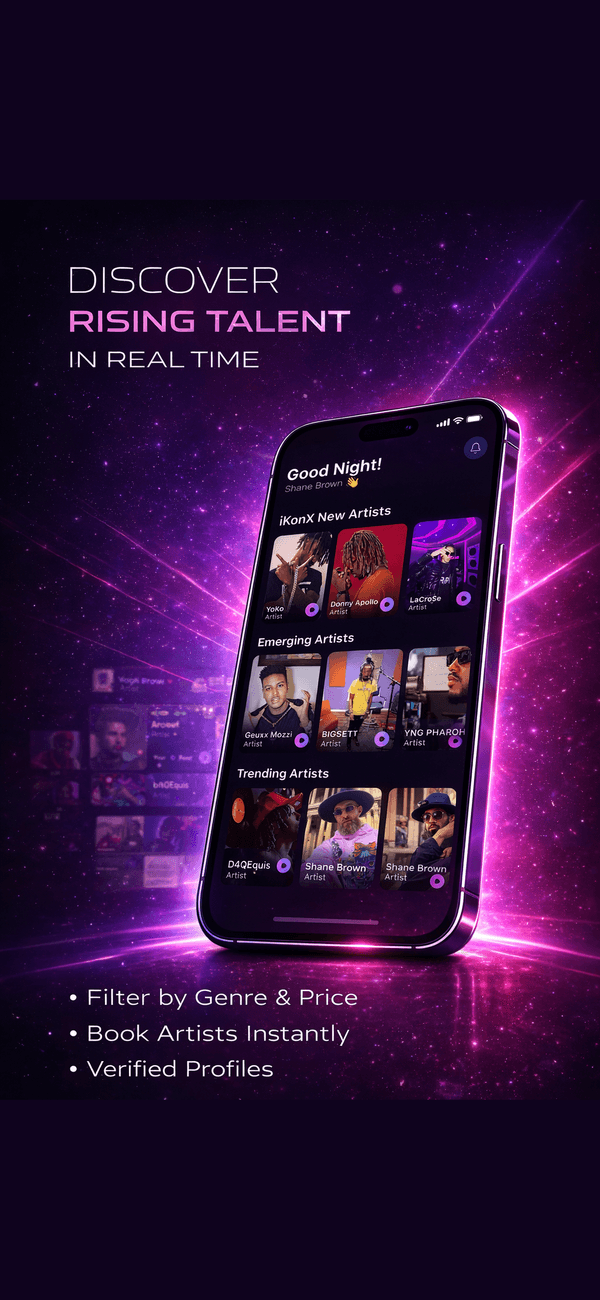
How the conversation gets made
Find by sound
Search verified music artists by the sound your audience already loves · no publicist gate, no cold list.
Contact direct
Message the artist on-platform. The conversation starts with the person who will sit in the chair.
Book the slot
Agree the terms and lock the date. The artist keeps 100% of what they set · you pay a flat 10%.
Most podcasters run on trust, and it works right up until it does not. The interview is great, the artist is generous, everybody hugs. Six months later the artist signs, their new team hears the episode, and an email arrives asking you to take it down, or to pull the song you played under the intro, or to remove the clip that has 400,000 views on TikTok. Nothing was agreed in writing, so the argument is not about who is right. It is about who has the stomach for it.
The music is the sharper edge. Interviewing a musician and playing their song are two entirely different acts. Under 17 U.S.C. 106 the copyright owner holds the exclusive rights to reproduce the work, to distribute copies, and to publicly perform it, and a podcast episode with a song in it does all three. The artist sitting across from you may own the master and be delighted for you to play it, and still not control the composition, because a publisher or a co-writer does. Verbal permission from the person in the room is not a license from everyone who owns the song.
Then there is ownership of the recording itself. A recorded interview is a copyrightable work, and 17 U.S.C. 201 vests copyright initially in the author, with the employer treated as the author only in a genuine work-made-for-hire situation. A transfer of copyright ownership is not valid unless it is in writing and signed, under 17 U.S.C. 204(a). Which means the podcast you assume you own is only unambiguously yours when someone wrote it down.
A podcast guest agreement for a musician is one page, plain language, signed before the record button. It covers four things, and each one is a fight you are pre-empting.
First, the release. The guest gives you permission to record the conversation and to publish, distribute, and promote the episode, including their name, voice, likeness, and image, on your feed and on the platforms you distribute to. Simple, mutual, and the thing that makes the episode safe to leave up.
Second, ownership. State plainly that you own the recording of the interview and the episode as produced, and grant the guest a clear license back to share and promote it, because they will want to and you want them to. Guests are far more comfortable signing when the agreement gives them something instead of only taking.
Third, the music, which is the clause people forget. If you play any of the guest's music in the episode, treat it as a separate written permission and be specific: which track, which portion, whether it is used as an intro, an outro, a bed, or a full play, and confirm in the document that the guest either controls the rights or has secured permission from the other owners. If the guest does not control the composition, you are being told that a publisher does, and that is information worth having before the episode ships, not after.
Fourth, clips. Say exactly what you may cut and where you may post it, because short-form is where the episode actually travels. An agreement that permits the full episode but is silent on clips is an agreement that fails on the only surface that matters in 2026.
Two additions. If the guest is paid to appear, put the fee and the timing in the same document, and pay them through iKonX, where the artist keeps 100 percent of the price they set, iKonX takes 0 percent platform commission, and you pay a flat 10 percent on top. And if the episode is sponsored or you have a material connection to something being endorsed, disclose it clearly, because the FTC's Endorsement Guides at 16 CFR Part 255 require material connections to be disclosed clearly and conspicuously.
The honest state of iKonX today: it is a live, downloadable app where podcasters reach real artists and pay them directly, and a podcast-side booking workflow with guest scheduling and agreement templates is on the roadmap. What already works is the reach and the payment, at 0 percent commission. iKonX is free to download and explore, full access to paid features is a flat 9.99 dollars a month, and the only artist-side deduction is a low, sub-5 percent withdrawal fee.
The whole network lives in one app.
iKonX puts every side of the music business in your pocket. Artists set their own price and keep 100% of it · iKonX takes 0% platform commission. Browse, message, and book straight from the app.

The best guest isn't the most famous · it's the one your audience discovers here first.
How to write the agreement, step by step
How do small podcasts land notable guests without a booking agent or a budget?
- Start with the recording release. The guest grants permission to record the conversation and to publish, distribute, and promote the episode, including their name, voice, likeness, and image, across your feed and distribution platforms. Keep it in plain English. A page an artist can read in two minutes gets signed. A five-page legal document gets ignored until the day of, and then it does not get signed at all.
- Say who owns the episode. State that you own the recording and the produced episode, and grant the guest a license back to share and promote it. Under 17 U.S.C. 204(a) a transfer of copyright ownership needs a signed writing, so the sentence that says you own it is the sentence that makes it true. Giving the guest sharing rights back costs you nothing and closes the deal.
- License the music separately, and name the track. Playing their song is not covered by an interview release. Specify the track, the portion, and the use (intro, bed, outro, full play), and have the guest confirm they control the rights or have secured permission from any other owners, because 17 U.S.C. 106 gives the copyright owner exclusive reproduction, distribution, and public performance rights. If they only control the master, a publisher controls the rest.
- Spell out the clips. Name the platforms and the permitted clip length, and confirm you may caption, subtitle, and edit for length. Short-form clips are where the episode travels, so an agreement that is silent on clips has a hole in the only place that matters.
- Add the fee, and the disclosure if it is sponsored. If the guest is paid, put the fee, the timing, and the payment method in the same page and pay them through iKonX so the artist keeps 100 percent of the price they set at 0 percent platform commission. If the episode is sponsored, disclose it clearly and conspicuously per the FTC Endorsement Guides at 16 CFR Part 255. Practical guidance, not legal advice.
What the agreement covers vs. what a handshake covers
| Six months later, when it matters | Signed one-page agreement | Verbal yes in the room |
|---|---|---|
| Episode stays up | Yes, the release covers publication and promotion | Depends on who has the stomach for the argument |
| Who owns the recording | Written and signed, per 17 U.S.C. 204(a) | Genuinely unclear |
| The song you played | Named track, named use, rights confirmed | Exclusive rights under 17 U.S.C. 106 belong to owners who never spoke to you |
| The clip with 400k views | Permitted, platforms named | A takedown request waiting to happen |
| Paying the guest | Fee and timing on the page, paid through iKonX at 0% platform commission | An invoice nobody agreed to |
Sources and dates. 17 U.S.C. 106 (live, July 2026): the copyright owner holds the exclusive rights to reproduce the work, distribute copies, and perform the work publicly, so playing a guest's recording inside a published episode implicates rights in both the sound recording and the underlying composition, which may be owned by different parties. 17 U.S.C. 201: copyright vests initially in the author, and the employer is treated as the author only in a work made for hire. 17 U.S.C. 204(a): a transfer of copyright ownership is not valid unless it is in writing and signed by the owner of the rights conveyed. FTC Endorsement Guides, 16 CFR Part 255: material connections between an endorser and a marketer must be disclosed clearly and conspicuously. Practical guidance, not legal advice. The iKonX model is the only fixed claim: artists keep 100% of the price they set, iKonX takes 0% platform commission, the buyer pays a flat 10% on top, iKonX is free to download and explore, full access to paid features is a flat $9.99/month, and the only payout deduction is a low, sub-5% withdrawal fee, below the industry standard.
Direct contact. No publicist. The artist keeps 100%.
Podcast guest agreement FAQ
Do I really need a written agreement for a podcast guest?
For a musician, yes. The interview is one right, the music is another, and the clips are a third. A one-page release signed before you record settles all three while everyone is happy, instead of six months later when the artist has a new team and the clip has 400,000 views.
Can I play the guest's song in the episode if they say yes?
Only if they actually control the rights. Under 17 U.S.C. 106 the owner holds exclusive reproduction, distribution, and public performance rights, and a recording carries two copyrights: the master and the composition. Your guest may own the master and not the publishing. Name the track and the use in the agreement and have them confirm the rights, or clear it with the publisher. Not legal advice.
Who owns the recording of the interview?
Whoever the signed agreement says. Do not assume it defaults to you: 17 U.S.C. 201 vests copyright in the author and treats the employer as author only in a genuine work made for hire, and 17 U.S.C. 204(a) requires a signed writing to transfer ownership. State that you own the episode and license it back to the guest for sharing.
What should the agreement say about clips?
Name the platforms, the permitted clip length, and your right to caption, subtitle, and edit for length. Short-form clips are how the episode actually reaches people, so an agreement that permits the episode but says nothing about clips leaves a hole exactly where the value is.
How do I pay a musician for appearing on my podcast?
Put the fee and the payment timing in the same one-page agreement, then pay through iKonX. The artist keeps 100 percent of the price they set, iKonX takes 0 percent platform commission, and you pay a flat 10 percent on top. iKonX is free to download and full access to paid features is a flat 9.99 dollars a month.
Do I have to disclose if the episode is sponsored?
Yes. The FTC Endorsement Guides at 16 CFR Part 255 require material connections between an endorser and a marketer to be disclosed clearly and conspicuously. If a brand paid for the episode, or paid the guest to talk about a product, say so plainly in the episode and in the description. Not legal advice.
Explore the connected sides of the network
Your next guest is one message away.
One page, signed before you record, covering the release, the music, and the clips. Download iKonX and pay your music guests directly, at 0 percent commission.

DOWNLOAD THE FREE PDF TODAY:
The Music-Guest Booking Kit
Outreach DM templates + a sound-fit guest-vetting checklist for landing music artists as podcast guests.
Get the free PDF ->