How to book a venue for a show
Booking a venue is a pitch, not a purchase. The venue is not really selling you a room, it is deciding whether you can fill it, because their money is made at the bar and their risk is an empty Tuesday. So lead with proof of draw, not with the artist's biography. Contact the talent buyer or booking manager by name, propose two or three specific dates rather than asking what is available, and bring evidence: past attendance, local ticket sales, and a local following in that actual city. Expect one of three deal structures: a straight rental where you take all the risk, a door split where you and the venue share ticket revenue, or a guarantee against a percentage where the artist is paid a floor and takes upside above it. Then budget for what first time promoters forget entirely: sound, security, ticketing fees, insurance, and the venue's public performance licensing. The show does not lose money on the artist fee. It loses money on the line items nobody mentioned.
A first time promoter sends an email to a venue that reads like a fan letter. It talks about the artist's sound, their influences, and how special the night is going to be. It asks whether the venue has any availability. It does not contain a single number.
The talent buyer reads eleven seconds of it and moves on, because they have a business problem, and it is not curatorial. They have a room with a fixed capacity, a bar that has to sell, staff who have to be paid, and a calendar with holes in it that cost money every time one goes unfilled. They are trying to work out one thing: will this person put bodies in my room on a Thursday. Nothing in the email answered that, so the answer is no.
Then, when a venue does say yes, the second failure arrives, and it is the one that actually costs money. The promoter budgeted the artist fee and the room, and nothing else. Then come the costs that were always going to be there: the sound engineer, the door staff, the security, the ticketing platform's cut, the insurance certificate the venue requires, and the public performance license that has to exist for live music to be legally performed. A show that looked profitable on a napkin quietly loses money on line items that were never on the napkin.
How to book the venue, step by step
Rebuild the pitch around the venue's actual question. Open with the number: the artist sold out a two hundred cap room in this city in March, or they have six thousand monthly listeners inside this metro, or the last show you promoted moved a hundred and forty tickets. One verifiable number of local draw is worth more than every adjective in the email.
Then make it easy to say yes. Name the talent buyer. Propose specific dates instead of asking what is open, because asking what is open makes your show their homework. Say the capacity you expect to fill, the deal structure you are proposing, and the support acts. Attach the EPK link, not nine files.
Understand the deal you are being offered before you accept it. A straight rental means you pay for the room and every ticket is yours, which is maximum upside and maximum risk. A door split shares the ticket revenue and shares the pain. A guarantee against a percentage pays the artist a floor with upside above a break point. None of these is the good one. The right one depends entirely on how confident you actually are, and a first time promoter who takes a straight rental on optimism is the classic way to lose a month's income in one night.
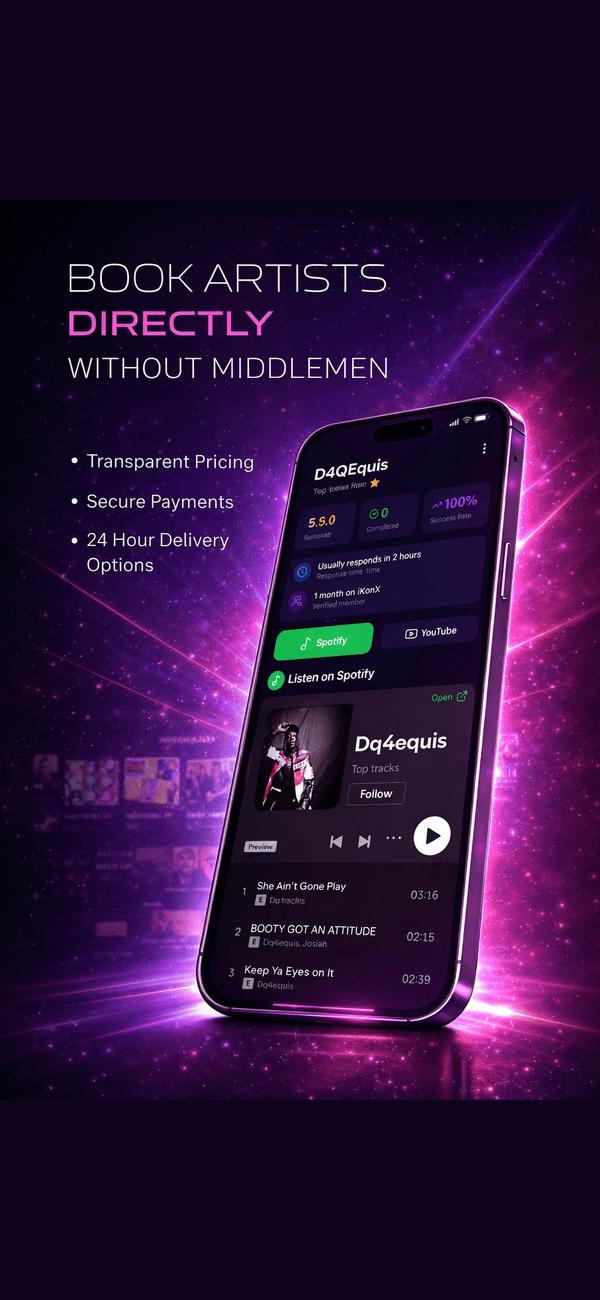
Then build the budget with every line in it, including the ones nobody mentions, and get the artist locked with a paid deposit rather than a verbal yes. On iKonX you can book the artist through their verified page at a price they publish, so the fee is agreed in writing before you commit to a room, and the artist keeps 100% of the price they set, iKonX takes 0% platform commission, and you pay a flat 10% on top. iKonX is free to download and explore, full access to paid features is a flat $9.99/month, and the only payout deduction is a low, sub-5% withdrawal fee when you transfer earnings out, below the industry standard.
Empty date
You have a room and a night with nothing on it yet.
Browse artists
Search verified indie acts with transparent pricing. No agent, no gatekeeper.
Lock the fee
Agree the price the artist set. They keep 100% · you pay a flat 10% on top.
Confirm + pay
Message direct, confirm the details, and pay securely in the app.
Doors open
The act shows up, the room fills, you book the room and keep the night.
Move this week · the good dates fill fastest.
The whole network lives in one app.
iKonX puts every side of the music business in your pocket. Artists set their own price and keep 100% of it · iKonX takes 0% platform commission. Browse, message, and book straight from the app.

Transparent booking fees, no surprises
$300 to $600
A local indie act for a small private show or pop-up.
100% to artist$600 to $1.5k
A headline slot or support for a ticketed venue night.
You pay flat 10%$1.5k and up
A lineup placement scaled to the act and the draw.
No broker cutThe three deals a venue will offer, and who carries the risk
| Deal structure | Who carries the risk | When it is the right call |
|---|---|---|
| Straight rental | You · you pay for the room whether ten people come or three hundred | Only when you have hard evidence of the draw. Optimism is not evidence |
| Door split | Shared · the venue takes a percentage of ticket revenue | The default for a first show. Less upside, and far less chance of a disaster |
| Guarantee against a percentage | You guarantee the artist a floor · they take upside above a break point | When the artist needs certainty and you believe the room will beat the break point |
| Artist fee booked on iKonX | Agreed in writing before you commit to the room | Always · the artist keeps 100% of the price they set · 0% platform commission · you pay a flat 10% on top |
Public performance of live music generally requires licensing from performing rights organizations, and most established venues carry blanket licenses covering the works in those repertories (ASCAP published licensing information for music users, 2025; BMI published licensing information, 2025). Confirm in writing which party holds the license rather than assuming, because responsibility follows the agreement. Deal structures, venue fees, and ticketing platform charges vary widely by market and room, so treat every figure as a range and not a quote. The only fixed claim here is the iKonX model: the artist keeps 100% of the price they set, iKonX takes 0% platform commission, and the buyer pays a flat 10% on top. iKonX is free to download and explore, full access to paid features is a flat $9.99/month, and the only payout deduction is a low, sub-5% withdrawal fee when you transfer earnings out, below the industry standard.
Venue booking FAQ
What does a venue actually want to hear in a booking pitch?
Evidence you will fill the room. Tickets sold at past shows, local listener numbers in that city, and attendance figures. They make their money at the bar and their risk is an empty night. The artist's influences and biography do not answer their question.
Should I ask the venue what dates they have open?
No. Propose two or three specific dates instead. Asking what is available turns your show into their homework, and homework gets deleted. Offering dates turns it into a yes or no decision, which is the only decision you want them making.
What is the safest deal structure for a first show?
Usually a door split. A straight rental gives you all the upside and all the risk, which is a fine trade only when you have hard evidence of the draw. First time promoters most often lose money by taking a rental on optimism rather than on ticket data.
What costs do first time promoters forget?
Sound engineer, security, door staff, ticketing platform fees, insurance, and public performance licensing. The show almost never loses money on the artist fee. It loses money on the line items that were never on the napkin.
Do I need a music license to put on a show?
Live public performance generally requires licensing from performing rights organizations, and most established venues hold blanket licenses. Confirm in writing which party carries it, because assuming the venue has it covered is a bad place to find out you were wrong.
Explore the connected sides of the network
Book the room. Keep the night.
Lock the artist at a published price before you commit to a room. Download iKonX.

DOWNLOAD THE FREE PDF TODAY:
The Indie Booking Kit
Offer templates, a fee-range guide, and a doors-to-payout checklist for booking an indie act.
Get the free PDF ->