What to put in a recording studio contract
A recording studio contract exists to settle eight arguments before they can start. It needs the rate and exactly what the rate includes, the deposit and whether it is refundable, the overtime rate and when it kicks in, the number of revisions included and the price of each one after that, the no show and late cancellation policy with a specific notice window, the file delivery terms including formats and what happens to session stems, the ownership question stating plainly that the client owns the master recording while the studio owns nothing unless it is written otherwise, and the payment terms including the sentence that files are released when the balance is paid. Add the copyright line explicitly, because a sound recording has an author by default and silence on that point is what turns a routine session into a dispute. Every clause on that list exists because a studio somewhere lost money by not having it.
Studios almost never lose money on the rate. They lose it in the gaps around the rate. The session that was booked for four hours runs seven because the artist showed up ninety minutes late with a friend who had opinions. The mix that was one revision becomes nine, each one arriving as a voice note at midnight saying can you just try one more thing. The client who booked Saturday simply does not appear, and the room sat empty on the best paying day of the week.
Then comes the worst one, the one that ends relationships. The session is done, the balance is unpaid, and the artist wants the files. The engineer, wanting to be reasonable, sends the rough mix so the artist can sit with it. The artist releases the rough mix. The balance is never paid. There was nothing in writing, so there is nothing to point to, and the studio is left arguing about ethics with someone who already has what they wanted.
Underneath all of it is the ownership question nobody raises because it feels awkward. Who owns the master. Who owns the session stems. Can the studio use the track in a showreel. Silence there is not neutrality, it is a default, and defaults surface at the exact moment the song starts making money and everyone suddenly has a very confident memory of what was agreed.
Four channels artists book you for
List the room and the rate · get found by artists ready to track.
Per-song or per-stem · transparent pricing artists can say yes to.
Get booked for the final pass · a steady stream, not word of mouth.
Home studio, no big credits? List the work · the room speaks for itself.
Write one page and send it with every booking, before the deposit is taken. Not a nine page legal instrument that scares off working artists, one page in plain English that names each of the eight arguments and settles it in a sentence. A client who reads that page and books anyway is a client who has already agreed to your terms, which is most of the fight.
Three clauses carry most of the weight. The deposit clause, because a booking without money attached is a wish. The revision clause, because unbounded revisions are how a profitable mix becomes an unpaid month. And the files-on-payment clause, stated flatly: mixes are delivered when the balance clears. That single sentence, agreed in advance, prevents the entire category of dispute where a studio ends up chasing money for work the client already has.
Say the ownership line explicitly too. In most independent sessions the intent is that the client owns the master and the studio is paid a service fee, so write that down. Under US copyright law a sound recording has an author from the moment it is fixed, and work made for hire is a specific legal arrangement with formal requirements rather than something that happens automatically because money changed hands. Guessing about that after the fact is expensive.
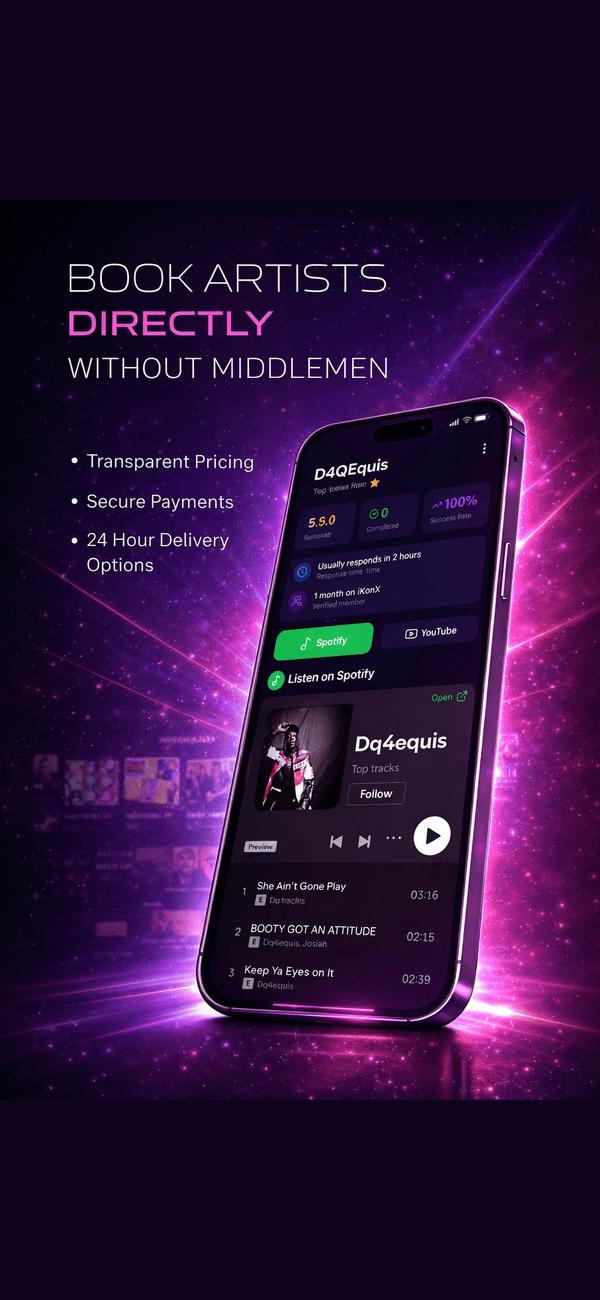
Then make the payment itself boring. The reason studios chase invoices is that the money and the work are separated in time. On iKonX a studio can publish its rate on a verified page and take the deposit before the room is held, and the studio keeps 100% of the price it sets, iKonX takes 0% platform commission, and the client pays a flat 10% on top. Paid before the session, not chased after it. iKonX is free to download and explore, full access to paid features is a flat $9.99/month, and the only payout deduction is a low, sub-5% withdrawal fee when you transfer earnings out, below the industry standard.
The whole network lives in one app.
iKonX puts every side of the music business in your pocket. Artists set their own price and keep 100% of it · iKonX takes 0% platform commission. Browse, message, and book straight from the app.

The eight clauses, and what each one has to say
- Rate and inclusions. The hourly or day rate, what it includes, and what it does not. Name the engineer. Say whether an assistant, backline, or mixing is inside the number or billed separately.
- Deposit and refundability. The amount, when it is due, and whether it is refundable. A held room with no deposit is not a booking, it is an option you gave away for free.
- Overtime. The rate after the booked block ends and the increment it bills in. State it up front so running long is a decision the client makes with a price attached, not an argument at 2am.
- Revisions. How many are included, what counts as one, and the price of each additional pass. Unbounded revisions are the single most common way a profitable mix turns into unpaid labor.
- No shows and late cancellation. The notice window and what is forfeited inside it. The empty Saturday is the most expensive thing that can happen to a studio and the easiest to prevent on paper.
- File delivery and stems. Formats, timeline, and how long you archive session files. Say whether stems are included in the price or billed, because that question always comes and it always comes later.
- Ownership of the master. State plainly who owns the recording. In most independent sessions the client owns the master and the studio is paid a service fee. Work made for hire is a specific legal arrangement, not an automatic result of paying an invoice, so write down what you actually mean.
- Payment terms, and files on payment. Balance due before final delivery. Files release when the balance clears. On iKonX you publish the rate, take the deposit before the room is held, and keep 100 percent of the price you set at 0 percent platform commission.
What each clause is actually protecting you from
| Clause | The argument it prevents | What it costs you to leave out |
|---|---|---|
| Deposit | The client who books the room and never appears | An empty Saturday, which is the highest value slot you have |
| Revisions | The mix that gets nine more passes for free | Weeks of unpaid work on a session you already invoiced |
| Files on payment | The artist who has the mix and stops replying | The entire balance, plus a released record you were never paid for |
| Master ownership | Who owns the recording once the song earns | A dispute that surfaces at the worst possible moment, with money on the table |
| Payment up front via iKonX | Chasing an invoice after the work is delivered | Nothing · you keep 100% of the price you set · 0% platform commission · client pays a flat 10% on top |
US copyright law provides that copyright in a sound recording vests initially in its author or authors, and that a work made for hire is a specific legal category with formal requirements rather than an automatic consequence of payment (17 U.S.C. section 101 and section 201, US Copyright Office, 2025; Circular 56, Copyright Registration of Musical Compositions and Sound Recordings, 2025). This is why a studio contract should state master ownership explicitly rather than leave it to a default nobody in the room has read. This is general information and not legal advice; have a music attorney review your template. The only fixed claim here is the iKonX model: the artist or studio keeps 100% of the price they set, iKonX takes 0% platform commission, and the buyer pays a flat 10% on top. iKonX is free to download and explore, full access to paid features is a flat $9.99/month, and the only payout deduction is a low, sub-5% withdrawal fee when you transfer earnings out, below the industry standard.
The best room in town does nothing if no artist can find it.
Studio contract FAQ
Does a small studio really need a written contract?
Yes, and it can be one page. Every clause on the standard list exists because a studio somewhere lost money without it. The deposit, the revision limit, and the files-on-payment line alone will pay for the ten minutes it takes to write the page.
Who owns the master recording after a paid session?
Whatever you wrote down. In most independent sessions the intent is that the client owns the master and the studio is paid a service fee, but copyright in a sound recording vests in its author by default and work made for hire is a specific legal arrangement, not an automatic result of payment. Write the ownership line explicitly.
Should I release files before the balance is paid?
No, and the contract should say so before the session, not after. Files release when the balance clears. Sending a rough mix to a client who has not paid is how studios end up watching a released record they were never paid for.
How many revisions should be included?
Pick a number, write it down, and price every pass after it. Two or three is common. The exact number matters far less than the fact that there is a number, because unbounded revisions are the most reliable way to turn a profitable mix into unpaid work.
How do I stop chasing deposits and invoices?
Take the money before the room is held. On iKonX a studio publishes its rate on a verified page and collects up front, and the studio keeps 100 percent of the price it sets, because iKonX takes 0 percent platform commission and the client pays a flat 10 percent on top.
Explore the connected sides of the network
Built for the room.
Publish your rate, take the deposit before the room is held, and keep 100 percent of it. Download iKonX.

DOWNLOAD THE FREE PDF TODAY:
The Studio Booking Checklist
Everything to confirm before a session books · rates, room specs, deposit, and turnaround.
Get the free PDF ->