Labels JOIN THE NETWORK · LABELS

Is it worth starting a label in 2026?

Unsigned artist ▲ Momentum
Stage Genre ▲ Momentum ✓ Verified

The room already pulled. Career-stage matched, verified, reachable direct.

142 New unsigned artists this week
100% Career-stage matched
0 Gatekeepers between you and contact
The short answer

Starting a label in 2026 is worth it only if you are buying one of three things: distribution leverage, working capital, or an audience you already control. If you have none of those, you are not starting a label, you are starting an LLC that pays for someone else's marketing. The upside is real, because independent deals now commonly run 50/50 to 60/40 in the artist's favor while major-label royalties sit at 13 to 20 percent. The catch is that a label is a portfolio business, and one artist is not a portfolio.

01 · Discovery

Most people asking whether a label is worth starting are really asking something else: can I make money in music without being the artist? That is a fair question, and the label route is one of the harder answers to it.

The structural problem is that a record label is a venture portfolio wearing a music jacket. You front money against an uncertain return on each act, and most acts will not return it. Traditional label economics assume a small number of successes carry a much larger number of write-offs. That works across twenty acts. It does not work across one, because one artist is not a portfolio, it is a bet.

The second problem is access. The major-label ladder that used to justify a small label as a feeder system has largely pulled itself up. Universal, Warner and Atlantic all decline unsolicited material outright, and submissions have to arrive through an established industry referral. Meanwhile roughly 2 percent of unsolicited demo submissions get any response from major labels, and indie A and R teams are swamped. The idea of building a small roster and flipping an act upward runs through a much narrower door than it did a decade ago.

The third problem is that the artist knows what you know. Distribution is cheap and self-serve. If your offer is that you will upload the record, the artist can do that themselves, keep the masters, and skip you entirely.

02 · Signal

The version that works in 2026 starts from a different question: what do I have that an artist cannot buy for a subscription fee? There are three honest answers, and each maps to a viable model.

Leverage. You have relationships that place records: playlist and press contacts, sync placements, radio, retail. That is a services label, and it can charge for outcomes an artist cannot manufacture alone.

Capital. You can front recording, video and marketing money and wait to be repaid. That is the closest thing to a classic label, and it is where the 50/50 to 60/40 splits now common in independent deals are earned rather than assumed. It is also the model that most needs a portfolio, because your money is at risk on every act.

Audience. You already own attention: a channel, a venue, a party series, a regional scene. This is the most underrated model in 2026, because a label with a built-in audience is really a media brand that also owns masters, and it is the only version where a single act can work.

Where iKonX fits is the front of the funnel, which is where new labels waste the most money. The expensive part of starting a label is not the paperwork, it is finding and vetting artists worth signing. iKonX is the discovery and direct-contact layer: verified artist profiles, direct contact with no gatekeeper, and no A and R subscription stack to maintain. When you book a paid collaboration through the platform, the artist keeps 100 percent of the price they set, iKonX takes 0 percent platform commission, and the buyer pays a flat 10 percent on top.

Be clear on the boundary: Labels is a roadmap side of iKonX, launching soon. Today it solves scouting and direct contact, not contracts, royalty accounting, or distribution.
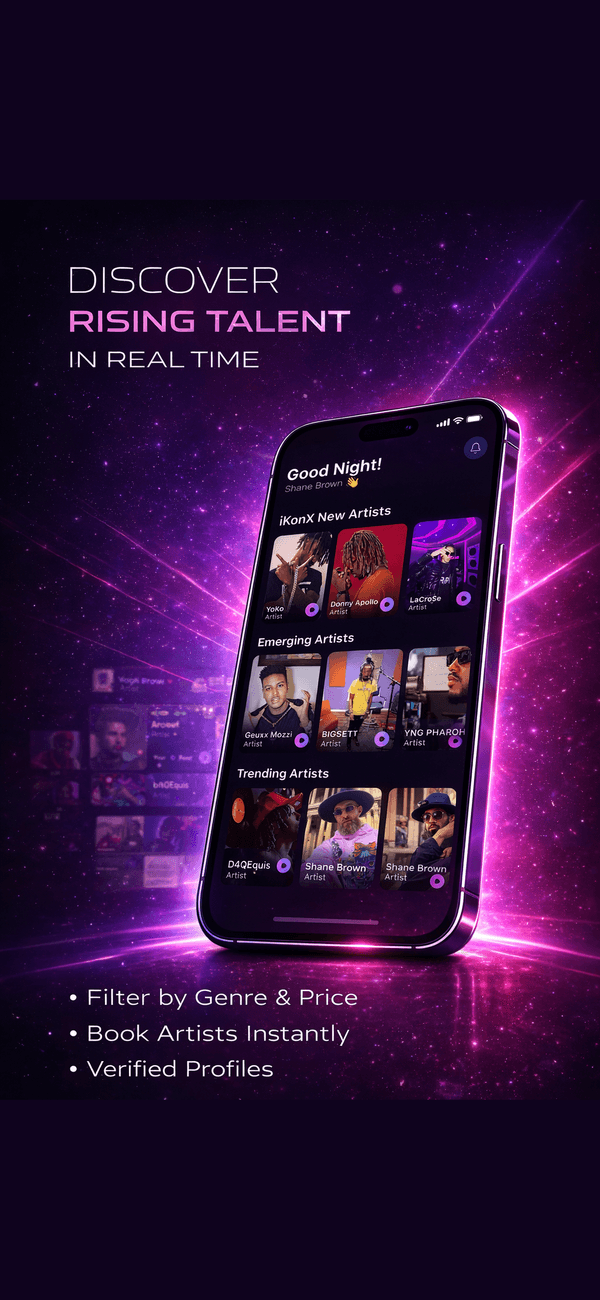
See iKonX in action

The whole network lives in one app.

iKonX puts every side of the music business in your pocket. Artists set their own price and keep 100% of it · iKonX takes 0% platform commission. Browse, message, and book straight from the app.

The iKonX app on an iPhone showing the artist discovery screen · where music meets business with 0% platform commission
03 · The Deck

How to decide whether to start a label in 2026, step by step

Scout the live room
Stage▲ Momentum
  1. Name your unfair advantage out loud. Write one sentence: an artist should sign with me instead of self-releasing because I have this. If the blank is only enthusiasm or a logo, stop here. That sentence saves more money than any other step.
  2. Price the real startup cost, not the legal cost. Registration is the cheap part. Budget the actual lines: recording, mixing and mastering, artwork, video, marketing, and the A and R tooling most new labels buy without noticing. Professional discovery platforms run into the low hundreds per month and that stack compounds before you have signed anyone.
  3. Choose a model and refuse the other two. Services, capital, or audience. Founders who try to be all three run out of money first, because each needs a different cost base and a different deal structure.
  4. Build the roster pipeline before the entity. Scout for ninety days with no company and no offer. Find twenty artists you would genuinely sign. If you cannot find twenty, you have a taste problem or an access problem, and incorporating fixes neither.
  5. Structure a deal you would sign as the artist. Independent splits commonly land between 50/50 and 60/40 in the artist's favor, often with the artist keeping masters. Start there. A deal an artist would be embarrassed to show a lawyer costs you the artists you actually want.
  6. Run one act as a live test before scaling. Fund one release end to end, track every dollar in and out, then decide whether it is a business or an expensive hobby. A label that has never completed one full release cycle has no data, only optimism.
Match by career stage
Genre✓ Verified

Filter the deck to artists at the same rung as your label, so a signing fits where you are now, not where you wish you were.

Reach out direct
✓ VerifiedOpen to contact

No demo pile, no inbox gatekeeper. You contact a verified profile straight from the deck and start the conversation on your terms.

Demo pile vs live discovery

The three label models that still work in 2026

ModelWhat you actually sellCapital neededWorks with one act?
Services labelPlacement: playlists, press, sync, radio, retailLow to moderateYes, if the placements are real
Capital labelMoney fronted against future incomeHigh, and at risk per actNo, needs a portfolio
Audience labelAttention you already ownLow, the audience is the assetYes
Logo-only labelNothing the artist cannot self-serveAny amount, all wastedNo

Figures are dated and sourced. Independent deals commonly run 50/50 to 60/40 in the artist's favor while major-label artist royalties typically sit at 13 to 20 percent or more (otherrecordlabels.com, 2025). Universal Music Group, Warner Music Group and Atlantic Records all decline unsolicited demos and require an established industry referral (avenuear.com, 2025). Roughly 2 percent of unsolicited demo submissions receive a response from major labels (droptrack.com, 2025). Professional A and R tooling is a real recurring cost, with Chartmetric listing Premium at 117 dollars a month and Ultra at 150 (chartmetric.com, accessed June 2026). The three model categories are an editorial framework, not an industry standard. The only fixed claim here is the iKonX model: the artist keeps 100 percent of the price they set, iKonX takes 0 percent platform commission, and the buyer pays a flat 10 percent on top. iKonX is free to download and explore, full access to paid features is a flat 9.99 dollars a month, and the only payout deduction is a low, sub-5 percent withdrawal fee, below the industry standard.

FAQ

Starting a label in 2026: FAQ

How much does it cost to start a record label in 2026?

Registration and a business account are the cheap part and can be handled for a few hundred dollars. The real budget is per release: recording, mixing and mastering, artwork, video, and marketing, plus the discovery and analytics tooling most new labels quietly subscribe to. Professional A and R platforms alone run into the low hundreds per month, with Chartmetric Premium at 117 dollars a month and Ultra at 150. Plan the release budget rather than the paperwork budget, because that is what decides whether you survive year one.

Can you start a record label with no money?

You can start a services or audience label with very little money, because what you are selling is placement or attention rather than capital. You cannot realistically start a capital label with no money, since fronting recording and marketing costs is the entire product. The honest no-money version is a partnership: you contribute work and access, the artist contributes the music, and you split the upside in writing before anything is released.

Is it better to start a label or just self-release?

If you are the artist, self-release first. Distribution is self-serve, you keep your masters, and you learn the numbers a label would otherwise learn on your behalf. Start a label when you want to do this for other people and you have something they cannot buy for a subscription fee. The signal that you are ready is simple: artists start asking you for help before you offer it.

Do record labels still sign unsigned artists in 2026?

Independent labels do, actively. The majors largely do not accept unsolicited material at all, since Universal, Warner and Atlantic each require an established industry referral, and only around 2 percent of unsolicited submissions to major labels get any response. That is exactly why direct discovery matters more than a submission inbox, and why a new label's edge is usually finding artists earlier than anyone else rather than out-bidding anyone later.

Does iKonX take a commission if I find and pay an artist through the platform?

No. The artist keeps 100 percent of the price they set and iKonX takes 0 percent platform commission. You pay a flat 10 percent on top, so the artist receives the full price listed. The only deduction on the artist side is a low, sub-5 percent withdrawal fee when they move earnings to their bank, which is a transfer cost rather than a commission on the rate. iKonX is free to download and explore, and full access to paid features is a flat 9.99 dollars a month. Timing matters: Labels is a roadmap side of iKonX and is launching soon, so today the platform is for scouting and direct contact rather than deal paperwork.

Building

Labels is coming to The Network

Scouting opens soon. Be first to the deck when it goes live · no pressure, just a seat held.

Notify me when it opens ->

Find the talent first. Sign on your terms.

iKonX is building a Labels side where you scout unsigned artists with verified profiles and reach them directly, with no gatekeeper in the middle. Artists keep 100 percent of the price they set, and iKonX takes 0 percent commission.

The iKonX app on a phone

Download the iKonX App

Download on theApp Store
Coming Soon onGoogle Play

DOWNLOAD THE FREE PDF TODAY:

The Indie Label A&R Scouting Playbook

A modern A&R checklist for finding, career-stage-matching, and signing unsigned artists in 2026.

Get the free PDF ->