Labels JOIN THE NETWORK · LABELS

How to start a record label with no money in 2026

Unsigned artist ▲ Momentum
Stage Genre ▲ Momentum ✓ Verified

The room already pulled. Career-stage matched, verified, reachable direct.
142 New unsigned artists this week
100% Career-stage matched
0 Gatekeepers between you and contact
The short answer

You can start a record label with no money by going digital-first: distribute free through Amuse, RouteNote, or UnitedMasters, run as a sole proprietor and defer the LLC until you have revenue, register royalties free with a PRO and SoundExchange, and sign artists on a 50/50 profit-share instead of advances. A digital-first label can launch for under 100 dollars.

01 · Discovery

The old idea of starting a record label, that you need a war chest for studio time, pressing plants, PR retainers, and five-figure advances, is what stops most people before they begin. And it is true for the legacy model: a full-service label launch still runs 5,000 dollars and up once you add studio time, manufacturing, legal, and a marketing budget. If that is the only picture you have of a label, no money looks like no chance.

But that picture is a decade out of date. The expensive parts of a label were the physical parts, and the business is now almost entirely digital. The real barrier today is not capital, it is knowing which costs are mandatory and which ones you have been told are mandatory but are not. Plenty of guides quietly fold a paid LLC, a paid distributor subscription, and an advance into the very first step, and that is exactly the spend a no-money founder does not need on day one.

So the honest question is not how much it costs to start a label. It is how little you can start with, what you can defer until revenue actually shows up, and how you find the first artist worth building around when you cannot outspend anyone. Strip the optional spend away and a label becomes what it always really was: an ear, a relationship, and a fair deal.

02 · Signal

The zero-budget path is to keep every early cost variable, not fixed. Distribution, the one thing a label cannot skip, is now free: Amuse offers unlimited releases with no annual fee and keeps 15 percent of royalties, RouteNote runs a free tier on the same 15 percent split (or pay roughly 10 dollars a single to keep 100 percent later), and UnitedMasters SELECT lets you keep 100 percent of your royalties with no commission once revenue justifies the subscription. You do not pay to put a record out anymore. You only pay to keep a larger slice once it earns.

The legal and royalty setup is just as deferrable. You can operate as a sole proprietor from day one at zero cost and form an LLC later, when revenue makes the liability protection worth the filing fee (as low as 35 to 40 dollars in Montana or Kentucky). Registering with a performing rights organization and with SoundExchange to collect your royalties is free. The only truly unavoidable spend is variable distribution commission you pay out of money you have already earned.

That leaves the one cost no platform fixes: finding the artist. This is where iKonX fits a no-money label. Instead of paying for demo-submission credits or a data seat, you find verified, career-stage-matched artists on the network and reach out yourself. When a deal involves a service the artist sells, the model is artist-first: the artist earns 100 percent of the price they set and iKonX takes 0 percent platform commission, while the buyer pays a flat 10 percent on top. We built iKonX so discovery and contact live in one place, which means a label with no budget competes on ear and on terms, not on spend.

See iKonX in action

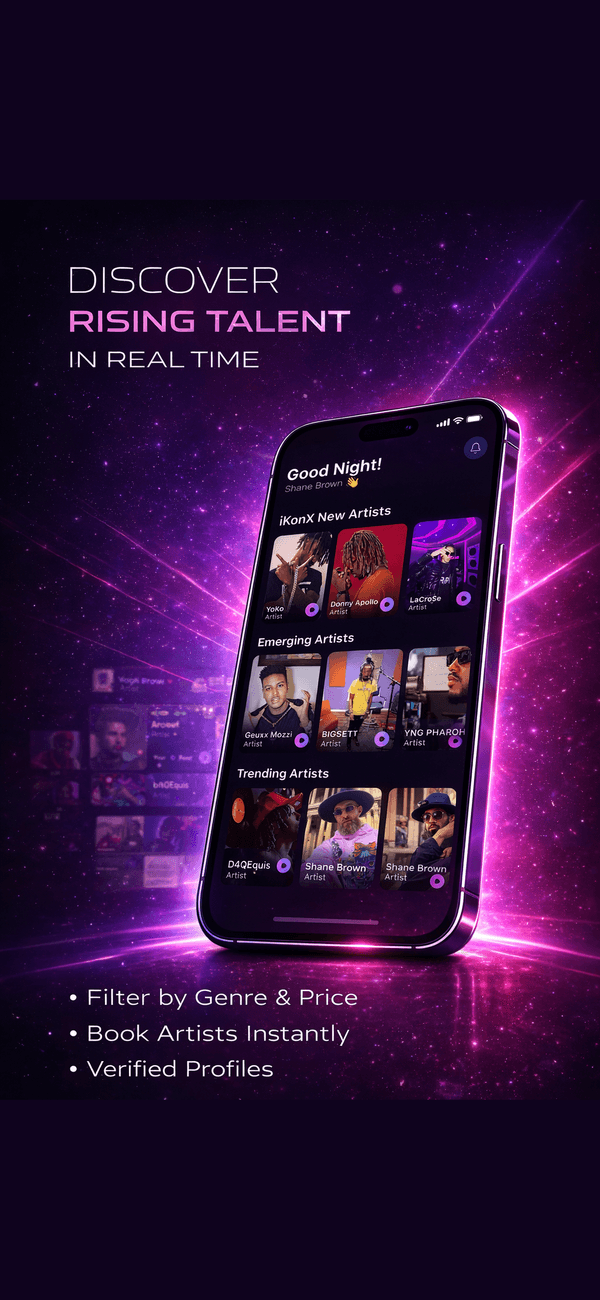
The whole network lives in one app.

iKonX puts every side of the music business in your pocket. Artists set their own price and keep 100% of it · iKonX takes 0% platform commission. Browse, message, and book straight from the app.

The iKonX app on an iPhone showing the artist discovery screen · where music meets business with 0% platform commission
03 · The Deck

How to start a record label with no money, step by step

Scout the live room
Stage▲ Momentum
  1. Start as a sole proprietor, defer the LLC. You do not need a registered company to release music or sign your first artist. Operate under your own name as a sole proprietor at zero cost, and form an LLC only once revenue makes the liability protection worth it. When that day comes, filing is as low as 35 to 40 dollars in states like Montana and Kentucky, versus the roughly 132 dollar national average. Paying to incorporate before you have a single release is the most common no-money mistake.
  2. Pick a free, digital-first distributor. Distribution is the one cost a label cannot skip, and in 2026 it is free to start. Amuse offers unlimited releases with no annual fee on a 15 percent royalty split, RouteNote runs a free tier on the same 15 percent (with a pay-per-release option to keep 100 percent), and UnitedMasters has free and paid tiers. Launch on a free split, then upgrade to a flat per-release or subscription fee only once a release is actually earning.
  3. Register your royalties for free. Sign up with a performing rights organization to collect performance royalties and register with SoundExchange to collect digital performance royalties. Both are free to join. This is pure money left on the table if you skip it, and it costs nothing but an afternoon of forms.
  4. Find your first artist on signal, not spend. You cannot buy your way to the right artist, so do not try. Skip the paid submission credits and the data seats. Read public momentum (TikTok traction, save-to-stream behavior, playlist movement) and reach out direct. On iKonX you can find verified, career-stage-matched artists and message them yourself, referencing the exact signal you saw, with no gatekeeper in the middle.
  5. Sign on profit-share, not an advance. The advance is the cost a no-money label genuinely cannot pay, and the good news is you do not have to. Offer a profit-share deal instead: no upfront payment, agreed costs recouped from income, then net profits split 50/50 (or 60/40 in the artist's favor). The artist starts earning the moment the project turns profitable, which is fairer and the only structure that works with zero capital. Put the split and the recoupable costs in writing before the first session.
  6. Reinvest the first dollars, do not pocket them. The whole no-money model lives or dies on what you do with early revenue. Roll the first streaming and sales income back into the next release: a small promo push, a paid distribution upgrade to keep a bigger royalty slice, eventually the LLC. A label that reinvests its first 500 dollars wisely compounds. A label that spends it does not get a second release.
Match by career stage
Genre✓ Verified

Filter the deck to artists at the same rung as your label, so a signing fits where you are now, not where you wish you were.

Reach out direct
✓ VerifiedOpen to contact

No demo pile, no inbox gatekeeper. You contact a verified profile straight from the deck and start the conversation on your terms.

Demo pile vs live discovery

What a no-money label actually has to pay for: the honest comparison

Cost lineMandatory on day one?What it costs to start
Finding the artist (iKonX)Yes, but free to startFree to browse and reach verified artists · 0% platform commission on the artist's price · the artist keeps 100% of what they set
Free distribution (Amuse / RouteNote)Yes0 dollars upfront · 15% of royalties kept by the distributor (paid out of money you already earned)
Pay-per-release / subscription distro (RouteNote Premium / UnitedMasters)No · upgrade laterRoughly $10 per single to keep 100% · or a $19.99 to $59.99 subscription tier
Business registration (LLC)No · defer it$35 to $40 in the cheapest states · ~$132 national average · sole proprietor is $0
Royalty collection (PRO + SoundExchange)RecommendedFree to register and collect
Artist advanceNo · use profit-share$0 with a 50/50 profit-share deal instead of an upfront advance

Cost figures are from named, dated sources (see the sources list): free-tier and pay-per-release distribution pricing and the 15 percent royalty splits for Amuse and RouteNote, and UnitedMasters DEBUT+/SELECT tiers ($19.99 / $59.99, with SELECT keeping 100 percent and no commission, DEBUT sunset October 2025); LLC filing-fee ranges (as low as $35 to $40 in Montana and Kentucky, roughly $132 national average) and the under-$500 / $5,000-plus digital-vs-full-service startup ranges; and the indie 50/50-to-60/40 profit-share structure with no advance. Figures vary by plan and state and change over time, so verify current pricing at the source. The only fixed claim is the iKonX model: the artist keeps 100% of the price they set, iKonX takes 0% platform commission, and the buyer pays a flat 10% on top. iKonX is free to download and explore, full access to paid features is a flat $9.99/month, and the only payout deduction is a low, sub-5% withdrawal fee, below the industry standard.

FAQ

Starting a label with no money FAQ

Can you really start a record label with no money?

Yes, if you go digital-first. Distribution is free to start through services like Amuse, RouteNote, or UnitedMasters, you can run as a sole proprietor at zero cost and form an LLC later, and registering your royalties with a PRO and SoundExchange is free. A digital-first label can launch for under 100 dollars and often for nothing. The cost you genuinely cannot avoid, an artist advance, you replace with a profit-share deal.

Do you need an LLC to start a record label?

No, not on day one. You can operate as a sole proprietor at zero cost and release music, sign artists, and collect royalties under your own name. An LLC adds liability protection and is worth forming once revenue justifies the filing fee, which runs as low as 35 to 40 dollars in states like Montana and Kentucky and averages around 132 dollars nationally. Deferring the LLC until you have income is the smart no-money move, not a corner cut.

What is the cheapest way to distribute music as a new label?

Use a free distributor to start. Amuse offers unlimited releases with no annual fee and keeps 15 percent of royalties, and RouteNote runs a free tier on the same 15 percent split. You pay nothing upfront and the cut comes out of money you have already earned. Once a release is actually generating revenue, you can upgrade to a pay-per-release fee (around 10 dollars a single on RouteNote) or a subscription tier to keep a bigger slice.

How do I sign artists if I cannot afford an advance?

Use a profit-share deal instead of an advance. There is no upfront payment: you agree which costs are recoupable, recoup them from the income the release generates, then split net profits, commonly 50/50 or 60/40 in the artist's favor. The artist starts earning the moment the project turns profitable, which is fairer than a traditional deal and the only structure that works with zero capital. Put the split and the recoupable costs in writing before the first session.

How does a no-budget label find artists without paying for tools?

Lead with signal, not spend. The momentum data the majors pay for, TikTok traction, save-to-stream behavior, playlist movement, is mostly public, so you can read it without a paid data seat or submission credits. On iKonX you can find verified, career-stage-matched artists and message them directly, so a label with no budget competes on ear and timing instead of money.

Does iKonX take a commission when an artist sells through the platform?

No. The artist earns 100 percent of the price they set and iKonX takes 0 percent platform commission. The buyer pays a flat 10 percent on top. The only deduction is a low, sub-5 percent withdrawal fee when an artist transfers earnings out, below the industry standard and a standard bank and transfer cost, never a commission on the sale. iKonX is free to download and explore, and full access to paid features across all ten sides of the network is a flat 9.99 dollars a month.

Building

Labels is coming to The Network

Scouting opens soon. Be first to the deck when it goes live · no pressure, just a seat held.

Notify me when it opens ->

Find the talent first. Sign on your terms.

Start with nothing but an ear and a fair deal. Download iKonX and find your first artist where the gatekeepers used to stand.

The iKonX app on a phone

Download the iKonX App

Download on theApp Store
Coming Soon onGoogle Play

DOWNLOAD THE FREE PDF TODAY:

The Indie Label A&R Scouting Playbook

A modern A&R checklist for finding, career-stage-matching, and signing unsigned artists in 2026.

Get the free PDF ->