How to split a sponsorship deal with your band
Brands reach independent artists directly on iKonX. Two parties, one transparent table, zero broker in the middle.
Agree the split before an offer exists, not after. Take real costs off the top, then divide what is left on a rule everyone signed: equal shares, or weighted for whoever does the work the brand is buying. Put it in a band agreement, name who receives and reports the money, and set the split for future deals in the same document.
A sponsorship is the first time most bands have to answer a question they have been avoiding since the garage: what is this band, legally, and who owns the money it makes. Right up until a brand sends a five-figure offer, that question is a vibe. Afterwards it is a fight.
Here is what makes it worse than a gig fee. A gig is shared work. A sponsorship is often not. The brand wants the singer's face on the campaign, or the guitarist because they are the one with the following, or two members at an activation while the other three sit at home. So an equal split feels wrong to the person doing the posts, and a weighted split feels wrong to everyone else, and both feelings are legitimate, which is exactly why the rule must be agreed before the money is real. Nobody negotiates fairly with a number on the table.
Then there is the part nobody wants to hear. If two or more people carry on a business together and share in the profits, the IRS generally treats that as a partnership, and Publication 541 describes how partners report their distributive share of income whether or not it is actually distributed. The SBA says the same thing about default structures: a general partnership is what you get by conduct, without filing anything, along with the personal liability that comes with it. And the brand is likely to report its payment to whoever it paid, so if the money lands in the drummer's personal account, the drummer is the one the paperwork points at. A band with no written agreement is not free of structure. It has the default structure, and the default structure is the one nobody chose.
Write the split before the offer. That is the whole discipline, and it is the difference between a band that gets a sponsor and a band that gets a sponsor once.
Start with costs off the top. Production, travel to the shoot, an editor, a photographer, anything the deal actually required. Those come out first and are reimbursed to whoever paid them, otherwise one member is quietly financing the campaign for everyone else and resenting it by month two.
Then choose the split rule, and there are three honest options. Equal shares, which is the simplest and by far the most durable, because it is the only version nobody has to relitigate. Weighted shares, where the member carrying the deliverables gets more, which is fair on paper and where most band arguments come from in practice. Or a hybrid: a service fee to the member doing the work, paid off the top, and then an equal split of what remains, which is usually the version that survives contact with reality because it pays the labour without saying that one person is worth more than another.
Then decide the plumbing. Who is the payee, who reports the income, and how the money moves to everyone else. If one person receives it, they are on the paperwork for all of it, so the agreement needs to say the money is band income and how it is distributed. A band bank account is cleaner than a member's Venmo, and it is worth the afternoon it takes to open.
Then the clause that saves the next deal: this split rule applies to future sponsorships too, unless everybody agrees in writing to change it. That one line stops the negotiation from restarting every time a brand emails.
The honest state of iKonX today: it is a live, downloadable app where artists and the brands and people who pay them connect and settle directly, and a sponsorship workspace with proposal, deliverable, and split tracking is on the roadmap. What already works is the money and the transparency it rests on: the artist keeps 100 percent of the price they set, iKonX takes 0 percent platform commission, the buyer pays a flat 10 percent on top, and the only payout deduction is a low, sub-5 percent withdrawal fee. iKonX is free to download and explore, and full access to paid features is a flat 9.99 dollars a month. A split you can all see is a split you can all live with.
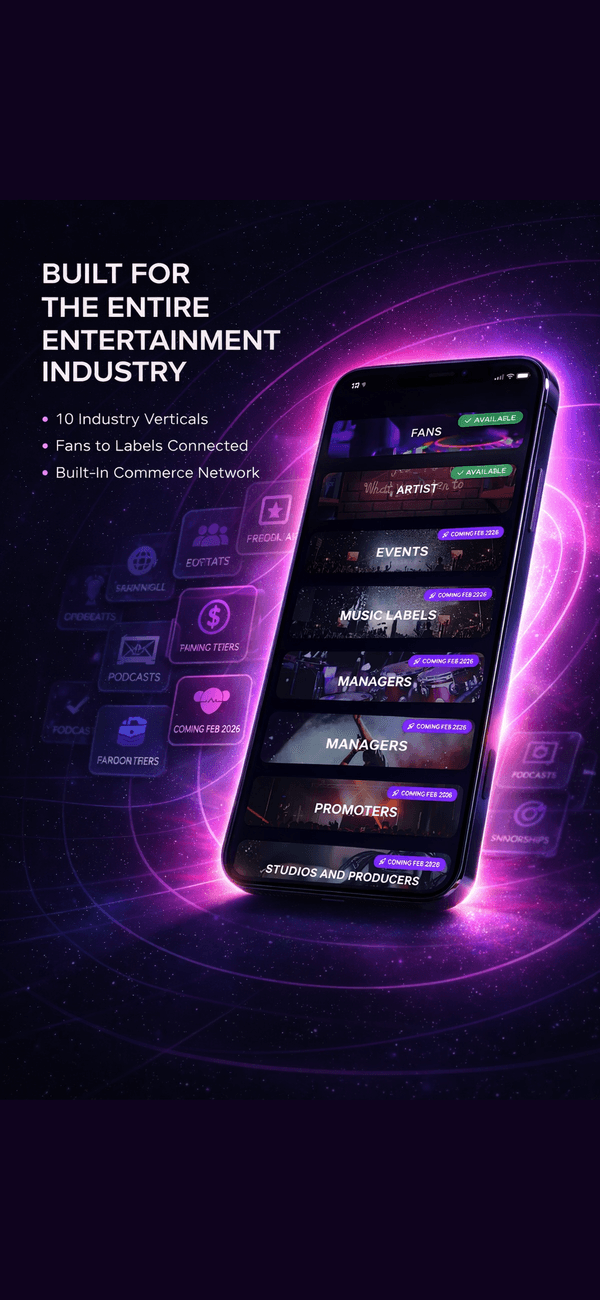
The whole network lives in one app.
iKonX puts every side of the music business in your pocket. Artists set their own price and keep 100% of it · iKonX takes 0% platform commission. Browse, message, and book straight from the app.

How to agree the split, step by step
- Have the conversation before an offer exists. The split has to be decided while the money is hypothetical, because the moment a number is on the table everyone is negotiating for themselves. Book an hour, no instruments, and settle it as a business decision rather than a friendship test.
- Take real costs off the top. Production, travel, editor, photographer, gear rental for the shoot. Reimburse whoever paid them, first, before anything is divided. Skipping this is how one member ends up funding the campaign for the whole band and quietly deciding they are done.
- Pick a rule: equal, weighted, or a service fee plus equal. Equal is simplest and most durable. Weighted rewards the member the brand is actually buying, and is the source of most band arguments. The hybrid, a service fee off the top for the deliverables then an equal split of the rest, usually holds best, because it pays the work without ranking the people.
- Name the payee and settle the tax question. Decide who receives the money and how it is distributed. Where two or more people carry on a business and share profits, the IRS generally treats it as a partnership and partners report their distributive share (Publication 541), and the brand will report its payment to whoever it paid. A band account beats a member's personal app. Not tax advice.
- Write it down, and make it apply to the next one. One band agreement, signed, covering this deal and every future sponsorship unless changed in writing. Sponsorship money that arrives through iKonX arrives with the artist keeping 100 percent of the price they set at 0 percent platform commission, so the number you are dividing is the number you agreed, with nothing skimmed on the way in.
Equal split vs. weighted split vs. service fee plus equal
| Equal shares | Weighted shares | Service fee, then equal | |
|---|---|---|---|
| How it works | Costs off the top, then divide evenly | The member doing the deliverables gets a bigger share | Pay the member doing the work a fee, then split the rest evenly |
| Feels fair to | Everyone, in theory | The person doing the posts | Most bands, most of the time |
| Argument risk | Low, nothing to relitigate | High, and it restarts every deal | Low, the labour is paid and nobody is ranked |
| Best when | The brand is buying the band | The brand is explicitly buying one member | The brand is buying the band but one member carries the work |
| Still required either way | A written band agreement, a named payee, and a decision on who reports the income | ||
Sources and dates. IRS Publication 541, Partnerships (live, July 2026): a partnership is the relationship between two or more persons who join to carry on a trade or business, each contributing money, property, labor, or skill and expecting to share in the profits and losses; partners report their distributive share of partnership income on their own returns. U.S. Small Business Administration, Choose a business structure: a general partnership is the default when two or more people go into business together, and partners are personally liable, so a written agreement is what defines how profits are shared. IRS, About Form 1099-NEC: payers report nonemployee compensation to the person or entity they paid, which is why who receives sponsorship money matters. Split structures are band practice, not published statistics. Practical guidance, not legal or tax advice. The iKonX model is the only fixed claim: artists keep 100% of the price they set, iKonX takes 0% platform commission, the buyer pays a flat 10% on top, iKonX is free to download and explore, full access to paid features is a flat $9.99/month, and the only payout deduction is a low, sub-5% withdrawal fee, below the industry standard.
Band sponsorship split FAQ
Should a band split sponsorship money equally?
Equal is the simplest and most durable rule, and it is the only one nobody has to relitigate every time an email lands. The exception is when the brand is explicitly buying one member's face and following, in which case a service fee off the top for the deliverables, then an equal split of the rest, usually holds better than a weighted share.
When should we agree the split?
Before an offer exists. Once a number is on the table, everyone is negotiating for themselves and the conversation becomes a friendship test instead of a business decision. Book an hour with no instruments in the room and settle the rule while the money is still hypothetical.
Do costs come out before the split?
Yes. Production, travel, an editor, a photographer, gear rental for the shoot, all reimbursed to whoever paid them, first. Otherwise one member is quietly financing the campaign for the band and will be done with it within two deals.
Who pays tax on band sponsorship money?
It depends on your structure, and the default is not nothing. Where two or more people carry on a business and share profits, the IRS generally treats it as a partnership and partners report their distributive share of income (Publication 541), while a brand reports its payment to whoever it paid. Name a payee, use a band account, and talk to an accountant. Not tax advice.
Do we need a written band agreement for one sponsorship?
Yes, and write it so it covers every future sponsorship unless changed in writing. The SBA notes that a general partnership is the default structure when people go into business together, so a band with no agreement is not unstructured, it just has the structure nobody chose.
Does iKonX take a cut of a sponsorship?
No. The artist keeps 100 percent of the price they set and iKonX takes 0 percent platform commission, with the buyer paying a flat 10 percent on top and a low, sub-5 percent withdrawal fee as the only deduction. A sponsorship workspace with proposal and split tracking is on the roadmap, not shipped. What is live today is the direct, transparent payment.
Explore the connected sides of the network
Show business is a business. No broker.
Agree the rule before the money is real, and write it down once for every deal after. Download iKonX and take sponsorship money on a rail where you keep 100 percent of it.

DOWNLOAD THE FREE PDF TODAY:
The Brand-Artist Sponsorship Proposal Template
A fill-in proposal a brand and an artist can agree on with no broker in the middle.
Get the free PDF ->