How to Price a Hook Versus a Full Verse
No platform commission on the price you list · the buyer pays a flat 10% on top.
Price a hook and a full verse as two separate products, not by length. A hook is shorter but it carries the song, so a catchy, memorable hook is often worth as much as or more than a 16-bar verse, not less. Set two clear numbers: one for a hook (the chorus plus any ad-libs and one revision) and one for a full verse (typically 16 bars with a revision). If you are early, a hook and a verse might sit in the same ballpark, commonly anywhere from about 50 to a few hundred dollars for an independent artist, scaling with your reach, the buyer's use, and turnaround. Do not discount the hook just because it has fewer words; price it for the value it adds to the finished record. On iKonX you set both prices on your verified artist page and the buyer pays before you record, so · the artist keeps 100 percent of the price they set, iKonX takes 0 percent platform commission, and the buyer pays a flat 10 percent on top · the number you quote is the number that lands in your account.
Most artists price by the wrong unit. They count bars, decide a verse is 16 and a hook is 8, and quietly charge half for the hook. But a buyer is not paying for syllables. A hook is the part a listener remembers, hums, and reposts. On a lot of records the hook is the single most valuable thing you deliver, so pricing it as a discount version of a verse leaves real money on the table.
The opposite trap is quoting one flat number for anything, so a quick catchy hook and a dense storytelling verse cost the buyer the same. That confuses people and invites haggling, because they cannot see what they are actually paying for.
Underneath both is trust. A buyer sending money for a hook they have not heard yet, through a random payment-app handle with no protection, is taking a real risk. When the deliverable is fuzzy and the payment feels unsafe, they hesitate, and hesitation is where bookings die.
List it. Price it. Keep it.
Sell two named products with two clear prices. A hook covers the chorus, any tagged ad-libs, and one revision, delivered as a mixed WAV. A full verse covers 16 bars, one revision, same format. Write down exactly what each includes so a buyer chooses a product, not a negotiation. Price each for the value it adds, not the time it takes: a hook can carry a song, so it should never be an automatic half-price. As demand grows, raise both numbers independently, because your hooks and your verses may not climb at the same rate.
iKonX removes the trust gap that kills these deals. You list your hook price and your verse price on a verified profile, the buyer pays through the platform before you record, and · the artist keeps 100 percent of the price they set, iKonX takes 0 percent platform commission, and the buyer pays a flat 10 percent on top. The money reaches you directly with no label or middleman skimming it, and the buyer gets the reassurance of paying a real, verified artist instead of a stranger online. Knowing your exact take-home also lets you quote two prices with a straight face.
To be straight about where iKonX is today: it is a live, downloadable app where artists set their prices and buyers pay them directly. It is not a pricing calculator and will not invent a number for you; you still decide each rate. What it does is make the rates you choose collectible and trustworthy on the first try. iKonX is free to download and explore, full access to paid features is a flat $9.99/month, and the only payout deduction is a low, sub-5% withdrawal fee when you transfer earnings out, below the industry standard.
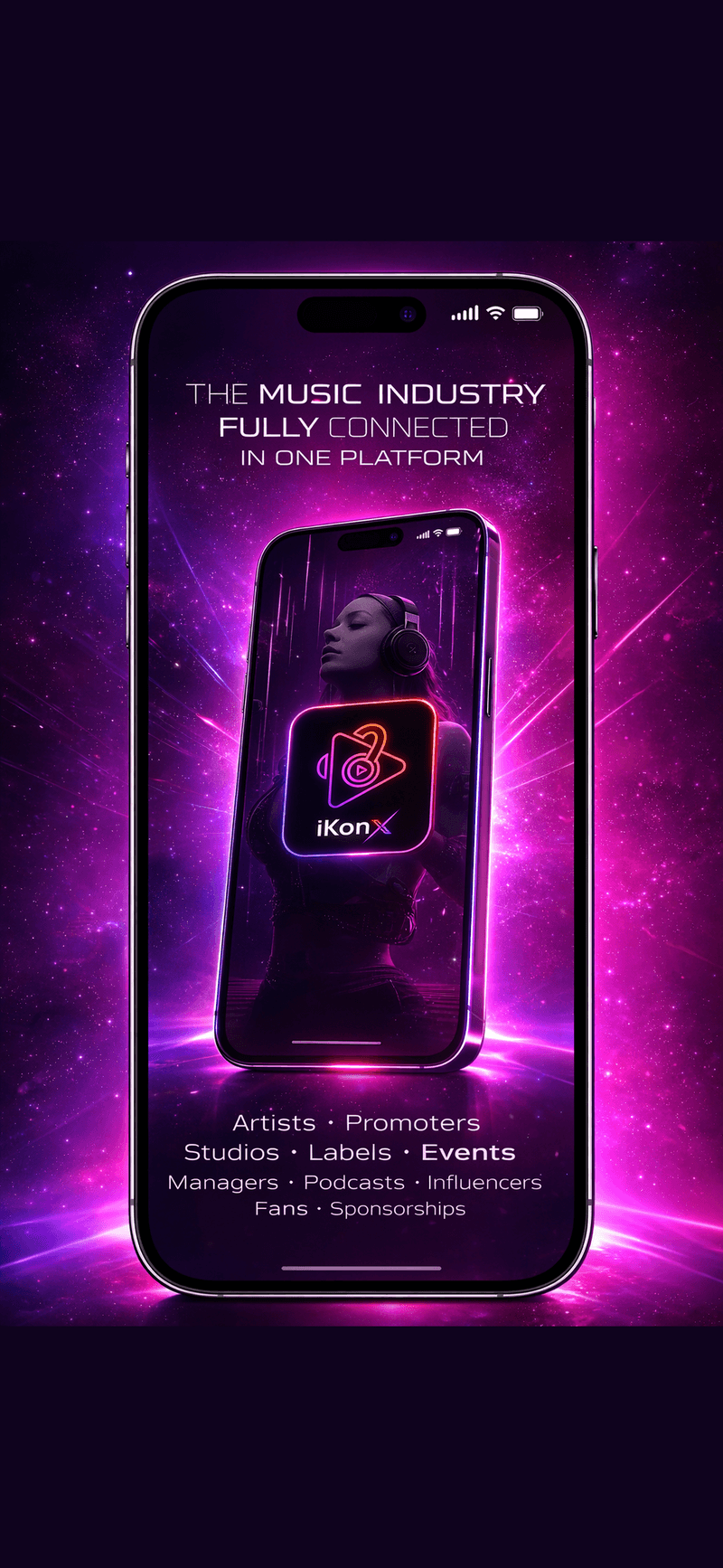
The whole network lives in one app.
iKonX puts every side of the music business in your pocket. Artists set their own price and keep 100% of it · iKonX takes 0% platform commission. Browse, message, and book straight from the app.

How to price a hook versus a full verse, step by step
- Define two products. Hook: chorus plus ad-libs plus one revision. Verse: 16 bars plus one revision. Same delivery format for both.
- Price for value, not length. A hook carries the song, so it is often worth as much as a verse. Never auto-halve it just because it is shorter.
- Anchor to your reach. Smaller audience, price near the low end; growing demand, move both up. Charge for the value the buyer gets.
- Quote one confident number per product. Not a range. Two clear prices a buyer can pick between in one message.
- Set both prices on iKonX. On your verified page the buyer pays before you record and you keep 100 percent of what you set at 0 percent commission.
- Raise each independently. Track which sells more. If your hooks book out first, that price climbs first.
Hook vs verse: how to think about the price
| Deliverable | What it does for the record | How to price it |
|---|---|---|
| Hook / chorus | The memorable part a listener repeats and reposts | Value-based, often equal to or above a verse · never an automatic half-price |
| Full verse (16 bars) | The story, the bars, the substance between hooks | Your standard feature rate, anchored to your reach |
| One flat number for anything | Confuses the buyer about what they are paying for | Avoid · it invites haggling |
| Collected on iKonX | A verified artist, paid before recording | 100% of the price you set · 0% platform commission · buyer pays a flat 10% on top |
Feature and hook rates vary widely by an artist's audience, the buyer's use, and turnaround; independent rates commonly run from roughly $50 into the low hundreds, with established names far higher (widely reported feature-pricing guidance, 2025). Ranges are directional and change by market. The only fixed claim is the iKonX model: the artist keeps 100 percent of the price they set, iKonX takes 0 percent platform commission, and the buyer pays a flat 10 percent on top. iKonX is free to download and explore, full access to paid features is a flat $9.99/month, and the only payout deduction is a low, sub-5% withdrawal fee when you transfer earnings out, below the industry standard.
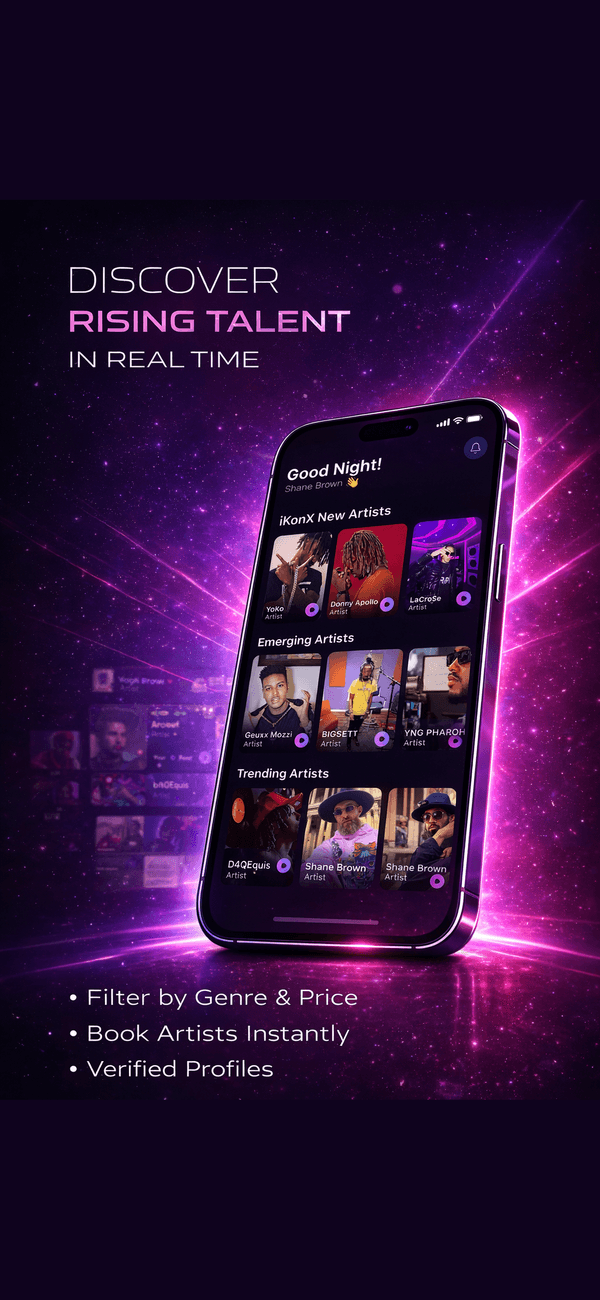
Verified artists, real profiles
Hook vs verse pricing FAQ
Should a hook cost less than a verse?
Not automatically. A hook is shorter but it often carries the whole song, so it can be worth as much as or more than a 16-bar verse. Price each for the value it adds, not the number of bars.
How much should I charge for a hook as an independent artist?
Anchor to your reach and what the hook includes. Independent rates commonly run from about 50 to a few hundred dollars. Pick one confident number for the hook and a separate one for a full verse.
Do I quote one price or two?
Two. Name a hook price and a verse price so the buyer picks a product instead of negotiating. Clear, separate numbers are easier to say yes to.
How do I get paid safely for a hook a buyer has not heard yet?
Let them pay a verified artist through a platform. On iKonX the buyer pays your set price before you record, and you keep 100 percent of it at 0 percent commission, so both sides are protected.
Explore the connected sides of the network
Built for the working artist.
Quote two confident numbers, one for the hook and one for the verse, and collect them clean. Keep 100 percent of what you set and let buyers pay a verified artist. Download iKonX.

DOWNLOAD THE FREE PDF TODAY:
Indie Feature Pricing Cheat-Sheet
What to charge for a feature verse with no following · the price math, plainly.
Get the free PDF ->