Labels JOIN THE NETWORK · LABELS

How to pay royalties to a signed artist on time

Unsigned artist ▲ Momentum
Stage Genre ▲ Momentum ✓ Verified

The room already pulled. Career-stage matched, verified, reachable direct.

142 New unsigned artists this week
100% Career-stage matched
0 Gatekeepers between you and contact
The short answer

Put a hard accounting period in the contract, usually semi-annual with payment due within 60 to 90 days of period close, then run it like payroll rather than like a favor. Reconcile the distributor statement, apply the recoupment ledger, reserve against returns honestly, and send a statement every single period even when the payable is zero. Know what you do not owe, too: SoundExchange and the MLC pay the artist directly.

01 · Discovery

Independent labels almost never fail to pay royalties because the money is not there. They fail because nobody ever defined the day. The contract says royalties will be accounted semi-annually and paid within a reasonable time, the distributor statement lands in a spreadsheet, the founder means to get to it, and eight months later an artist who has been quietly counting is now loudly counting, in public.

The second failure is the statement. Labels send money and no paper, or paper and no money, and both destroy trust equally. An artist who receives $412 and no explanation does not think they were paid. They think they were shorted, because they have no way to check. Every unpaid question compounds into an audit request, and audit requests are how small labels find out their accounting was never really accounting.

Then there is the confusion that causes the ugliest fights: labels get blamed for royalties they were never supposed to pay. Under 17 U.S.C. 114(g), when a sound recording copyright owner receives digital performance royalties from the statutory license, the featured artist is paid 45 percent and non-featured performers 5 percent, and in the SoundExchange system those artist shares are paid directly to the artist, not routed through the label. Songwriter mechanicals from interactive streaming flow through the blanket license administered by the Mechanical Licensing Collective under 17 U.S.C. 115(d), not through your royalty run. The rates behind those streaming mechanicals are set by the Copyright Royalty Board, which is why they change on a schedule you do not control. If an artist thinks you owe them their SoundExchange money, that is not a payment dispute. It is an education problem, and it is yours to fix on day one.

02 · Signal

Royalty accounting is a calendar with a spreadsheet attached. Build the calendar first.

Fix the period in the agreement in words with no wiggle in them. Semi-annual is the industry norm: periods ending June 30 and December 31, statements and payment due within 60 to 90 days of the close. Quarterly is a genuine competitive advantage for an independent label and it is not much more work once the process exists. Whatever you choose, put the specific dates in the contract, because a royalty obligation is a contract obligation, not a statutory one, and a period nobody wrote down is a period nobody will meet.

Then build the ledger, and build it once. Gross receipts from the distributor. Contractual deductions, spelled out. The recoupment balance: advances, and whichever recording, video, and marketing costs the deal makes recoupable. Reserves against returns if you have physical product, held at a percentage you can defend and liquidated on a stated schedule rather than held forever. What is left is the payable. If the payable is negative because the artist is unrecouped, that is a real and normal answer, and it still gets a statement.

Send the statement every period, without exception, even at zero. A one-page statement with gross, deductions, recoupment balance, and net does more to keep an artist relationship intact than the money itself. Artists do not leave labels that pay them fairly. They leave labels that will not show them the math.

Then pay the people around the record on the day, too. Session players, featured guests, the writer who came in for a hook, the mixer: those are not royalty payments, they are invoices, and a label that is late on those has a reputation problem long before it has a royalty problem. That is the half iKonX is being built for: direct, dated payments to the artists and collaborators around a release, where the artist keeps 100 percent of the price they set, iKonX takes 0 percent platform commission, and the buyer pays a flat 10 percent on top. iKonX is free to download and explore, and full access to paid features is a flat $9.99 a month. Straight about the boundary: iKonX is not a royalty accounting system, it does not compute recoupment, and it does not replace your distributor. It handles the payments that should never have been late in the first place.
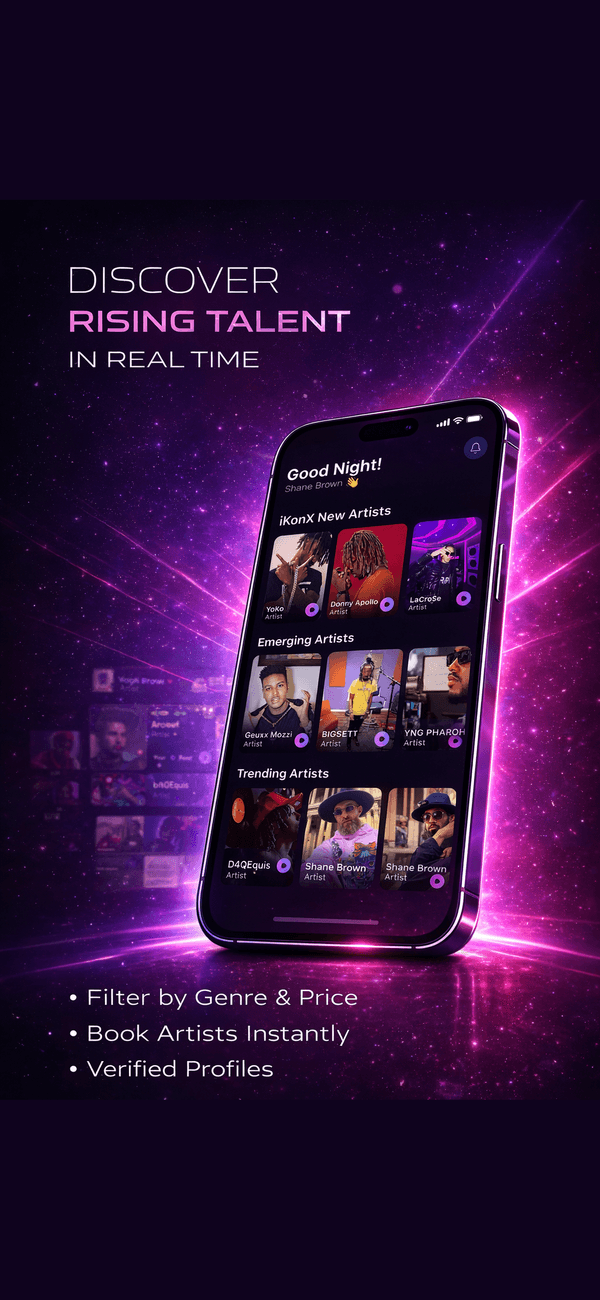
See iKonX in action

The whole network lives in one app.

iKonX puts every side of the music business in your pocket. Artists set their own price and keep 100% of it · iKonX takes 0% platform commission. Browse, message, and book straight from the app.

The iKonX app on an iPhone showing the artist discovery screen · where music meets business with 0% platform commission
03 · The Deck

How to run a royalty payment on time, step by step

Scout the live room
Stage▲ Momentum
  1. Write the accounting period into the contract as a date, not an adjective. Periods closing June 30 and December 31, statement and payment due within 60 to 90 days of close. Not "semi-annually within a reasonable time." Reasonable is what you argue about in a deposition. A date is what you calendar. Quarterly accounting is a real differentiator for an independent label if you can carry it.
  2. Reconcile the distributor statement before you touch the ledger. Pull the period's gross receipts, check them against what actually landed in the bank, and resolve the gap before you compute anybody's share. Paying out of an unreconciled statement is how a label discovers, two years later, that it overpaid one artist and underpaid three.
  3. Apply recoupment and reserves you can defend out loud. Advances and whichever costs the deal makes recoupable come off first, tracked as a running balance the artist can see. If you hold a reserve against physical returns, hold a percentage you would be comfortable explaining to an auditor, and liquidate it on a stated schedule instead of letting it sit forever. A reserve with no release date is just a haircut with better manners.
  4. Send a statement every period, even at zero. One page: gross receipts, deductions, recoupment balance carried forward, net payable. Send it when the artist is unrecouped and the answer is nothing, because the statement is what proves you are counting. Silence in a period is what makes an artist reach for an auditor.
  5. Tell the artist what you do not pay. Under 17 U.S.C. 114(g), the featured artist's 45 percent share of statutory digital performance royalties is paid directly to the artist through SoundExchange, not by you. Songwriter mechanicals from streaming flow through the MLC's blanket license under 17 U.S.C. 115(d). Get them registered with both on the day they sign, and half the royalty fights you would otherwise have simply never start. Practical guidance, not legal advice.
Match by career stage
Genre✓ Verified

Filter the deck to artists at the same rung as your label, so a signing fits where you are now, not where you wish you were.

Reach out direct
✓ VerifiedOpen to contact

No demo pile, no inbox gatekeeper. You contact a verified profile straight from the deck and start the conversation on your terms.

Demo pile vs live discovery

Who pays which royalty (the chart that ends most label disputes)

Artist royalty on sales and streamsDigital performance (SoundExchange)Songwriter mechanicals (the MLC)
Who pays itYou, the labelSoundExchange, direct to the artistThe MLC, direct to the writer or publisher
Where it comes fromYour contract with the artist17 U.S.C. 114(g), statutory license17 U.S.C. 115(d), blanket license
Artist shareWhatever the deal says45% featured, 5% non-featuredSet by the Copyright Royalty Board
Recoupable against your advanceUsually yesNo, it is paid around youNo, it is a different right
Your jobAccount, reserve, pay on the dateGet them registered on signing dayGet the works registered on signing day
Paying the humans around the recordSession players, features, and mixers are invoices, not royalties · on iKonX they are paid directly, artist keeps 100%, 0% platform commission

Sources and dates. 17 U.S.C. 114(g) (live, July 2026): where a sound recording copyright owner receives receipts from the statutory digital performance license, 45% is allocated to the featured recording artist and 5% to non-featured performers through the designated funds, with those artist shares distributed directly rather than through the label. 17 U.S.C. 115(d): the Music Modernization Act blanket compulsory license for digital phonorecord deliveries, administered by the Mechanical Licensing Collective, which pays songwriters and publishers directly. Copyright Royalty Board: the statutory mechanical royalty rates for streaming are set by the CRB on a multi-year schedule, so those rates move independently of any label's accounting. Accounting-period norms (semi-annual close with payment 60 to 90 days after period end), reserve practice, and recoupment structure are contract terms and market observation from 2026, not statutory requirements. Practical guidance, not legal advice. The iKonX model is the only fixed claim here: artists keep 100% of the price they set, iKonX takes 0% platform commission, the buyer pays a flat 10% on top, iKonX is free to download and explore, full access to paid features is a flat $9.99/month, and the only payout deduction is a low, sub-5% withdrawal fee, below the industry standard.

FAQ

Paying artist royalties FAQ

How often is a label legally required to pay artist royalties?

There is no statutory schedule. An artist royalty is a contract obligation, so the only deadline you have is the one written into the agreement. That is exactly why the contract must state a hard accounting period and a hard payment window: semi-annual periods closing June 30 and December 31, paid within 60 to 90 days of close, is the common shape. Quarterly is a real advantage if you can carry it. Practical guidance, not legal advice.

What should a royalty statement actually show?

One page is enough: gross receipts for the period, the contractual deductions itemized, any reserve held and its release schedule, the recoupment balance carried forward, and the net payable. The point is not elegance, it is that the artist can follow the arithmetic without asking you a single question. A statement they cannot check is a statement they will not believe.

Do I owe the artist their SoundExchange money?

No. Under 17 U.S.C. 114(g), the featured artist's 45 percent share of statutory digital performance royalties is paid directly to the artist, and non-featured performers get 5 percent through the designated funds. It does not flow through your accounting and it is not recoupable against your advance. Get every signed artist registered with SoundExchange on the day they sign and you will avoid the single most common royalty misunderstanding in independent music.

What do I send when the artist is unrecouped and the payable is zero?

Send the statement anyway. Gross, deductions, recoupment balance, net zero. A zero statement proves you are counting and shows the artist exactly how far the balance has moved. Silence in a period looks identical to being ignored, and that is the feeling that ends in an audit request.

Can I hold a reserve against returns forever?

You should not, and a well-drafted deal will not let you. Hold a percentage you could defend to an auditor, state the schedule on which it liquidates, and then actually liquidate it. A reserve with no release date is functionally a permanent deduction, and it is one of the first things a royalty auditor goes looking for.

How does iKonX fit into paying a signed artist?

It does not do royalty accounting, compute recoupment, or replace your distributor. It handles the direct payments around the record: the session player, the featured guest, the writer, the mixer. The artist keeps 100 percent of the price they set, iKonX takes 0 percent platform commission, and the buyer pays a flat 10 percent on top. iKonX is free to download and explore, full access to paid features is a flat $9.99 a month, and the only payout deduction is a low, sub-5 percent withdrawal fee, below the industry standard.

Building

Labels is coming to The Network

Scouting opens soon. Be first to the deck when it goes live · no pressure, just a seat held.

Notify me when it opens ->

Find the talent first. Sign on your terms.

Fix the date, run the ledger, and send the statement even at zero. Download iKonX and pay the artists and players around your releases directly, on the day.

The iKonX app on a phone

Download the iKonX App

Download on theApp Store
Coming Soon onGoogle Play

DOWNLOAD THE FREE PDF TODAY:

The Indie Label A&R Scouting Playbook

A modern A&R checklist for finding, career-stage-matching, and signing unsigned artists in 2026.

Get the free PDF ->