The room already pulled. Career-stage matched, verified, reachable direct.
How do I pay an advance to a newly signed artist?
To pay an advance to a newly signed artist, sign the deal first, then transfer a recoupable lump sum the artist keeps against future royalties. Size it to what you can realistically recoup, put the amount, recoupment terms, and ownership in writing, collect tax paperwork, and pay through a traceable rail with a signed contract behind it.
Paying an advance sounds simple: you like the artist, you write a check. Then the questions start. How much? Is it a gift or a loan? Do they pay it back if the record flops? What do you get for it, and what happens to the masters? Get any of these wrong on a first signing and you either overpay for talent you cannot recoup, or you lowball an artist and poison the relationship before the first session.
The confusion is real because an advance is not what it sounds like. It is not a salary and it is not a gift. An advance is a recoupable prepayment: money you hand the artist now, against royalties they have not earned yet. In almost every deal it is non-returnable, which means if the project never earns it back the artist does not owe you cash, but you keep their royalty share until the advance is paid off. That single mechanic, recoupment, is where most first-time label owners get burned, because they treat the advance as a sunk marketing cost instead of a loan against the artist's own future income.
Then there is scale. Independent labels invest an average of 236,197 dollars per artist across advance, recording, marketing, and support, according to IFPI research, while a bedroom label might have a few thousand to work with. There is no single right number, and the gatekeeper problem makes it worse. For decades the only people who knew how advances were really structured were the lawyers and A&R execs on the other side of the table. A new label owner, or an artist signing a first deal, was negotiating blind against people who did this every week.
Start by naming the advance honestly, to yourself and to the artist: it is their future money, paid early, at your risk. That framing changes everything. You are not buying the artist and you are not their bank. You are fronting cash you expect to earn back from their royalty share, and the fair version of the deal is one where the artist understands exactly how and when that happens. The labels who keep their best signings are the ones who account transparently, not the ones who bury recoupment in fine print.
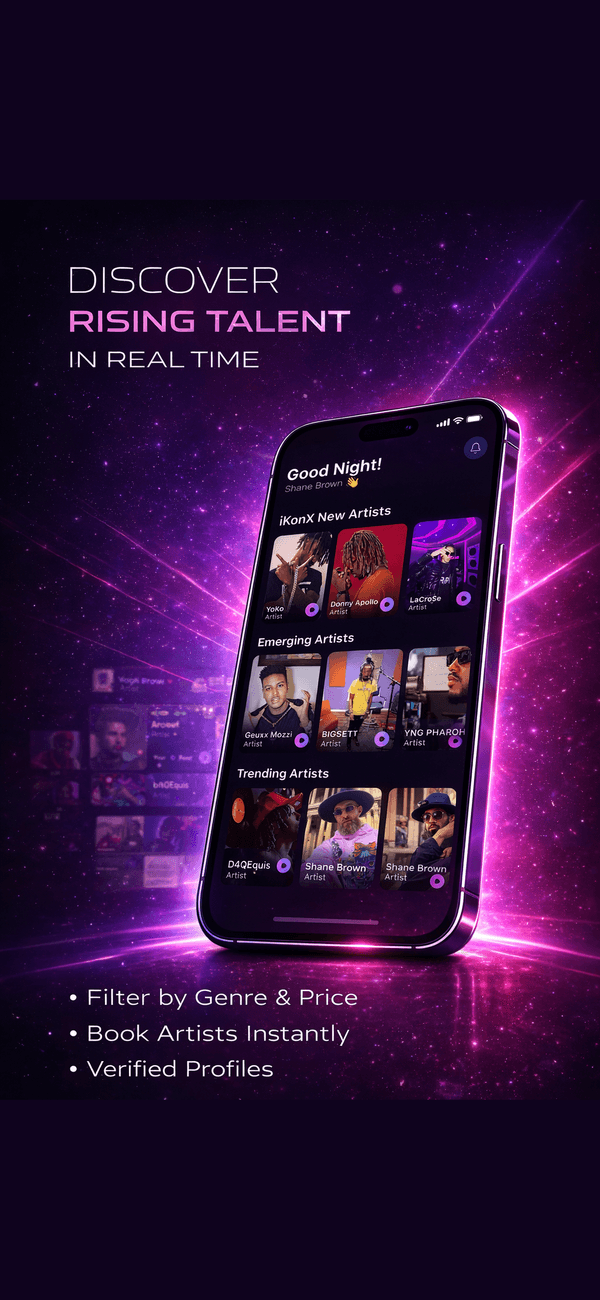
This is where a network like iKonX changes the starting position. For most of music history the first conversation between a label and an artist ran through a gatekeeper: a manager, an A&R contact, a paid introduction. On iKonX you find verified, career-stage-matched artists and message them directly, so the advance conversation is the real one from the first message, with no middleman taking a cut of the relationship before it begins. And when a deal on the network involves a service the artist sells, the model is deliberately artist-first: the artist keeps 100 percent of the price they set and iKonX takes 0 percent platform commission, while the buyer pays a flat 10 percent on top. The artist you are signing is not already losing a slice of every sale to the platform before your advance even lands.
We are building the labels side of iKonX in the open, so treat this as roadmap-honest: today iKonX is where a small label reads the signal, reaches the artist direct, and starts the relationship on fair terms, and the deal paperwork for an advance still lives in a proper contract between you and the artist. What does not change is the principle. A label that competes on ear, timing, and fair terms instead of muscle is the one that earns the second and third signing, and an advance paid the right way is the first proof to an artist that you are that kind of label.
The whole network lives in one app.
iKonX puts every side of the music business in your pocket. Artists set their own price and keep 100% of it · iKonX takes 0% platform commission. Browse, message, and book straight from the app.

How to pay an advance to a newly signed artist, step by step
- Sign the deal before a dollar moves. An advance is a contract term, not a favor, so it belongs in a signed agreement before you transfer anything. Spell out the amount, exactly what the advance covers, the recoupment terms, the artist's royalty rate, who owns the masters, the territory, and the term. If you found and reached the artist directly on a network like iKonX, you already skipped the gatekeeper, but you still put the numbers in writing. A handshake advance is how first-time labels end up in disputes they cannot win.
- Size the advance to what you can realistically recoup. The advance is recouped from the artist's royalty share, not yours, so the honest test is simple: given a conservative streaming and revenue projection, could this recoup in a sensible window? Independent labels put an average of 236,197 dollars into an artist across advance, recording, and marketing, but a first signing on a small budget might be a few thousand. Base the number on projected earnings, not on what impresses the artist in the room.
- Choose a structure: one lump sum or milestone tranches. You do not have to pay it all at once. Splitting the advance into tranches tied to deliverables, part on signing, part on delivery of finished masters, part on release, protects your cash flow and keeps both sides moving. Milestone payments are especially smart on a first deal, where neither side has a track record with the other yet. Decide, too, whether the advance is cross-collateralized across projects, and lean against it: cross-collateralization is one of the terms artists most resent.
- Collect tax paperwork and pay through a traceable rail. An advance is taxable income to the artist in the year they receive it, so collect a W-9 in the US, or a W-8BEN for a foreign artist, before you pay, and plan to issue a 1099 if you paid 600 dollars or more. Move the money through a rail with a paper trail, bank transfer, ACH, or escrow, never untraceable cash. A clean record protects both of you if the deal is ever questioned. This is general information, not tax or legal advice; confirm specifics with a professional.
- Account for recoupment in the open. The advance is not done the day it lands; it is done when it recoups. Give the artist a clear, regular recoupment statement showing what they were advanced and how earnings are paying it down. Transparent accounting is the single biggest trust signal a new label can send, and it is the difference between a one-record artist and a multi-year relationship. Treat the artist the way you would want to be treated on the other side of the table.
Filter the deck to artists at the same rung as your label, so a signing fits where you are now, not where you wish you were.
No demo pile, no inbox gatekeeper. You contact a verified profile straight from the deck and start the conversation on your terms.
Ways to pay an advance to a new artist, compared
| How you pay the advance | What the artist gets | How you recoup, and what it costs |
|---|---|---|
| iKonX | Direct contact with verified, stage-matched artists; agree terms with no gatekeeper in the way | 0% platform commission on any service the artist sells · the artist keeps 100% of the price they set, the buyer pays a flat 10% on top |
| Traditional record-deal advance | A lump sum upfront (reported roughly 50,000 to 350,000 dollars-plus at majors, far less at indies) | Recouped from the artist's royalty share; the artist earns a lower rate until it clears |
| Distribution-deal advance | Often 0 dollars (DistroKid, TuneCore) or a cash advance (UnitedMasters, Amuse-style); artist keeps ownership | Recouped from that catalog's streaming income; artist keeps 80 to 100% of royalties |
| Royalty-advance funding (beatBread / Duetti-style) | An advance underwritten by streaming data; artist keeps their masters | Recouped from a fixed share of future royalties; a financing cost, not equity in the artist |
| Development or singles-deal advance | A small, milestone-based advance, often paid per single | Recouped project by project; the lowest-risk structure for a first deal |
Ranges and structures above are general industry patterns, not live quotes; every deal is negotiated individually, so verify current terms with each platform or a music attorney before you sign. The average independent-label investment of 236,197 dollars per artist (IFPI Investing in Music) covers advance plus recording and marketing, not the advance alone, and the roughly 50,000 to 350,000 dollar major-label range is a reported estimate that varies widely. The only fixed claim is the iKonX model: the artist keeps 100 percent of the price they set on any service they sell, iKonX takes 0 percent platform commission, and the buyer pays a flat 10 percent on top. iKonX is free to download and explore, full access is a flat 9.99 dollars a month, and the only payout deduction is a low, sub-5 percent withdrawal fee, below the industry standard.
Paying a new-artist advance FAQ
What is an advance to a newly signed artist?
An advance is a recoupable prepayment: money a label pays an artist now, against royalties the artist has not earned yet. In almost every deal it is non-returnable, so if the project never earns it back the artist does not owe the cash, but the label keeps the artist's royalty share until the advance is paid off. It is not a salary and it is not a gift; it is the artist's own future income, paid early, at the label's risk.
How much should I advance a new artist?
There is no fixed number, and the honest test is recoupment: given a conservative revenue projection, could the advance be earned back from the artist's royalty share in a sensible window? Independent labels invest an average of 236,197 dollars per artist across advance, recording, and marketing, per IFPI research, while a first signing on a small budget might be a few thousand. Base the figure on projected earnings, not on what impresses the artist in the room.
Does the artist pay the advance back if the record does not sell?
Usually not in cash. Standard advances are recoupable but non-returnable, so the label recovers it out of the artist's royalty share as earnings come in, and if the project never recoups the artist does not write a check for the shortfall. The rare exception is a personally guaranteed or repayable advance, which most artists and their lawyers will refuse. Put the recoupment terms in writing so there is no dispute later.
Do I have to pay an advance at all to sign an artist?
No. Plenty of deals carry a 0 dollar advance. Flat-fee distributors like DistroKid and TuneCore pay nothing upfront and let the artist keep their royalties, and a development or singles deal can start with a small, milestone-based payment instead of a big lump sum. An advance is one tool, not a requirement. Sometimes the stronger offer to a new artist is fair terms, transparency, and real support rather than the biggest check.
How do I pay the advance safely and legally?
Sign the agreement first, then pay. Collect a W-9 in the US, or a W-8BEN for a foreign artist, before any money moves, and issue a 1099 if you paid 600 dollars or more. Send the funds through a rail with a paper trail, bank transfer, ACH, or escrow, never untraceable cash, and consider paying in milestone tranches tied to deliverables. This is general information, not tax or legal advice, so confirm specifics with a professional.
Does iKonX take a cut of an artist's advance or earnings?
No. iKonX takes 0 percent platform commission, and on any service an artist sells the artist keeps 100 percent of the price they set while the buyer pays a flat 10 percent on top. The only deduction is a low, sub-5 percent withdrawal fee when an artist moves earnings out, a standard transfer cost below the industry norm, never a commission on the sale. iKonX is free to download and explore, and full access is a flat 9.99 dollars a month. The labels side is on the roadmap; today iKonX is where you find and reach the artist direct, and the advance itself lives in your contract.
Labels is coming to The Network
Scouting opens soon. Be first to the deck when it goes live · no pressure, just a seat held.
Explore the connected sides of the network
Find the talent first. Sign on your terms.
Find the artist, reach them direct, and start the deal on fair terms. Download iKonX and skip the gatekeeper.
DOWNLOAD THE FREE PDF TODAY:
The Indie Label A&R Scouting Playbook
A modern A&R checklist for finding, career-stage-matching, and signing unsigned artists in 2026.
Get the free PDF ->