Labels JOIN THE NETWORK · LABELS

How to clear a sample for a signed artist

Unsigned artist ▲ Momentum
Stage Genre ▲ Momentum ✓ Verified

The room already pulled. Career-stage matched, verified, reachable direct.

142 New unsigned artists this week
100% Career-stage matched
0 Gatekeepers between you and contact
The short answer

Clearing a sample means getting two separate yeses in writing: one from whoever owns the master recording, usually a label, and one from whoever owns the composition, usually a publisher. Identify both owners, send a clearance request with the exact use, negotiate a fee plus a share of the new song, then paper it before release. Start eight to twelve weeks out.

01 · Discovery

Every uncleared sample is a release date with a fuse on it. The song comes in hot, the artist is signed, the rollout is booked, and somewhere in the second verse is four bars lifted off a record nobody in the room has thought about since 1974. The engineer knows. The A and R suspects. Nobody wants to be the person who says the word clearance out loud, because the word means eight weeks and a check.

The law is not vague about why it matters. Under 17 U.S.C. 106, the copyright owner holds the exclusive rights to reproduce the work and to prepare derivative works, and a sample touches both. Worse, it touches them twice, because a recorded sample carries two copyrights stacked on top of each other: the sound recording, and the underlying musical composition. Two rights, usually two different owners, and you need both.

Courts have not made this easier. In Bridgeport Music v. Dimension Films (6th Circuit, 2005) the court's guidance for sound recordings was famously blunt: get a license or do not sample. Eleven years later, in VMG Salsoul v. Ciccone (9th Circuit, 2016), the court applied the de minimis exception to sound recordings and expressly created a circuit split with Bridgeport. Which means the answer to is this tiny sample fine depends in part on which circuit you are sued in. That is not a risk model, that is a coin toss with your artist's release on the table.

02 · Signal

Sample clearance is a process, not a favor. It has a fixed shape, and a label that runs it the same way every time stops losing release dates to it.

The shape is two lanes running in parallel. Lane one is the master: the specific recording you sampled, normally controlled by the label that released it. Lane two is the composition: the song underneath, normally controlled by one or more publishers, and often split between several. You need written permission from every owner in both lanes. If a song has three co-writers at three publishers, that is three yeses in lane two alone, and any single no can kill the record.

What clearance actually costs is negotiated, not listed. In practice a master clearance is often a flat advance plus a royalty on the new recording, and a publishing clearance is often a share of the new composition, sometimes with an advance on top. Both scale with how recognizable the sample is, how central it is to the new song, how big the artist is, and how badly the owner wants to be on the record. There is no rate card, and anyone who tells you there is has not cleared many samples.

The label's real job is timeline and paper. Eight to twelve weeks is a working window, and it is a floor rather than a ceiling once multiple publishers are involved. Nothing goes to distribution and nothing goes to the DSPs until both yeses exist in a signed document, because a takedown mid-rollout costs more than the clearance ever would. And where a clearance is impossible or priced out of reach, the honest answer is to replay the part with session musicians and clear only the composition, or cut it.

The honest state of iKonX today: it is a live, downloadable app where artists and the people who pay them connect and settle up directly, and a label-side workspace for A and R pipelines, splits, and clearance tracking is on the roadmap. What already works is the piece a clearance touches most often, the money. When you hire a session player to replay a sample, or pay a writer for a new interpolation, the payment runs through iKonX: the artist keeps 100 percent of the price they set, iKonX takes 0 percent platform commission, and the buyer pays a flat 10 percent on top. iKonX is free to download and explore, full access to paid features is a flat 9.99 dollars a month, and the only payout deduction is a low, sub-5 percent withdrawal fee. iKonX is not a clearance house and does not license samples. It makes the people you hire to fix one easy to reach and easy to pay.
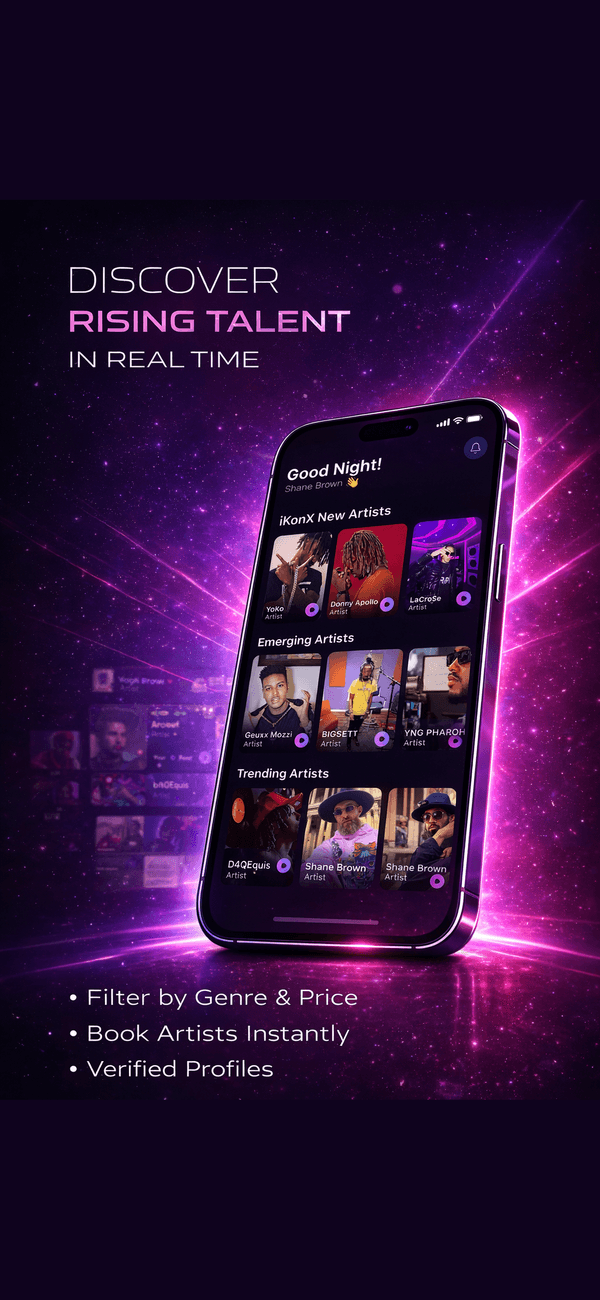
See iKonX in action

The whole network lives in one app.

iKonX puts every side of the music business in your pocket. Artists set their own price and keep 100% of it · iKonX takes 0% platform commission. Browse, message, and book straight from the app.

The iKonX app on an iPhone showing the artist discovery screen · where music meets business with 0% platform commission
03 · The Deck

How to clear a sample, step by step

Scout the live room
Stage▲ Momentum
  1. Get the exact sample on paper first. Timecode in and out, length, which element (drums, vocal, melody, a whole bar), and whether it is looped through the record or used once. Owners quote against the use, so a vague request gets a slow or expensive answer. Write down what the song sounds like without it, too, because that is your walk-away position.
  2. Identify both owners, not one. Lane one: the master owner, normally the label that released the original recording. Lane two: the publisher or publishers of the composition, which can be several if the song has co-writers. Public sources like the MLC and PRO databases are where you start. A sample is not cleared until both lanes say yes in writing.
  3. Send a clearance request with the whole picture. Include the original title and artist, the exact use, a copy of the new track, the release plan, the expected release date, and the formats and territories. Send both lanes on the same day, because the slowest publisher sets your timeline, not the fastest one.
  4. Negotiate the fee and the share. Expect a flat advance plus a royalty on the master side, and a share of the new composition on the publishing side, both scaled to how recognizable and central the sample is. There is no rate card. Get the final numbers, the term, the territory, and the formats written into a signed agreement, and do not release on an email that says looks fine.
  5. Have a plan B before you need one. If a clearance is refused or priced past the value of the record, replay the part with session musicians and clear only the composition, or interpolate the melody and clear the publishing, or cut it. Deciding this at week two is a creative choice. Deciding it at week ten is a crisis. Practical guidance, not legal advice.
Match by career stage
Genre✓ Verified

Filter the deck to artists at the same rung as your label, so a signing fits where you are now, not where you wish you were.

Reach out direct
✓ VerifiedOpen to contact

No demo pile, no inbox gatekeeper. You contact a verified profile straight from the deck and start the conversation on your terms.

Demo pile vs live discovery

Cleared vs. uncleared vs. replayed (what each one costs you)

Cleared in writingReleased unclearedReplayed or interpolated
Permissions neededMaster owner and publisher, bothNone obtained, both still owedPublishing only, no master clearance
Typical costAdvance plus royalty, plus a share of the new songZero, until it is notSession fees plus a publishing share
Legal exposurePapered and closedReproduction and derivative rights under 17 U.S.C. 106, and the circuits disagree on de minimisLow on the master side
Risk to the rolloutNoneTakedown, pulled release, renegotiation under duressSchedule risk only
Timeline8 to 12 weeks, longer with multiple publishersFast, then very slowDays to weeks
Paying the players you hireSession musicians and writers get paid through iKonX, keeping 100% of the price they set at 0% platform commission

Sources and dates. 17 U.S.C. 106 (live, July 2026): the copyright owner holds the exclusive rights to reproduce the copyrighted work and to prepare derivative works based upon it. A recorded sample implicates two separate copyrights, the sound recording and the underlying musical composition. Bridgeport Music, Inc. v. Dimension Films, 410 F.3d 792 (6th Cir. 2005): the court held that sampling a sound recording without a license is infringement, summarized as get a license or do not sample. VMG Salsoul, LLC v. Ciccone, 824 F.3d 871 (9th Cir. 2016): the Ninth Circuit applied the de minimis exception to sound recordings and expressly acknowledged creating a circuit split with Bridgeport. Clearance fees are negotiated case by case and are not published. Practical guidance, not legal advice. The iKonX model is the only fixed claim: artists keep 100% of the price they set, iKonX takes 0% platform commission, the buyer pays a flat 10% on top, iKonX is free to download and explore, full access to paid features is a flat $9.99/month, and the only payout deduction is a low, sub-5% withdrawal fee, below the industry standard.

FAQ

Sample clearance FAQ

What do you actually have to clear when you sample a record?

Two things. The master recording, normally owned by the label that released it, and the underlying composition, normally owned by one or more publishers. They are separate copyrights with separate owners, and you need written permission from both. Clearing one and not the other is not cleared.

How long does sample clearance take?

Plan on eight to twelve weeks, and treat that as a floor. The slowest owner sets your timeline, so a song with three co-writers at three publishers can run considerably longer. Start the process the week the sample lands in the demo, not the week the single is announced.

How much does it cost to clear a sample?

There is no rate card. In practice the master side is a negotiated advance plus a royalty on the new recording, and the publishing side is a share of the new composition, sometimes with an advance. Both scale with how recognizable the sample is, how central it is to the new song, and how big the artist is.

Is a short sample legally safe without clearing it?

Do not bet a release on it. The Sixth Circuit in Bridgeport (2005) said get a license or do not sample for sound recordings, while the Ninth Circuit in VMG Salsoul v. Ciccone (2016) applied a de minimis exception and openly created a circuit split. The answer can depend on where you are sued, which is not a risk a signed artist's release date should carry. Not legal advice.

What do we do if the owner says no?

Replay the part with session musicians and clear only the composition, interpolate the melody and clear the publishing, or cut it. Decide that at week two, when it is a creative choice, instead of week ten, when it is a crisis. Session players and writers you bring in get paid through iKonX, keeping 100 percent of the price they set at 0 percent platform commission.

Can iKonX clear a sample for my label?

No, and it does not claim to. iKonX is not a clearance house. It is a live app where the people you hire to fix a clearance problem, session musicians, writers, and interpolation players, are easy to reach and get paid directly. A label-side workspace for A and R and clearance tracking is on the roadmap, not shipped.

Building

Labels is coming to The Network

Scouting opens soon. Be first to the deck when it goes live · no pressure, just a seat held.

Notify me when it opens ->

Find the talent first. Sign on your terms.

Two owners, two yeses, in writing, before release. Download iKonX and pay the writers and session players who get the record cleared, directly.

The iKonX app on a phone

Download the iKonX App

Download on theApp Store
Coming Soon onGoogle Play

DOWNLOAD THE FREE PDF TODAY:

The Indie Label A&R Scouting Playbook

A modern A&R checklist for finding, career-stage-matching, and signing unsigned artists in 2026.

Get the free PDF ->