How to build an artist EPK as a manager
An artist EPK is one link that answers three questions in under thirty seconds: who is this, can they draw a crowd, and how do I book them. Build it in that order. Open with a short bio, no more than about a hundred and fifty words, that says what the artist sounds like and why anybody should care right now. Follow it with proof: monthly listeners, follower counts, past venues and capacities, ticket numbers, press quotes, and one live video that is not a phone recording from the back of the room. Close it with the booking block: a real name, a real email, the fee range, the technical requirements, and a high resolution photo the buyer can drop straight into a poster. Leave out the origin story, the influences paragraph, and the adjectives. A promoter is scanning for evidence the artist sells tickets. Everything on the page either supports that or is in the way.
The manager sends a beautiful EPK. Nine pages. A full biography that starts with the artist's grandmother's record collection. A mood board. Six paragraphs of influences, three of which are artists who filled arenas before the client was born. And buried on page seven, in small type, an email address that goes to an account nobody checks.
The promoter opens it, scrolls for eleven seconds looking for a number, does not find one, and closes it. The show gets offered to somebody else. The artist never hears why, and the manager concludes that the market is unfair, when what actually happened is that the pitch never answered the only question the buyer had.
Because a talent buyer is not evaluating art. They are evaluating risk. They have a room to fill on a Friday, a guarantee to cover, and a bar to sell. They are looking for one thing: evidence that this artist brings people through a door. An EPK that leads with poetry and hides the proof is asking a busy person to do the work of finding the reason to say yes, and busy people do not do that work. They say no by simply not replying.
Rebuild the EPK as a one screen argument, in the buyer's priority order, not the artist's. Identity, then proof, then logistics. The bio is the shortest section on the page, not the longest. The proof section is the biggest, because it is the only part doing sales work.
Proof means numbers with context. Not just monthly listeners, but where the listeners are, because a promoter in Tampa cares enormously that the artist has listeners in Tampa and does not care at all about the global total. Not just past shows, but venue names with capacities and how many tickets moved. If the artist sold out a two hundred cap room, say the number two hundred and say sold out. That single line does more than the entire biography.
Then make the booking block impossible to miss: name, email, phone, fee range, stage plot and input list, and a downloadable high resolution press photo. Every field you leave out is a reply the buyer now has to send, and every extra reply is a chance for the deal to quietly die in an inbox.
The last piece is the part most EPKs skip: make it bookable. A pitch that ends in an email address ends in a negotiation. A pitch that ends in a verified artist page with a visible price ends in a booking. That is what an iKonX artist page does, and the artist keeps 100% of the price they set, iKonX takes 0% platform commission, and the buyer pays a flat 10% on top, so the manager's commission comes off a fee that arrived whole. iKonX is free to download and explore, full access to paid features is a flat $9.99/month, and the only payout deduction is a low, sub-5% withdrawal fee when you transfer earnings out, below the industry standard.
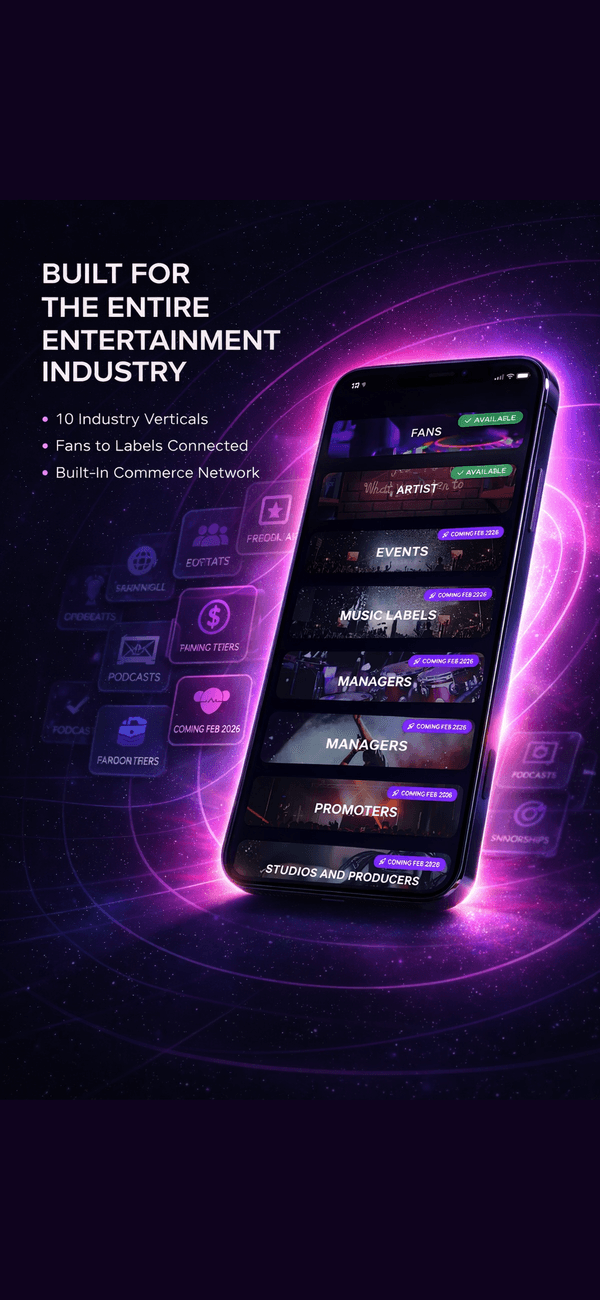
The whole network lives in one app.
iKonX puts every side of the music business in your pocket. Artists set their own price and keep 100% of it · iKonX takes 0% platform commission. Browse, message, and book straight from the app.

- Write the bio last and keep it to about 150 words. Genre, city, what they sound like, and the single most impressive true fact. No grandmother, no mood board, no adjectives you cannot prove.
- Lead the proof section with the number that sells. Sold out a 200 cap room. 40,000 monthly listeners with 6,000 of them in this metro. Opened for a named act. Put the strongest verifiable fact where the eye lands first.
- Localize the audience data. Streaming platforms publish listener geography in their artist tools. A promoter cares about their city, not your global total. Pull the local number and lead with it.
- Include exactly one live video, and make it a good one. A crowd reacting is the whole point. A shaky clip from the back of an empty room is worse than no video at all.
- Add the boring logistics buyers actually need. Fee range, stage plot, input list, backline needs, travel party size, and a high resolution photo they can put on a poster today.
- Put a real human's contact details at the top and the bottom. Name, email, phone. Not a form. Not a shared inbox nobody reads. Buyers move fast and they will not chase you.
- End with a way to actually book, not just to inquire. Link the artist's verified iKonX page so the buyer sees the price and books, instead of opening a negotiation. The artist keeps 100 percent of that price at 0 percent platform commission.
Scout
Browse verified, unsigned artists by genre and stage · the discovery layer the labels gatekeep.
Shortlist
Save and tag prospects into a working roster you can compare side by side.
Contact
Message verified talent direct · the artist keeps 100%, iKonX takes 0% platform commission.
What a buyer looks for versus what most EPKs lead with
| Section | How much a talent buyer cares | Where most EPKs put it |
|---|---|---|
| Proof of draw (tickets sold, venue capacities, local listeners) | This is the decision · almost everything rides on it | Page four, in small type, if at all |
| Booking block (contact, fee range, tech needs, press photo) | Second · a missing field is another email they will not send | The very last page, or missing |
| Live performance video | Third · one good one settles the question of whether they can hold a room | Six of them, all unwatched |
| Long biography and influences | Close to zero · they are buying a ticket seller, not a memoir | Page one, in full, in large type |
Streaming platform artist tools publish listener geography and audience data that let a manager show a promoter the local numbers rather than a global vanity total (Spotify for Artists published documentation, 2025). Electronic press kit platforms consistently structure the kit around bio, proof, media, and contact for exactly this reason (Sonicbids published EPK guidance, 2025). Platform features and published guidance change; verify current documentation before relying on it. Fee ranges vary enormously by market and draw, so treat any figure as a range and not a quote. The only fixed claim here is the iKonX model: the artist keeps 100% of the price they set, iKonX takes 0% platform commission, and the buyer pays a flat 10% on top. iKonX is free to download and explore, full access to paid features is a flat $9.99/month, and the only payout deduction is a low, sub-5% withdrawal fee when you transfer earnings out, below the industry standard.
Talent does not wait for permission.
When Managers opens, you will scout, shortlist and message verified talent from one console · before the labels ever see them.
What is the most important part of an artist EPK?
Proof of draw. Ticket numbers, venue capacities, sold out rooms, and local listener counts. A talent buyer is evaluating whether this artist fills their room on a Friday. Everything else on the page is supporting evidence for that one question.
How long should the bio be?
About 150 words, and it should be the shortest section on the page. Genre, city, what they sound like, and the strongest true fact. The long origin story is the single most common reason an EPK gets closed before the proof is ever seen.
Should the EPK show the artist's booking fee?
Show a range at minimum. Hiding the fee does not create leverage, it creates an extra email, and every extra email is a chance for the buyer to move on to an artist who made it easy. A visible price closes faster than a mystery.
Does an EPK need to be a PDF?
No, and a link is usually better. A link can be updated the day a new number lands, it works on a phone, and it does not sit stale in an inbox. Keep a PDF handy for buyers who ask, but lead with the link.
How does the manager get paid on a booking that comes from the EPK?
Commission comes off the artist's fee, so the size of that fee when it lands matters. On iKonX the artist keeps 100 percent of the price they set, iKonX takes 0 percent platform commission, and the buyer pays a flat 10 percent on top, so the fee arrives whole before the split.
Built for the people who run the careers.
Build the pitch, then make it bookable at a price the buyer can see. Download iKonX.

DOWNLOAD THE FREE PDF TODAY:
The Manager's Roster Starter
A working template for building and tracking a shortlist of unsigned talent · the operator's first roster.
Get the free PDF ->