How much should I charge to ghostwrite a song?
No platform commission on the price you list · the buyer pays a flat 10% on top.
Charge for three things, not one: the flat fee for the work, the writer's share you keep or sign away, and the credit you agree to stay off. Independent ghostwrites run from a few hundred dollars for a developing artist to five figures on a major placement. Take 50 percent up front, and keep 100 percent of your price on iKonX at 0 percent commission.
Ghostwriting is the only songwriting job with no rate card. Nobody publishes what they paid, because the whole point of the arrangement is that nobody says it happened. So the number gets pulled out of the air, usually by the person with more leverage, and the writer finds out later that the fee was the smallest part of what changed hands.
The gatekeeper here is not an A and R. It is the paperwork. A commissioned song is not automatically a work made for hire. Under 17 U.S.C. 101, a specially ordered or commissioned work only counts as a work made for hire when there is a signed written agreement and the work falls inside one of nine listed categories, and a standalone song is not one of them. A transfer of copyright ownership is also invalid unless it is in writing and signed by the owner of the rights conveyed, under 17 U.S.C. 204(a). Which means the loose deal in the DMs did not move your rights, and the aggressive one-page you signed without reading probably did.
Then there is the money. Ghostwrites are delivered as files, and files travel faster than payments. You send the lyric sheet and the reference vocal, the artist says the label has to process it, and the invoice starts aging. Two failures compound: an underpriced deal, collected late, on terms you never read.
List it. Price it. Keep it.
Price a ghostwrite as three separate decisions and the number stops being a guess. Decision one is the fee: what the work is worth on the day. Decision two is the writer's share: whether you retain a percentage of the composition or sign it away. Decision three is the credit: what you charge for staying off it.
Fee first. The honest bands in the independent market: a few hundred dollars for a topline or a verse for a developing artist with no budget, low four figures for a full song delivered with a demo vocal for an artist with real traction, and five figures once a label, a sync deal, or a name act is on the other side. Charge for the deliverable, not the hours. A hook, a verse, a full topline, and a full song with a produced demo are four different products with four different prices.
Then the share. This is where writers lose the most money without noticing, because a fee is visible and publishing is not. If you keep a writer's share, the composition keeps paying you through your PRO and the MLC long after the fee is spent. If you assign it, that stream is gone, and it should be paid for. Any deal that takes 100 percent of the writer's share should price meaningfully above a deal where you keep 25 or 50 percent. There is also a long tail worth knowing: under 17 U.S.C. 203, grants made by an author on or after January 1, 1978 can be terminated in a five-year window that opens 35 years after the grant, but genuine works made for hire are excluded from that right. That is exactly why buyers push the work-for-hire label, and exactly why the label does not fit a standalone song on its own.
Last, the credit. Anonymity has a price. If the artist wants your name off the song and an NDA on the arrangement, that is a product you are selling, and it should carry a premium rather than a discount.
Then collect it. The fee is agreed and the file is the leverage, so payment has to land before the file does. That is the half iKonX handles. You set the price, the buyer pays inside the app before you deliver, and the artist keeps 100 percent of the price they set, at 0 percent platform commission, with the buyer paying a flat 10 percent on top. iKonX is free to download and explore, full access to paid features is a flat 9.99 dollars a month, and the only payout deduction is a low, sub-5 percent withdrawal fee, below the industry standard. Straight about the boundary: iKonX is not a publisher and does not register your splits or your termination rights. It removes the other failure, the one where the song is delivered and the fee never arrives.
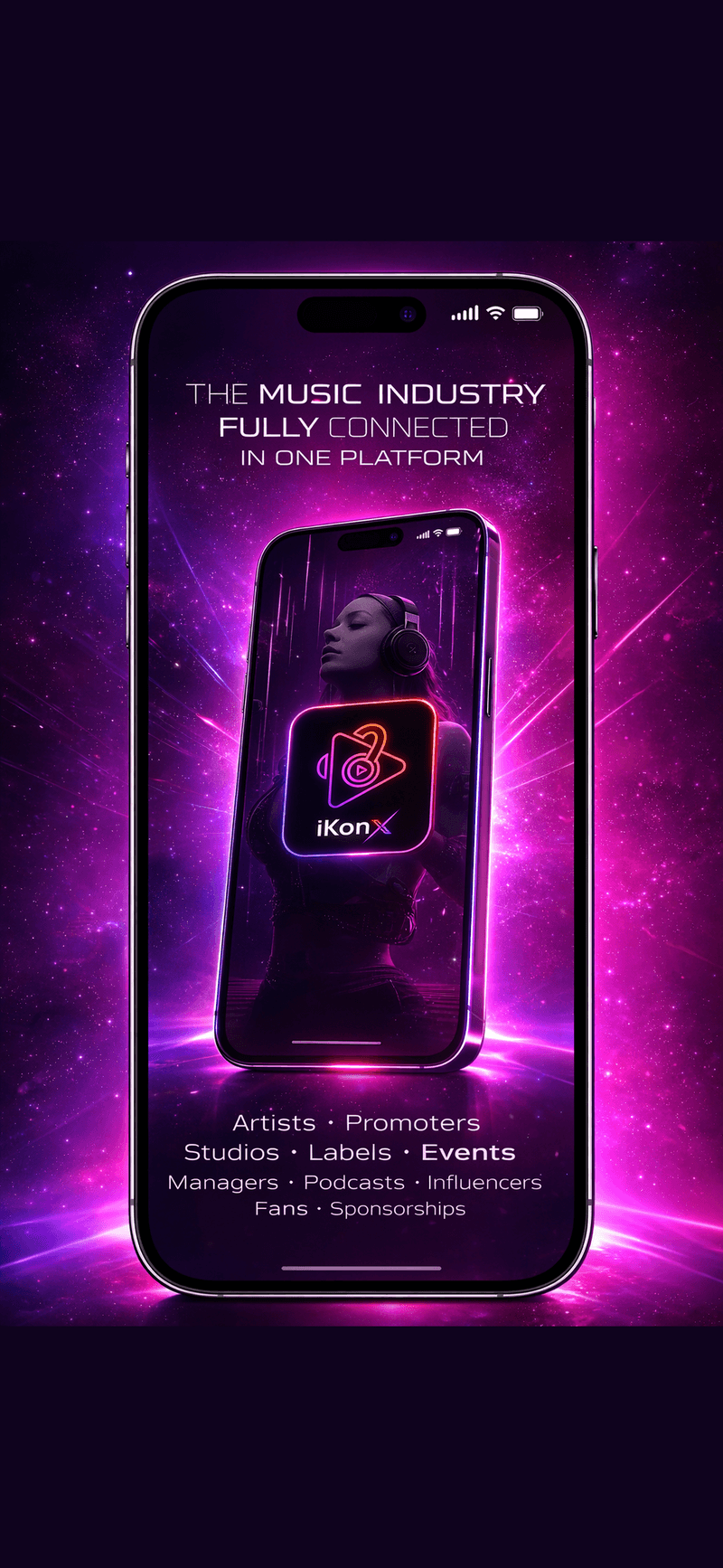
The whole network lives in one app.
iKonX puts every side of the music business in your pocket. Artists set their own price and keep 100% of it · iKonX takes 0% platform commission. Browse, message, and book straight from the app.

How to price a ghostwrite, step by step
- Define the deliverable before you name a number. A hook, a single verse, a full topline over their beat, or a finished song with a demo vocal and a lyric sheet are four separate products. Write down exactly what lands in their inbox, in what format, and how many revisions are included. A price with no scope is an invitation to rewrite the song five times for free.
- Set the flat fee to your tier, not to their story. Developing artist with no budget: a few hundred. Independent artist with real traction and a release plan: low four figures. Label, sync, or a name act behind the request: five figures. The budget follows the placement, not the sad email. If they cannot say what the song is for, they cannot afford the top of your range.
- Price the writer's share as its own line. Decide whether you keep a percentage of the composition. Keeping 25 to 50 percent of the writer's share lets the song keep paying you through your PRO and the MLC. Signing away 100 percent kills that stream forever, so it should raise the fee, not be thrown in as a courtesy.
- Charge for the silence. If they want your name off the record and an NDA on the arrangement, add a premium. Uncredited work costs you the portfolio, the reference, and the next client who would have found you through the song. That is a real cost and it belongs in the price.
- Take 50 percent up front and get it in writing. Half on signature, half on delivery, both collected through iKonX before the file leaves your drive. Put the scope, the revision count, the credit, and the writer's share in a signed document, because 17 U.S.C. 204(a) means an unsigned promise to transfer rights is not a transfer at all. Practical guidance, not legal advice.
Three ghostwriting deal shapes (and what each one is really worth)
| Flat fee, no credit, no share | Flat fee plus writer's share | Lower fee, bigger share | |
|---|---|---|---|
| What you sell | The song and every right in it | The song, you keep a slice of the composition | Discounted cash for real ownership |
| Typical independent range | Highest cash of the three | Mid cash plus back end | Lowest cash, biggest back end |
| Pays you in 2029 | No | Yes, via your PRO and the MLC | Yes, and more of it |
| Needs a signed writing | Yes, 17 U.S.C. 204(a) | Yes | Yes |
| Best when | You need cash now and the song is not your voice | Default position for most writers | The artist is on the way up and you believe it |
| Your fee on iKonX | Collected before delivery, you keep 100% of the price you set, 0% platform commission | ||
Sources and dates. 17 U.S.C. 101 (live, July 2026): a specially ordered or commissioned work is a work made for hire only if the parties expressly agree in a signed written instrument and the work falls within one of nine enumerated categories; a standalone musical work is not among them. 17 U.S.C. 204(a): a transfer of copyright ownership is not valid unless it is in writing and signed by the owner of the rights conveyed. 17 U.S.C. 203: grants executed by an author on or after January 1, 1978 may be terminated during a five-year window beginning 35 years after execution, and works made for hire are excluded from that right. Rate bands are market observation from the independent market in 2026, not published statistics. Practical guidance, not legal advice. The iKonX model is the only fixed claim: artists keep 100% of the price they set, iKonX takes 0% platform commission, the buyer pays a flat 10% on top, iKonX is free to download and explore, full access to paid features is a flat $9.99/month, and the only payout deduction is a low, sub-5% withdrawal fee, below the industry standard.
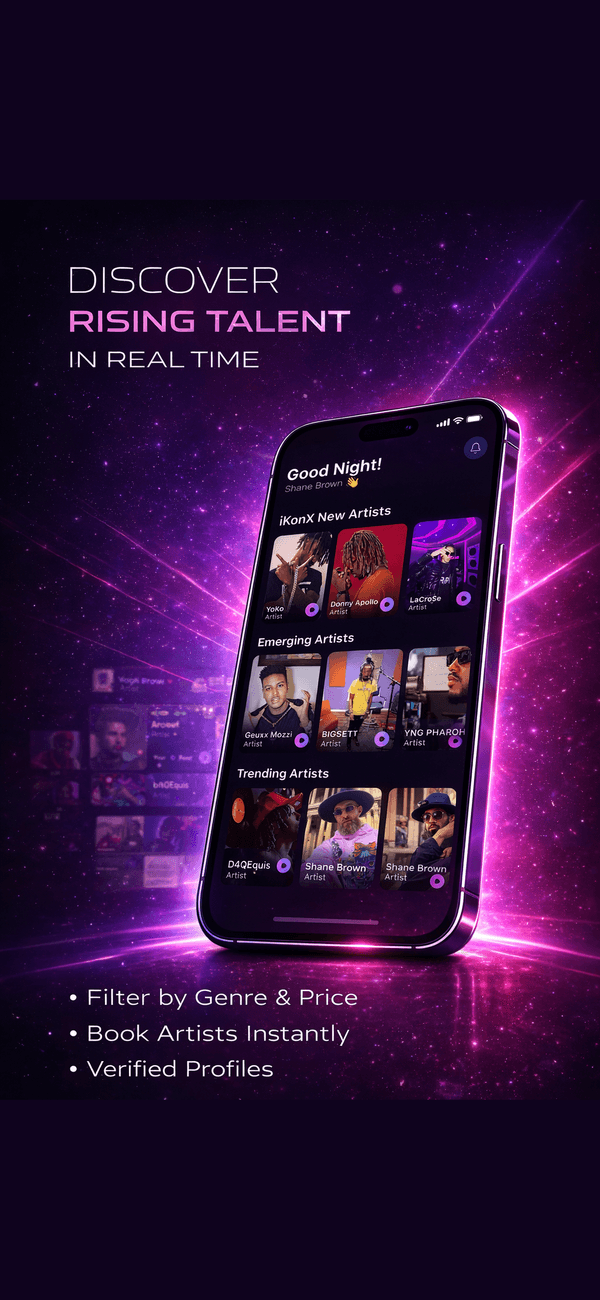
Verified artists, real profiles
Ghostwriting rates FAQ
What is a normal ghostwriting fee for one song?
There is no published rate card, so use tiers. A few hundred dollars for a verse or topline for a developing artist with no budget, low four figures for a full song with a demo vocal for an artist with traction, and five figures once a label, a sync placement, or a name act is behind the request. Charge for the deliverable, not the hours.
Should I keep a writer's share or take a bigger flat fee?
Keeping 25 to 50 percent of the writer's share means the composition keeps paying you through your PRO and the MLC for as long as it earns. Signing away 100 percent ends that permanently, so it should raise the cash fee, not be given away to close the deal. If you need cash now and the song is not your voice, the flat fee is a fair trade, made with your eyes open.
Is a ghostwrite automatically a work made for hire?
No. Under 17 U.S.C. 101 a commissioned work is a work made for hire only if there is a signed written agreement and the work falls in one of nine listed categories, and a standalone song is not one of them. A song can qualify as part of a motion picture or other audiovisual work or a collective work, which is why film and compilation deals are different. Practical guidance, not legal advice.
Do I charge extra for staying uncredited?
Yes. Anonymity costs you the credit, the catalog, the portfolio, and the next client who would have found you through the song. If the artist wants an NDA and your name off the record, that is a product you are selling and it carries a premium.
How do I get paid before I hand over the lyrics?
Take 50 percent on signature and 50 percent on delivery, both collected through iKonX before the file leaves your drive. The artist keeps 100 percent of the price they set, iKonX takes 0 percent platform commission, and the buyer pays a flat 10 percent on top. iKonX is free to download, full access is a flat 9.99 dollars a month, and the only deduction is a low, sub-5 percent withdrawal fee.
Does iKonX take a cut of my ghostwriting fee?
No. iKonX takes 0 percent platform commission and the writer keeps 100 percent of the price they set. The buyer pays a flat 10 percent on top of the price. iKonX is not a publisher, so it does not register your composition, file your splits, or handle your termination rights under 17 U.S.C. 203. It handles the payment.
Explore the connected sides of the network
Built for the working artist.
Name the price, get half up front, and never hand over a song on a promise. Download iKonX and sell your writing where the payment lands before the file does.

DOWNLOAD THE FREE PDF TODAY:
Indie Feature Pricing Cheat-Sheet
What to charge for a feature verse with no following · the price math, plainly.
Get the free PDF ->