How much do music sponsorships pay?
Brands reach independent artists directly on iKonX. Two parties, one transparent table, zero broker in the middle.
Music sponsorship pay is set by deal type first and audience size second. Per-post content deals for smaller artists commonly run 100 to 500 dollars, regional tour sponsorship 1,000 to 5,000, and national tour sponsorship 10,000 to 100,000 or more. Within each band, engagement moves the number hardest: rates above 8 percent engagement can command a 30 to 50 percent premium. What you keep depends on whether a manager and agent stack sits in between.
Artists asking what sponsorships pay usually get one of two unhelpful answers: a single number that is wrong for their situation, or it depends, which is true and useless.
The reason a single number never works is that sponsorship is not one product. A brand paying for three Instagram posts and a brand underwriting a twelve-date regional tour are buying different things on different budgets from different people inside the company. Quoting a per-post rate for a tour deal leaves money on the table; quoting a tour number for a content deal ends the conversation.
The second confusion is that artists benchmark on follower count when brands increasingly do not. Engagement above 8 percent can command 30 to 50 percent premium pricing, because buyers worked out that response predicts outcomes better than reach does. An artist with a small, highly engaged, geographically concentrated audience is genuinely worth more to a regional brand than a larger passive one, and the pricing reflects that when the artist knows to argue it.
The third thing that distorts the picture is what comes out the other side. A manager typically takes 15 to 20 percent of gross and an agent another 10 to 20 percent, so a headline deal figure and what lands in the artist's account can differ by a quarter to nearly half. Artists comparing notes on deal sizes are often comparing gross to net without realising it.
Work out the number in two steps: pick the band from the deal type, then move within it using the five multipliers.
Step one, the band. Paid content for smaller artists commonly runs 100 to 500 dollars per post, with platform-tier rates putting Instagram nano creators at 100 to 500 and TikTok nano at 200 to 1,000. Regional tour sponsorship commonly runs 1,000 to 5,000 dollars. National tour sponsorship runs 10,000 to 100,000 or more. Product and endorsement deals often pay in product with a smaller cash component, and are worth taking early because they build the track record that unlocks the cash bands.
Step two, the five multipliers. Engagement rate is the strongest, with above 8 percent commanding a 30 to 50 percent premium. Audience concentration matters next, because a geographically or demographically tight audience is directly actionable for a brand. Then exclusivity, since agreeing not to work with competitors is worth real money and is routinely given away free. Then usage rights, because a brand wanting to run your content as paid media for six months is buying substantially more than a post. Then deliverable count, which is the one artists focus on and the one that moves the number least.
Then work out what you keep. A manager at 15 to 20 percent and an agent at 10 to 20 percent can take a quarter to nearly half of gross between them. Those percentages are entirely fair when the intermediary is the reason the deal exists. They are hard to justify when a brand found you directly.
That last point is why being findable changes the economics of smaller deals specifically. iKonX is building the Sponsorships side around it: verified artist profiles with audience and rates visible up front, so a brand can reach the artist directly. The artist keeps 100 percent of the price they set, iKonX takes 0 percent platform commission, and the buyer pays a flat 10 percent on top.
Roadmap honesty: Sponsorships is a roadmap side of iKonX, launching soon. It solves discovery and direct contact, not contracts or campaign reporting.
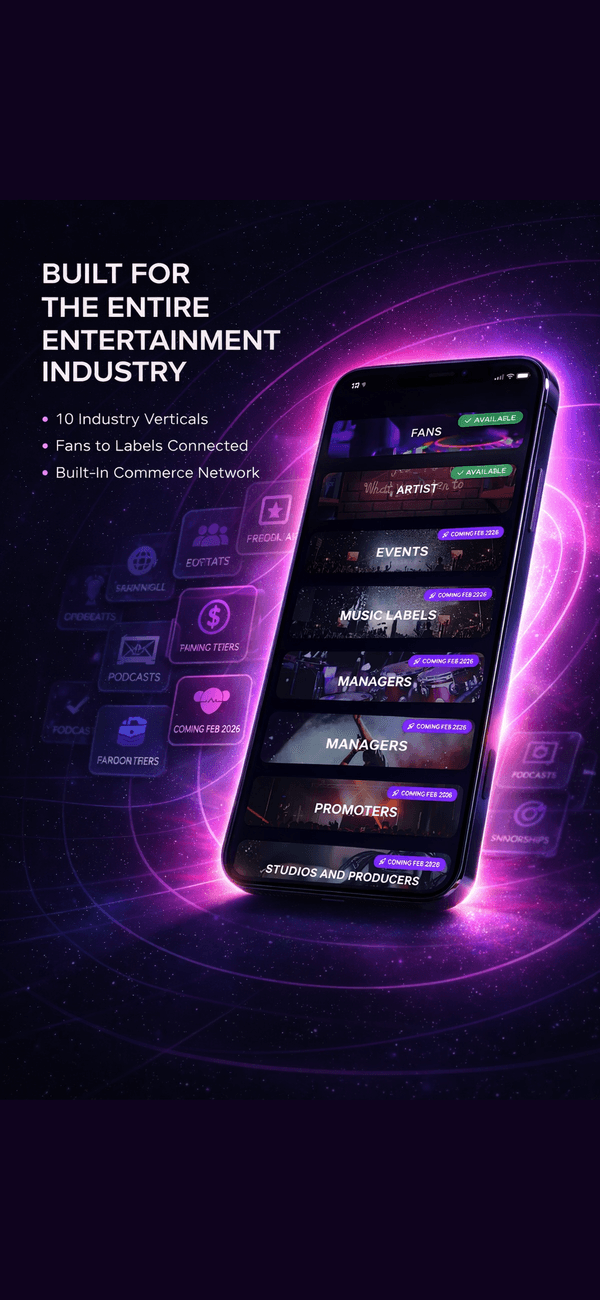
The whole network lives in one app.
iKonX puts every side of the music business in your pocket. Artists set their own price and keep 100% of it · iKonX takes 0% platform commission. Browse, message, and book straight from the app.

How to work out what your sponsorship should pay
- Name the deal type before you name a price. Paid content, event or performance, product or endorsement, or tour sponsorship. Each has a different budget holder and a different band, and quoting across types is how artists both underprice and lose deals.
- Pick your band from real figures. Per-post 100 to 500 dollars for smaller artists, regional tour 1,000 to 5,000, national tour 10,000 and up. Start inside the band rather than guessing above or below it.
- Lead with engagement, not followers. Above 8 percent engagement can command 30 to 50 percent premium pricing. If your rate is strong, put it in the first line of the conversation, because it is the number that justifies moving up the band.
- Price exclusivity separately, every time. Agreeing not to work with competitors for a period is a real restriction on future income. It is the term most often handed over free and the easiest one to charge for once you name it.
- Price usage rights separately too. Organic posting and six months of paid-media use are different products. If a brand wants to run your content as an ad, that is an additional line, not a courtesy.
- Calculate net before you celebrate. Subtract any manager and agent percentages, which can be 25 to 40 percent combined. Compare deals net to net, because gross-to-net comparisons are why artists think everyone else is getting better numbers.
Music sponsorship rate bands by deal type in 2026
| Deal type | Typical 2026 pay | What moves it most |
|---|---|---|
| Paid content, smaller artist | 100 to 500 dollars per post | Engagement rate and audience concentration |
| Paid content by platform tier | Instagram nano 100 to 500, TikTok nano 200 to 1,000 | Platform and engagement |
| Product or endorsement | Product, sometimes plus a fee | Fit and duration; builds track record |
| Event or performance | Varies with event scale and market | Live draw rather than online reach |
| Regional tour sponsorship | 1,000 to 5,000 dollars | Routing, markets and activation |
| National tour sponsorship | 10,000 to 100,000 dollars or more | Audited audience and sustained visibility |
| Minus a manager and agent stack | Roughly 25 to 40 percent of gross removed | Whether they sourced the deal |
| Direct via iKonX | The artist's listed price, buyer pays 10 percent on top | 0 percent platform commission |
Pay bands are dated and sourced. Music sponsorship ranges run roughly 1,000 to 5,000 dollars for a regional tour and 10,000 to 100,000 dollars or more for a national tour, with per-post rates of 100 to 500 dollars for artists under 10,000 followers (orphiq.com, 2026-05-17). 2026 sponsored-post rates by follower tier put Instagram nano creators at 100 to 500 dollars and TikTok nano at 200 to 1,000 (influenceflow.io, 2026). Engagement above 8 percent can command 30 to 50 percent premium pricing, with engagement weighted over follower count (influenceflow.io, 2025). Sponsorship types including product placement, event performance and social promotion are per Ditto Music (dittomusic.com, 2026). A music manager typically takes 15 to 20 percent and a booking or talent agent 10 to 20 percent of gross (matadortalent.com, 2025), which is where the combined 25 to 40 percent figure comes from. Sponsored content must be clearly disclosed, with FTC civil penalties reaching 53,088 dollars per violation as of 2025 (termly.io, 2025). Figures are directional market ranges, not quotes for any specific artist. The only fixed claim here is the iKonX model: the artist keeps 100 percent of the price they set, iKonX takes 0 percent platform commission, and the buyer pays a flat 10 percent on top. iKonX is free to download and explore, full access to paid features is a flat 9.99 dollars a month, and the only payout deduction is a low, sub-5 percent withdrawal fee, below the industry standard.
Music sponsorship pay: FAQ
How much does a music sponsorship pay?
It depends on the deal type more than on you. Paid content for smaller artists commonly runs 100 to 500 dollars per post, regional tour sponsorship 1,000 to 5,000 dollars, and national tour sponsorship 10,000 to 100,000 or more. Product and endorsement deals often pay in product with a smaller cash element. Name which deal you are discussing before quoting anything, because a per-post rate quoted for a tour deal leaves a great deal on the table.
What increases a music sponsorship rate the most?
Engagement rate. Above 8 percent can command 30 to 50 percent premium pricing, because brands worked out that response predicts outcomes better than reach. After that: audience concentration, since a geographically tight audience is directly actionable; exclusivity, which is a genuine restriction on future income; and usage rights, since running your content as paid media for months is a bigger product than a post. Deliverable count moves the number least, and it is what artists focus on most.
Do you need a big following to get paid for a sponsorship?
No, and chasing size can be counterproductive. Nano-tier rates already sit at 100 to 500 dollars per post on Instagram and 200 to 1,000 on TikTok, and a small, engaged, geographically concentrated audience is genuinely more valuable to a regional brand than a large passive one. Lead with who your audience is and how they respond rather than how many there are.
How much of a sponsorship does a manager take?
A manager typically takes 15 to 20 percent of gross and an agent another 10 to 20 percent, so a combined stack can remove roughly a quarter to nearly half. That is fair when the intermediary is the reason the deal exists and hard to justify when the brand found you directly. Always compare deals net to net, because gross-to-net comparisons are why artists assume everyone else is getting better numbers than they are.
Does iKonX take a commission on sponsorship deals?
No. The artist keeps 100 percent of the price they set and iKonX takes 0 percent platform commission, with the brand paying a flat 10 percent on top, so the rate you list is the rate you receive. That is a different structure from a manager and agent stack taking 25 to 40 percent of gross between them. The only deduction on the artist side is a low, sub-5 percent withdrawal fee when moving earnings to a bank, a transfer cost and never a commission. iKonX is free to download and explore, full access is a flat 9.99 dollars a month, and Sponsorships is a roadmap side, launching soon.
Explore the connected sides of the network
Show business is a business. No broker.
iKonX is building a Sponsorships side where brands find verified artists with rates visible up front. Artists keep 100 percent of the price they set, and iKonX takes 0 percent commission.

DOWNLOAD THE FREE PDF TODAY:
The Brand-Artist Sponsorship Proposal Template
A fill-in proposal a brand and an artist can agree on with no broker in the middle.
Get the free PDF ->