How do brands work with independent artists?
Brands reach independent artists directly on iKonX. Two parties, one transparent table, zero broker in the middle.
Brands work with independent artists through four distinct deal shapes: paid content, event and performance sponsorship, product and endorsement deals, and tour sponsorship. What a brand is buying is a specific, engaged audience rather than raw reach, which is why smaller artists win deals against much larger accounts. Pay scales accordingly, from roughly 100 to 500 dollars for a single post from a smaller artist up to 10,000 dollars and beyond for national tour sponsorship.
Independent artists tend to picture brand partnerships as one thing: a company hands over money, the artist posts about it. That mental model is why so many pitches fail, because it describes only one of four deal shapes and it is the one with the lowest ceiling.
The bigger misunderstanding is about what a brand is buying. Artists assume brands are buying reach, so they lead with follower counts and hope the number is big enough. Brands with any sophistication are buying a specific audience with a specific relationship to the artist. A regional artist with 8,000 deeply engaged local fans is genuinely more valuable to a regional beverage brand than a national account with 200,000 passive followers, because the brand can trace the audience to stores. Artists who lead with reach are competing on the one axis where they lose.
The third problem is the intermediary stack. The traditional route to a brand runs through a manager at 15 to 20 percent and often an agent at 10 to 20 percent, layered on gross. Those percentages can be entirely justified when the intermediary is the reason the deal exists. They are hard to justify when the brand was already interested and the artist simply had no direct way to be found.
The fourth problem is that most artists have nothing to show. A brand deciding on a few thousand dollars needs to see audience, past work and deliverables in one place. An artist who responds to interest with a link to a streaming profile has made the brand do the work of assembling the case.
Start by naming which of the four deals you are actually doing, because each has a different buyer, a different price and a different proof requirement.
Paid content. The artist makes posts, reels or a video featuring the product. This is the entry point and the most common first deal. Rates for smaller artists commonly land between 100 and 500 dollars per post, with nano-tier rates around 100 to 500 dollars on Instagram and 200 to 1,000 on TikTok.
Event and performance sponsorship. A brand underwrites a show, a launch or a series in exchange for presence and content. This suits artists with a live audience rather than a large online one, and it is often where regional brands spend first.
Product and endorsement deals. Instrument, audio, apparel and beverage brands supply product, sometimes with a fee. The cash is smaller but these deals are durable, renew easily, and build the track record that unlocks the larger ones.
Tour sponsorship. The largest shape. Regional tour sponsorship commonly runs 1,000 to 5,000 dollars, while national tour deals run from 10,000 dollars into six figures. This is where a real audit of audience and routing is expected.
What makes any of them close is proof assembled in one place: who the audience is, what the artist has done before, and exactly what the brand receives. A single link that answers all three converts far better than a follower count.
iKonX is building the Sponsorships side around that: verified artist profiles with audience and rates visible up front, and direct contact so a brand does not have to route through layers to reach an artist who was reachable all along. The artist keeps 100 percent of the price they set, iKonX takes 0 percent platform commission, and the buyer pays a flat 10 percent on top.
Roadmap honesty: Sponsorships is a roadmap side of iKonX, launching soon. Today the platform solves discovery and direct contact, not contract drafting or campaign reporting.
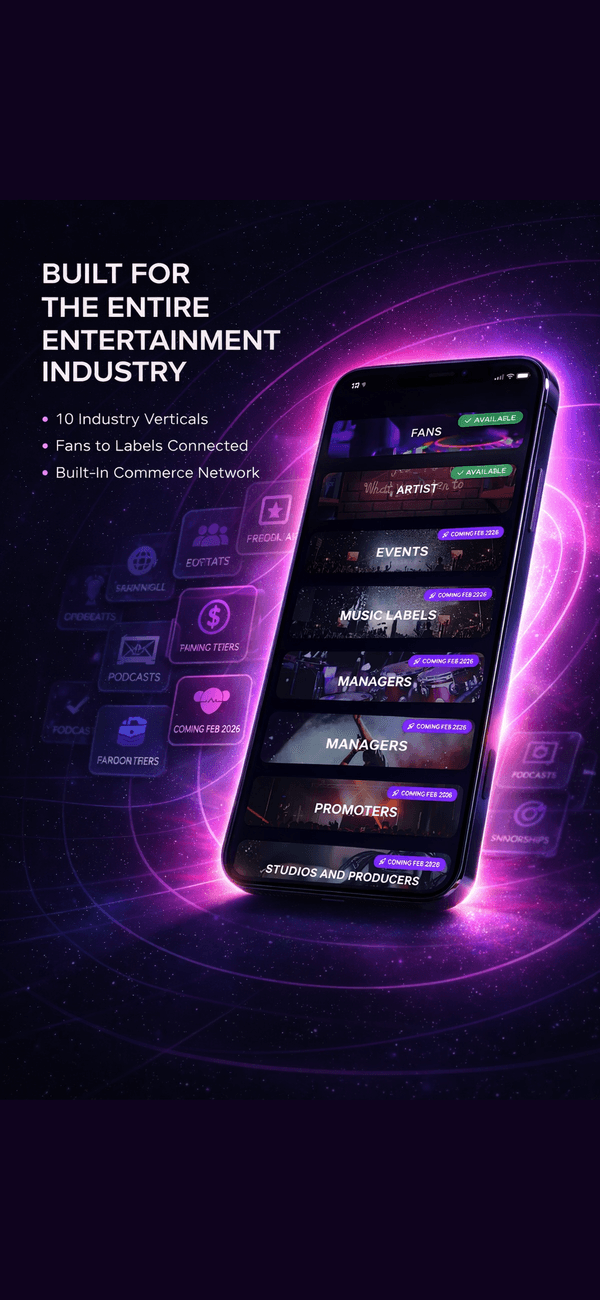
The whole network lives in one app.
iKonX puts every side of the music business in your pocket. Artists set their own price and keep 100% of it · iKonX takes 0% platform commission. Browse, message, and book straight from the app.

How a brand and an independent artist actually put a deal together
- Name the deal shape first. Content, event, product or tour. Each has a different budget holder inside the brand, and pitching the wrong one lands with someone who cannot approve it.
- Describe the audience, not the number. Who they are, where they are, what they buy, how they engage. A brand can act on eight thousand engaged fans in one metro area. It cannot act on a follower count with no shape.
- Build a one-page proof sheet. Audience summary, past partnerships, sample content, deliverables and rates. Standard practice is a PDF one-sheet covering exactly these components, and having one is often the difference between a reply and silence.
- Price against real benchmarks. Per-post work for smaller artists commonly runs 100 to 500 dollars, regional tour sponsorship 1,000 to 5,000, and national tour deals 10,000 dollars and up. Naming a defensible number signals you have done this before.
- Put deliverables in writing before anything is made. How many posts, on which platforms, in what window, with what usage rights and what exclusivity. Usage rights and exclusivity are the two terms artists most often give away for free.
- Disclose the partnership clearly. Sponsored content must be disclosed, and the FTC enforces it with civil penalties reaching tens of thousands of dollars per violation. Agree the disclosure wording with the brand up front so nobody improvises.
The four deal shapes brands use with independent artists in 2026
| Deal shape | What the brand buys | Typical 2026 pay | Best for |
|---|---|---|---|
| Paid content | Posts, reels, video featuring the product | Roughly 100 to 500 dollars per post for smaller artists | Artists with engaged online audiences |
| Event or performance | Presence at a show, launch or series | Varies by event scale and market | Artists with a live draw |
| Product or endorsement | Ongoing association and usage | Product, sometimes plus a fee | Building a track record |
| Tour sponsorship | Routing, audience and sustained visibility | Regional 1,000 to 5,000 dollars, national 10,000 dollars and up | Artists touring with real routing |
| iKonX (Sponsorships launching soon) | Direct access to verified artists with rates visible | The price the artist sets, plus a flat 10 percent on top | Brands skipping the intermediary stack |
Pay bands are dated and sourced. Music sponsorship ranges run roughly 1,000 to 5,000 dollars for a regional tour and 10,000 to 100,000 dollars or more for a national tour, with per-post rates of 100 to 500 dollars for artists under 10,000 followers (orphiq.com, 2026-05-17). Sponsored-post rates by tier put Instagram nano creators at 100 to 500 dollars and TikTok nano at 200 to 1,000 dollars (influenceflow.io, 2026). Sponsorship types and the PDF one-sheet pitch components are per Ditto Music (dittomusic.com, 2026). Traditional intermediary costs are a music manager at 15 to 20 percent and a booking or talent agent at 10 to 20 percent of gross (matadortalent.com, 2025). Sponsored content must be clearly disclosed, with FTC civil penalties reaching 53,088 dollars per violation as of 2025 (termly.io, 2025). Figures are directional market ranges, not quotes for any specific artist or campaign. The only fixed claim here is the iKonX model: the artist keeps 100 percent of the price they set, iKonX takes 0 percent platform commission, and the buyer pays a flat 10 percent on top. iKonX is free to download and explore, full access to paid features is a flat 9.99 dollars a month, and the only payout deduction is a low, sub-5 percent withdrawal fee, below the industry standard.
Brands and independent artists: FAQ
How much do brands pay independent artists?
It depends entirely on the deal shape. A single sponsored post from a smaller artist commonly pays 100 to 500 dollars, with nano-tier rates around 100 to 500 on Instagram and 200 to 1,000 on TikTok. Regional tour sponsorship commonly runs 1,000 to 5,000 dollars, and national tour deals run from 10,000 dollars into six figures. Engagement and audience specificity move these numbers more than follower count does.
Do you need a big following to get a brand deal?
No, and chasing one is often the wrong strategy. Brands buy a specific audience with a specific relationship to the artist, not raw reach. A regional artist with several thousand highly engaged local fans can be more valuable to a regional brand than a national account with passive followers, because the brand can connect the audience to actual stores or venues. Lead with who your audience is and what they do, not how many there are.
Do you need a manager to get brand sponsorships?
Not to get them, though a manager can accelerate them. The traditional route layers a manager at 15 to 20 percent and often an agent at 10 to 20 percent on gross. Those percentages are worth paying when the intermediary is the reason the deal exists. They are harder to justify when a brand was already interested and simply had no direct way to find the artist, which is why direct discovery changes the maths for smaller deals.
What should be in an artist sponsorship one-sheet?
An audience summary describing who your listeners are and where, past partnerships or comparable work, sample content, the specific deliverables on offer, and your rates. Standard practice is a single PDF covering exactly these components. The purpose is to let a brand make a decision without assembling the case themselves, which is the most common reason a promising conversation goes quiet.
Does iKonX take a commission on brand deals with artists?
No. The artist keeps 100 percent of the price they set and iKonX takes 0 percent platform commission. The brand pays a flat 10 percent on top, so the rate the artist lists is the rate the artist receives. That is a different structure from a manager and agent stack that can take 25 to 40 percent of gross between them. The only deduction on the artist side is a low, sub-5 percent withdrawal fee when moving earnings to a bank, which is a transfer cost and never a commission. iKonX is free to download and explore, full access to paid features is a flat 9.99 dollars a month, and Sponsorships is a roadmap side of iKonX, launching soon.
Explore the connected sides of the network
Show business is a business. No broker.
iKonX is building a Sponsorships side where brands find verified independent artists with rates listed up front and reach them directly. Artists keep 100 percent of the price they set, and iKonX takes 0 percent commission.

DOWNLOAD THE FREE PDF TODAY:
The Brand-Artist Sponsorship Proposal Template
A fill-in proposal a brand and an artist can agree on with no broker in the middle.
Get the free PDF ->