How do you book musicians as podcast guests?
You book musicians as podcast guests by pitching the artist directly rather than routing through a publicist, timing the ask to something they are already promoting, and keeping the first commitment small. Most podcast guests are not paid, so what you are actually selling is attention and a good experience, not a fee. Independent and rising artists say yes far more often than established acts, because for them the interview is promotion rather than an obligation.
How the conversation gets made
Find by sound
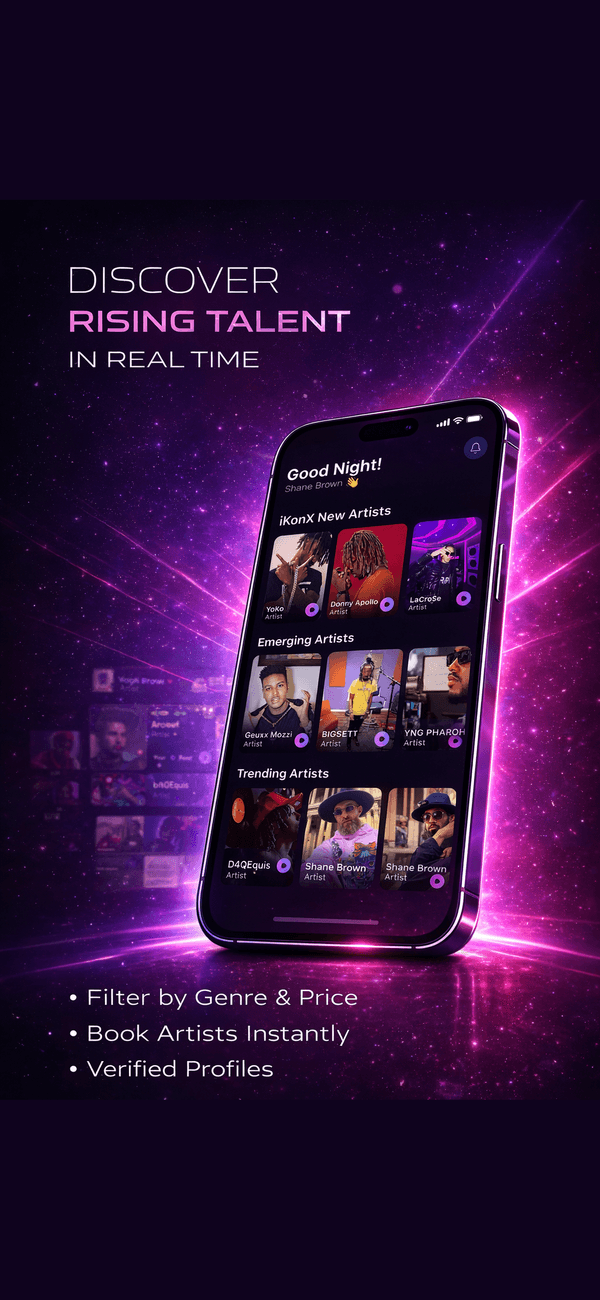
Search verified music artists by the sound your audience already loves · no publicist gate, no cold list.
Contact direct
Message the artist on-platform. The conversation starts with the person who will sit in the chair.
Book the slot
Agree the terms and lock the date. The artist keeps 100% of what they set · you pay a flat 10%.
Most music podcasts stall at the same place: the host knows exactly who they want, sends a pitch, and hears nothing back. The instinct is to blame the pitch. Usually the problem is the target.
For established or celebrity guests the publicist is the gatekeeper, and a publicist's job is to filter. They are protecting a schedule against hundreds of asks, weighing each against a promotional calendar you cannot see. A cold email into that system is not a conversation, it is a lottery ticket. That is why hosts who chase names first tend to have a great booking wish list and an empty release calendar.
The second problem is the size of the ask. A first pitch that requests ninety minutes, a video call, a pre-interview and a promotional commitment is asking a stranger for a substantial slice of their working week. Every added requirement lowers the yes rate, and most hosts add requirements because they are trying to sound professional.
The third problem is timing. An artist with nothing to promote has no reason to sit down with you, while the same artist two weeks before a release is actively looking for places to talk. Hosts who pitch on their own schedule rather than the artist's release schedule are asking at the one moment the answer is most likely to be no.
Then there is the money question, which trips up new hosts in both directions. Most podcast guests appear for free, including on very large shows, so budgeting a guest fee is usually unnecessary. What is not free is your time, and the booking tools and agencies that promise to save it carry real prices.
The system that works inverts all three mistakes: pick reachable artists, pitch on their calendar, and make the first yes cheap.
Target the reachable middle. Independent and rising artists handle their own inbox, and for them a thoughtful interview is promotion they did not have to pay for. That is a fundamentally different transaction from asking an established act's publicist for a favour. Build your first twenty episodes here, then use them as proof when you eventually pitch upward.
Pitch to the release, not to your gap. Find out what the artist has coming: a single, an EP, a tour date, a video. Anchor the pitch to that and you stop being an interruption and start being useful. This one change moves reply rates more than any subject-line trick.
Make the first ask small and specific. Name a length, name a format, name two or three dates. Thirty minutes, remote, this Thursday or next Tuesday, is a decision someone can make in ten seconds. Ninety minutes, in person, whenever suits you, is a task they will postpone forever.
Lead with what is in it for them. Open with a specific detail that proves you actually listened to the record, then say plainly what they get: the audience, the clips, the link placement, the timing against their release.
Then compound with referrals. Warm introductions convert better than cold outreach, so ask every guest for one artist they would recommend. A show that does this from episode one never has a cold-pitch problem by episode twenty.
iKonX is building the Podcasts side around the reachable-middle problem: verified artist profiles and direct contact, without a publicist layer in between. When a paid collaboration is booked through the platform, the artist keeps 100 percent of the price they set, iKonX takes 0 percent platform commission, and the buyer pays a flat 10 percent on top. Most interviews are unpaid, so for a podcast host the value is the direct line, not the payment rail.
Roadmap honesty: Podcasts is a roadmap side of iKonX, launching soon. Today it solves finding and contacting artists, not scheduling or recording.
The whole network lives in one app.
iKonX puts every side of the music business in your pocket. Artists set their own price and keep 100% of it · iKonX takes 0% platform commission. Browse, message, and book straight from the app.

The best guest isn't the most famous · it's the one your audience discovers here first.
How to book musicians as podcast guests, step by step
How do small podcasts land notable guests without a booking agent or a budget?
- Define the guest your show can actually get. Write down the tier: independent artists with a release in the next eight weeks, in the genres your audience already listens to. A precise, reachable target list beats a wish list of names every single time.
- Find the release before you find the email. Check what the artist has coming. Pitching two to three weeks ahead of a single or EP puts you in the window where they want the conversation.
- Write a pitch that proves you listened. Open with one specific detail about their music, not a compliment anyone could paste. Then state the format, the length, and two or three concrete dates. Keep the whole thing under two hundred words.
- Make the yes cheap. Offer remote, offer thirty minutes, and offer to work around them. You can expand the format once trust exists. The first booking is about getting to yes, not about the perfect episode.
- Do not offer a fee by default. Most guests appear for free, including on large shows, so leading with money sets a precedent you cannot sustain across a season. Offer promotion, clips and reach instead.
- Ask every guest for one referral. A warm introduction from a peer converts far better than a cold pitch, and it is the cheapest booking channel that exists. Ask while the episode is still fresh.
Ways to book music guests, and what each one costs in 2026
| Route | What it costs in 2026 | Best for |
|---|---|---|
| Direct pitch to the artist | Free, costs time | Independent and rising artists |
| Guest-matching platforms | PodMatch tiers roughly 6 to 64 dollars a month; Matchmaker.fm Pro around 129 dollars a year | Volume, but general-interest rather than music-specific |
| Booking agency | Retainers roughly 1,500 to 5,000 dollars a month, or 200 to 1,500 dollars per placement | Established shows with a budget |
| Through a publicist | Free to ask, low hit rate | Established and celebrity guests |
| iKonX (Podcasts launching soon) | Direct contact; if you book a paid collaboration, the artist's price plus a flat 10 percent on top | Reaching verified independent artists directly |
Costs are dated and sourced. PodMatch runs tiered memberships of roughly 6 to 64 dollars a month and Matchmaker.fm Pro is about 129 dollars a year with a limited free tier (podrewind.com, 2025-12-16); both are general-interest guest-matching platforms rather than music-specific (podmatch.com and matchmaker.fm, accessed June 2026). Podcast booking agency retainers run roughly 1,500 to 5,000 dollars a month with per-placement fees of 200 to 1,500 dollars (podseeker.co, 2025). Most podcast guests are not paid, and even large shows commonly do not pay guests (podwritten.com, 2025). For established guests the publicist is the primary gatekeeper (bookingagentinfo.com, 2025), while warm referrals and asking past guests for introductions convert better than cold outreach (voices.com, 2025). Reply rates vary by show and genre and are market observation, not published statistics. The only fixed claim here is the iKonX model: the artist keeps 100 percent of the price they set, iKonX takes 0 percent platform commission, and the buyer pays a flat 10 percent on top. iKonX is free to download and explore, full access to paid features is a flat 9.99 dollars a month, and the only payout deduction is a low, sub-5 percent withdrawal fee, below the industry standard.
Direct contact. No publicist. The artist keeps 100%.
Booking musicians as podcast guests: FAQ
Do you have to pay musicians to come on your podcast?
Usually no. Most podcast guests appear for free, and even very large shows commonly do not pay guests. What an artist wants from an interview is reach, clips they can reuse, and a link placement timed to something they are promoting. Leading with a fee also sets a precedent you cannot sustain across a full season, so offer promotion and a good experience first and treat payment as an exception rather than the default.
How do you get musicians to reply to a podcast pitch?
Pitch the artist directly rather than a publicist, anchor the ask to a release they already have coming, and keep the request small and specific. Open with one concrete detail that proves you listened to the music, then name the format, the length and two or three dates. Warm introductions work even better, so ask every guest to recommend one artist while the episode is still fresh.
What is the best way to find musicians to interview?
Start with independent and rising artists who manage their own inbox, because they treat an interview as promotion rather than an obligation. General guest-matching platforms exist, with PodMatch running roughly 6 to 64 dollars a month and Matchmaker.fm Pro around 129 dollars a year, but both are general-interest rather than music-specific, so a music show often does better with direct outreach plus referrals from past guests.
Is a podcast booking agency worth it for a music show?
Only once you have a budget and a track record. Retainers commonly run 1,500 to 5,000 dollars a month, with per-placement fees of 200 to 1,500 dollars. That is difficult to justify for a show still building an audience, particularly when direct pitching to independent artists costs nothing but time. Agencies make more sense when your constraint is your own hours rather than your access.
Does iKonX take a commission if I pay an artist for an appearance?
No. The artist keeps 100 percent of the price they set and iKonX takes 0 percent platform commission. You pay a flat 10 percent on top, so the artist receives the full price listed. The only deduction on the artist side is a low, sub-5 percent withdrawal fee when they move earnings to their bank, which is a transfer cost rather than a commission. Most interviews are unpaid, so for a host the value is the direct line to verified artists. iKonX is free to download and explore, full access to paid features is a flat 9.99 dollars a month, and Podcasts is a roadmap side of iKonX, launching soon.
Explore the connected sides of the network
Your next guest is one message away.
iKonX is building a Podcasts side where you find verified artists open to interviews and reach them directly, with no publicist in the middle. Artists keep 100 percent of the price they set, and iKonX takes 0 percent commission.

DOWNLOAD THE FREE PDF TODAY:
The Music-Guest Booking Kit
Outreach DM templates + a sound-fit guest-vetting checklist for landing music artists as podcast guests.
Get the free PDF ->