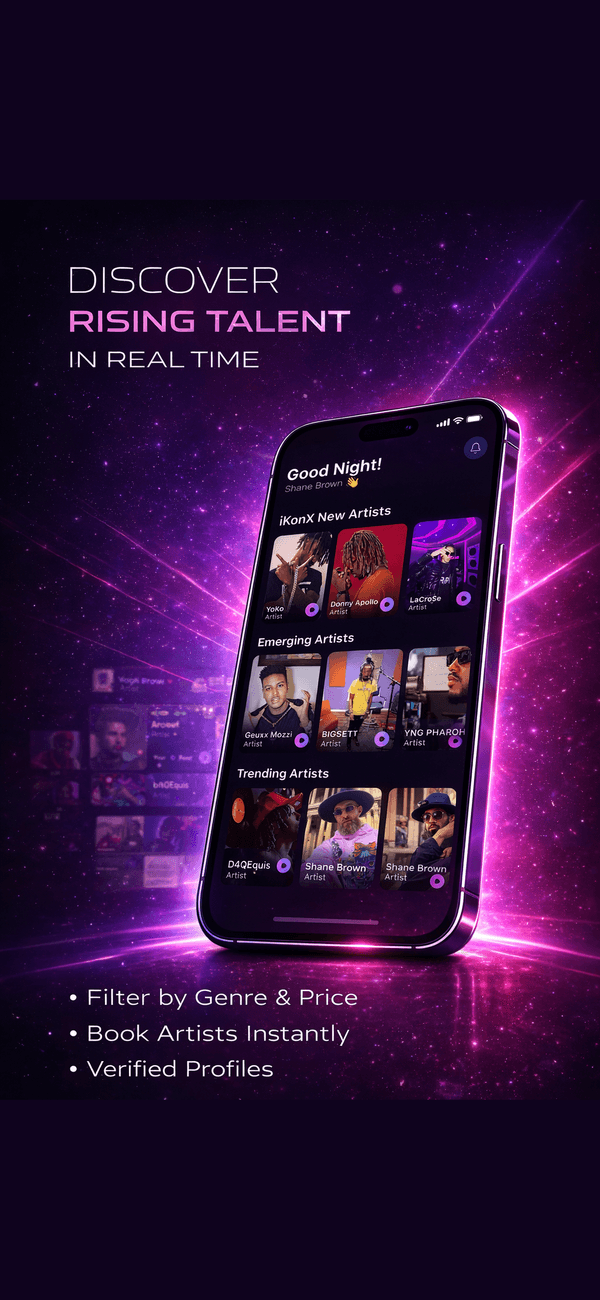
An independent artist runs their own career: unsigned, self-managed, and booking their own gigs. That describes most of the working talent you would actually put on a wedding, a corporate party, a fundraiser, or a small festival slot, and it is the exact reason booking one feels harder than it should. There is no agent to email, no listed price, and no public calendar. The act you loved at a bar last month lives behind an Instagram handle and a half-updated Linktree. So the job that looks like one step, book the band, quietly turns into six: find them, confirm they are active, agree a fair number, protect the money, and make sure they show up.
Every path around that adds a gatekeeper or a fee without removing the guesswork. A booking agent adds a standard 10 to 20 percent commission on top of the fee, and most agents only represent acts already too big for an independent bill (Stagent, 2025). A general gig marketplace surfaces polished party bands first and charges a planner-side service fee at checkout. Booking straight through DMs and a payment app leaves you with no listed price, no deposit structure, and no protection if the money leaves and the act goes quiet the week of the event. You guess the budget, the right indie act stays hard to reach, and a simple booking becomes a chase. Booking for a ticketed public gig has its own wrinkles, which is why we cover that separately in how to book independent artists for shows.