What is the best app for independent artists?
No platform commission on the price you list · the buyer pays a flat 10% on top.
The best app for an independent artist is the one that takes the least out of each payment while still putting you in front of buyers. Features reach parity fast; take rates do not. A platform charging 30 percent on sales and one charging 0 percent commission are different businesses, and across a year that gap outweighs every feature comparison. Judge by what reaches your bank account, then by whether anyone can find you there.
Search for the best app for independent artists and you get a list of thirty tools that do unrelated jobs. That list is unusable, because it ranks a recording tool against a distributor against a marketplace as though they compete.
The deeper problem is that these lists compare features. Features are cheap to copy and reach parity within a release cycle. What never reaches parity is the take rate, and that is the number that decides how much of your work you keep. BeatStars applies a 30 percent commission on its free plan, so a seller keeps 70 percent, and adds a 12 percent buyer service fee on marketplace purchases. Cameo takes 25 percent and pays talent 75. GigSalad charges providers a 5 percent booking fee on free membership plus a 10 to 12 percent client-side service fee. Those are not variations on a theme; over a year of steady work they are the difference between a side income and a real one.
The third problem is the stack. A working independent artist ends up paying for a DAW, a distributor, a networking app, a marketplace subscription and a payment tool, each solving one slice and each billing separately. Much of it duplicates. Almost none of it talks to the rest.
And the quiet one: most of these tools assume you already have an audience. They give you somewhere to put a link, not somewhere to be found. If nobody discovers you on the platform, its take rate is academic.
List it. Price it. Keep it.
Sort the question into jobs, then judge each job on what it costs you per transaction.
Making and releasing. A DAW and a distributor. These charge a licence or a flat fee and take nothing from your income, which is why they are the least controversial spend in the stack and rarely worth agonising over.
Finding collaborators. A networking app. Vampr is the best known, positioned as the leading musician network with more than nine million connections made, with a free tier of roughly five connections a day and Pro at about 6.66 dollars a month on a three-month plan.
Getting booked and getting paid. This is the job where the money leaks, and it is the one worth consolidating. Every percentage point here recurs on every transaction for as long as you use the platform.
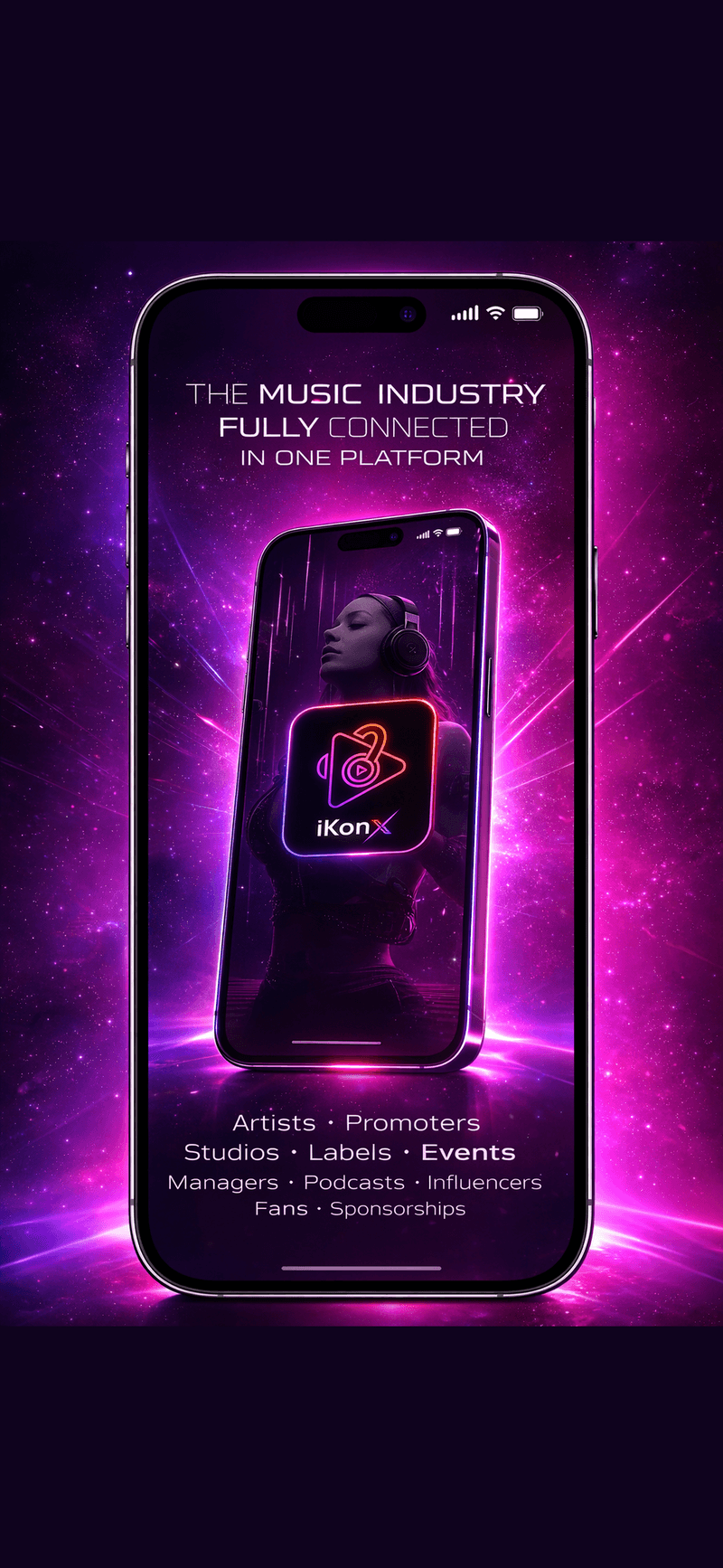
That last job is what iKonX is built for, and it is priced against the take-rate problem rather than the feature problem. The artist keeps 100 percent of the price they set, iKonX takes 0 percent platform commission, and the buyer pays a flat 10 percent on top. Access is a flat 9.99 dollars a month rather than a share of what you earn, which means the cost stays flat while your income does not.
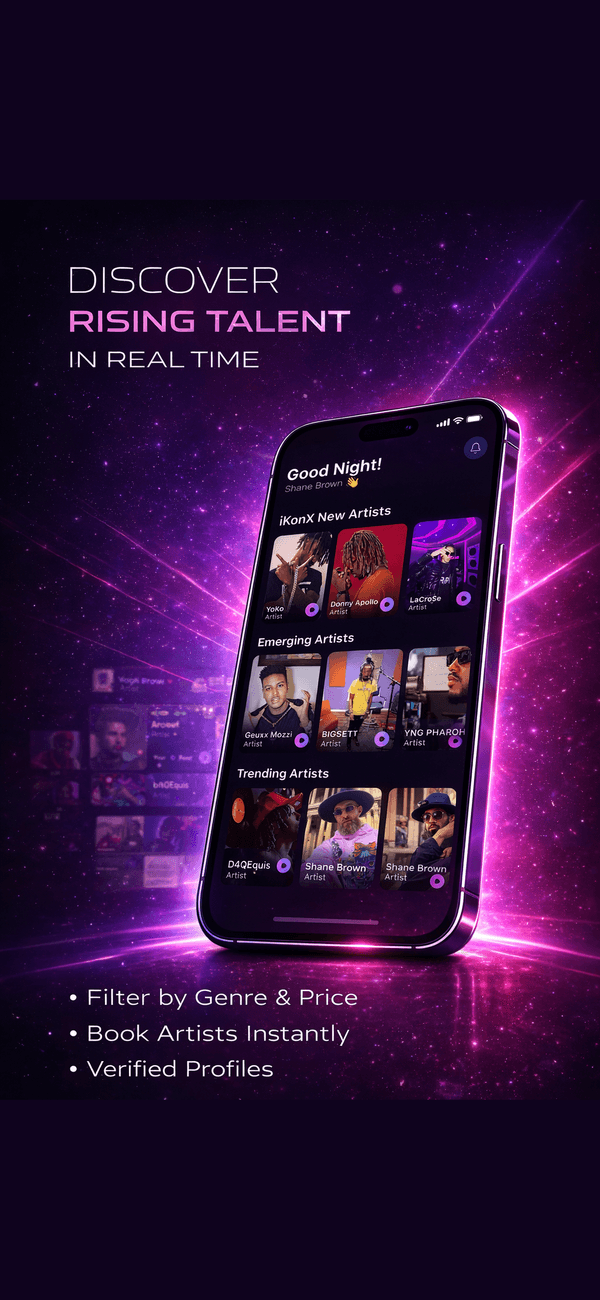
Be honest about scope: iKonX does not replace your DAW or your distributor and is not trying to. What it replaces is the marketplace-and-payment layer where percentage cuts accumulate, plus the discovery problem underneath it, since a verified profile is somewhere buyers can actually find you rather than another link to send people who already know your name.
The whole network lives in one app.
iKonX puts every side of the music business in your pocket. Artists set their own price and keep 100% of it · iKonX takes 0% platform commission. Browse, message, and book straight from the app.

How to pick the right app as an independent artist, step by step
- Write down the job before the app. Making, releasing, collaborating, getting booked, getting paid. Most frustration comes from expecting one tool to do a job it was never built for.
- Ask what it deducts, not what it does. Find the fee page before the feature page. A 30 percent commission and a 0 percent commission are different businesses, and the gap compounds on every sale you ever make.
- Separate flat cost from percentage cost. A subscription is predictable and gets proportionally cheaper as you earn more. A percentage scales forever. If you expect to grow, flat wins; if you earn nothing yet, a free tier with a commission may genuinely cost less today.
- Count the stack you already pay for. Add up every music tool billing you monthly. Most independent artists find two or three overlapping subscriptions once the list is in one place.
- Test discovery, not just checkout. Search the platform the way a buyer would and see whether someone like you surfaces. A low take rate on a platform nobody browses is still zero income.
- Run one real transaction before committing. Feature lists never reveal how a payment clears, how long it takes, or what actually lands in your account. One completed job teaches more than a month of comparison reading.
What each platform actually deducts from an independent artist in 2026
| Platform | What it takes from the artist | Buyer-side fee |
|---|---|---|
| BeatStars (free plan) | 30 percent commission, seller keeps 70 | 12 percent marketplace service fee |
| BeatStars (Pro) | No commission, paid plan instead | 12 percent marketplace service fee |
| Cameo | 25 percent, talent keeps 75 | Included in the listed price |
| GigSalad | 5 percent booking fee free, 2.5 percent paid | 10 to 12 percent client-side service fee |
| Vampr | No transaction cut, Pro about 6.66 dollars a month | Not a marketplace |
| iKonX | 0 percent platform commission, artist keeps 100 percent | Flat 10 percent on top |
Platform terms are dated and sourced. BeatStars applies a 30 percent commission on its free plan so the seller keeps 70 percent, with the Pro plan removing the commission (beatstars.com, 2026), plus a 12 percent buyer service fee on marketplace purchases (help.beatstars.com, 2025). Cameo takes a 25 percent cut with talent keeping 75 percent (influencermarketinghub.com, 2025). GigSalad charges providers a 5 percent booking fee on free membership and 2.5 percent on paid, alongside a 10 to 12 percent client-side service fee (help.gigsalad.com, 2025). Vampr offers a free tier of about five connections a day with Pro at roughly 6.66 dollars a month on a three-month plan (vampr.me, 2025) and is positioned as the leading musician network with over nine million connections made (play.google.com, 2026). Terms change, so confirm current rates with each provider. The only fixed claim here is the iKonX model: the artist keeps 100 percent of the price they set, iKonX takes 0 percent platform commission, and the buyer pays a flat 10 percent on top. iKonX is free to download and explore, full access to paid features is a flat 9.99 dollars a month, and the only payout deduction is a low, sub-5 percent withdrawal fee, below the industry standard.
Verified artists, real profiles
Best app for independent artists: FAQ
What is the best app for independent artists in 2026?
There is no single best app, because independent artists do several unrelated jobs and no tool leads at all of them. Pick the best tool per job, then minimise how many of them take a percentage of your income. A DAW and a distributor charge fees but take nothing from what you earn. Marketplaces and booking platforms take a cut of every transaction, and that is where the real cost sits, so that is the job worth choosing carefully.
Which music app lets independent artists keep the most money?
Compare the deduction, not the feature list. BeatStars takes 30 percent on its free plan and adds a 12 percent buyer service fee, Cameo takes 25 percent, and GigSalad charges providers 5 percent on free membership plus a 10 to 12 percent client-side fee. iKonX takes 0 percent platform commission, so the artist keeps 100 percent of the price they set and the buyer pays a flat 10 percent on top. Over a year of steady work that difference is larger than any feature gap.
Are free music apps actually cheaper for independent artists?
It depends entirely on what you earn. Free tiers usually recover their cost through commission, which is why BeatStars takes 30 percent on its free plan while the paid Pro plan removes that commission. If you are earning nothing yet, free is genuinely cheaper. Once you sell consistently, a flat subscription almost always wins, because the subscription stays flat while a percentage grows with every sale.
Do independent artists need an all-in-one app?
For the business side, consolidating usually helps, because separate subscriptions overlap and the monthly total adds up quietly. For the creative side it does not, since a DAW is chosen on workflow and a bundled version rarely matches a dedicated one. The sensible split is to keep recording and distribution specialised and consolidate the getting-booked and getting-paid layer, which is where percentage cuts otherwise stack.
What does iKonX cost an independent artist?
iKonX is free to download and explore, and full access to paid features is a flat 9.99 dollars a month. On a transaction the artist keeps 100 percent of the price they set and iKonX takes 0 percent platform commission, with the buyer paying a flat 10 percent on top. The only deduction on the artist side is a low, sub-5 percent withdrawal fee when moving earnings to a bank, which is a transfer cost rather than a commission on your rate. iKonX covers getting booked and getting paid; it does not replace a DAW or a distributor.
Explore the connected sides of the network
Built for the working artist.
Stop paying a percentage on every sale. Download iKonX and keep 100 percent of the price you set, with 0 percent platform commission.

DOWNLOAD THE FREE PDF TODAY:
Indie Feature Pricing Cheat-Sheet
What to charge for a feature verse with no following · the price math, plainly.
Get the free PDF ->