The room already pulled. Career-stage matched, verified, reachable direct.
What do A&Rs look for in the first 10 seconds of a track?
A&R gives a new track seconds, not minutes, so the first 10 seconds have to earn the next 10. In that window they judge four things at once: an immediate hook or signature sound that signals identity, a lead vocal or line that is present and identifiable, production clean enough to sound finished, and momentum that pulls you toward the drop. It is economics before taste. Nearly 29 percent of streams are abandoned inside the first 10 seconds, so a great song that takes 20 seconds to arrive usually never gets heard.
Most artists build a track assuming the person judging it will hear the whole thing. An A&R rarely does. With roughly 100,000 tracks uploaded to streaming every single day, A&R and playlist teams triage on the opening. They are not being lazy, they are matching the behavior of the audience they answer to, and that audience decides fast.
The clearest picture of how fast comes from a large analysis of streaming behavior by Paul Lamere (Music Machinery, 2014) covering billions of plays. It found that 24.14 percent of songs are skipped inside the first 5 seconds, 28.97 percent inside the first 10, and 35.05 percent before the 30-second point. Almost half, 48.6 percent, are abandoned before the song ends. New and unfamiliar music, which is exactly what an A&R is auditioning, skips hardest of all, with artist-radio skip rates around 55 percent. Your unknown track starts from the worst position on that curve, not the best.
Song structure has already adapted to this. A study of Billboard top-10 hits by Hubert Léveillé Gauvin (Musicae Scientiae, 2018) found the average intro shrank from over 20 seconds in the mid-1980s to about 5 seconds by 2015, with hooks and titles arriving sooner and tempos rising, a direct response to the attention economy. Streaming reinforces it from both ends: on Spotify a play does not even count as a paid stream until 30 seconds, and on TikTok the sound has to land almost instantly to catch. So the first 10 seconds are not a warm-up. They are the filter your song has to pass before anyone hears the part you are proud of.
Here is the reframe that changes the picture: every one of those four things A&R listens for is craft you fully control, and the proof that your open works is data you can generate yourself. Hook placement, vocal presence, a clean master, forward momentum, all of that is a decision you make in the arrangement. What you cannot fake is whether real people stay past second 10, and that signal, save rate, completion, and replays, is exactly what A&R reads too.
That is why we built iKonX. It gives an independent artist a verified profile and a direct relationship with the fans, collaborators, and industry people who actually move a career, so the audience reacting to your first 10 seconds is one you own. When you sell something through the platform, the model is artist-first and simple: you keep 100 percent of the price you set and iKonX takes 0 percent platform commission, while the buyer pays a flat 10 percent on top. iKonX is free to download and explore, full access to every paid feature is a flat $9.99 a month, and the only deduction on a payout is a low, sub-5 percent withdrawal fee, below the industry standard.
Labels is a side of the network iKonX is building toward, not a live feature yet. What is live now is the foundation an artist needs before any A&R conversation ever happens: the audience, the direct income, and the real first-listen data that tells you whether your open lands. Nail the first 10 seconds and own the audience reacting to them, and a strong open becomes leverage instead of a lottery ticket you hand to a gatekeeper and hope.
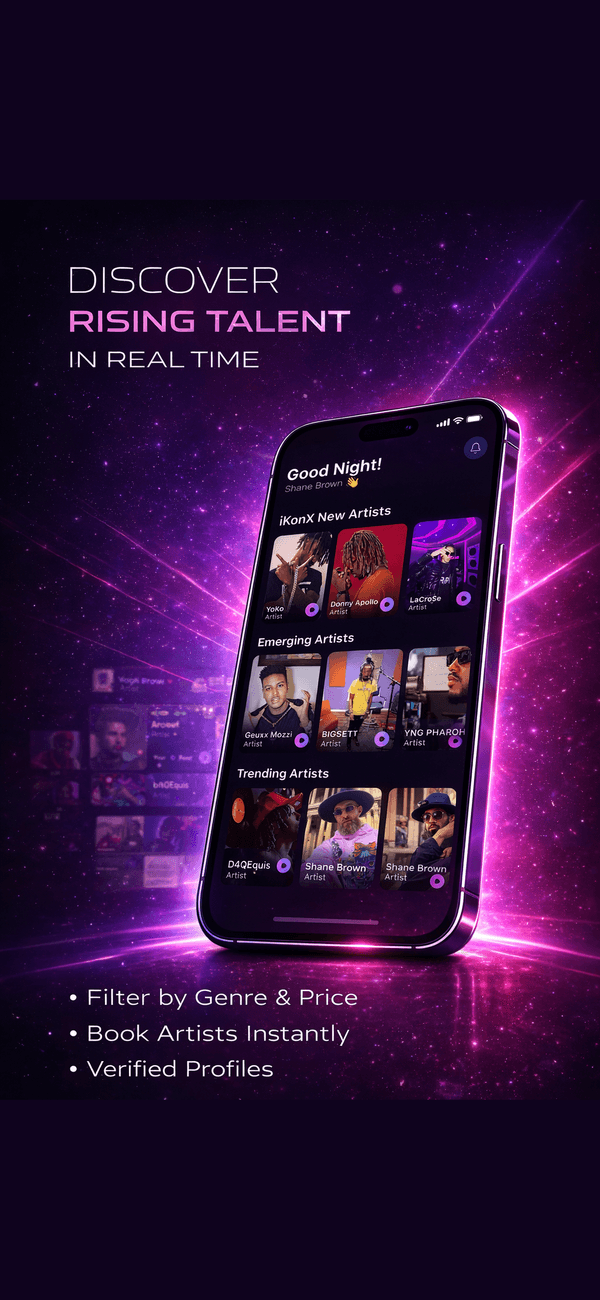
The whole network lives in one app.
iKonX puts every side of the music business in your pocket. Artists set their own price and keep 100% of it · iKonX takes 0% platform commission. Browse, message, and book straight from the app.

How to win the first 10 seconds of a track, the way A&R hears it
- Get to the hook, or a signature sound, almost immediately. The single biggest change you can make is cutting the long intro. Average hit intros dropped to about five seconds for a reason. Open on the hook, a distinctive melodic phrase, an ad-lib, or a sound only you use, so an A&R hears your identity inside the first bar instead of waiting for it.
- Make the lead vocal or main line present and identifiable. A&R is trying to answer one question in about three seconds: who is this. Push the voice or signature instrument forward in the mix, close enough to feel intimate, so the character of the artist registers before the beat even fully drops. Anonymity is the fastest way to get skipped.
- Sound finished from the first note. The open is where A&R decides whether a track is ready or still a demo. Loudness, low-end control, and a clean top end in the first few seconds signal professional-grade production. A rough intro tells a busy listener triaging 100,000 daily uploads to move on before your best section ever arrives.
- Build momentum, never dead air. The first 10 seconds should pull the ear forward with rising tension: a vocal chop, a filter sweep, a rhythmic hook that promises the drop is coming. A slow fade-in, silence, or a generic four-bar count is where attention leaks out. Give the listener a concrete reason to reach second 11.
- Prove the open works with real listener data. Taste is subjective, retention is not. Test your intro with a real audience and watch save rate, completion, and replays, the same signals A&R reads. Build that owned audience on iKonX, where you keep 100 percent of what you charge, so you walk into any conversation with proof your first 10 seconds convert.
Filter the deck to artists at the same rung as your label, so a signing fits where you are now, not where you wish you were.
No demo pile, no inbox gatekeeper. You contact a verified profile straight from the deck and start the conversation on your terms.
First 10 seconds: what A&R rewards vs what quietly gets you skipped
| The opening move | What A&R reads in the first 10 seconds | The data behind it |
|---|---|---|
| iKonX · owned audience + real first-listen data | Proof the open converts, before you ever pitch | Keep 100% of what you set · 0% iKonX commission · buyer pays 10% on top |
| Hook or signature sound inside the first bar | This artist knows exactly what they are, worth the next 10 seconds | Average hit intros fell from over 20s (1986) to about 5s (2015) |
| Long atmospheric intro, 20s before the hook lands | Point arrives too late, likely skipped before it hits | 28.97% of plays are abandoned inside the first 10 seconds |
| Rough, demo-level mix in the open | Not ready, pass | A&R triages roughly 100,000 tracks uploaded daily on the intro |
| Familiar but generic, no identity | Forgettable, reflex skip | New and unfamiliar music skips hardest, around 55% on artist radio |
Skip figures are from Paul Lamere's large-scale analysis of streaming listening (Music Machinery, 2014-05-02, covering billions of plays): 24.14% of songs skipped within the first 5 seconds, 28.97% within the first 10, 35.05% within 30, and 48.6% before the song ends, with unfamiliar music and artist radio skipping hardest (around 55%). The intro-length shift is from Hubert Léveillé Gauvin, Drawing Listener Attention in Popular Music (Musicae Scientiae, 2018), which found average Billboard top-10 intros fell from over 20 seconds in the mid-1980s to about 5 seconds by 2015 as hooks and titles arrived sooner. Streaming context: Spotify counts a play as a paid stream only after 30 seconds (Spotify Loud and Clear), and roughly 100,000 tracks are uploaded to streaming every day (Luminate, 2024). Figures vary and change over time, so verify current data at the source. The only fixed claim is the iKonX model: the artist keeps 100% of the price they set, iKonX takes 0% platform commission, and the buyer pays a flat 10% on top. iKonX is free to download and explore, full access to paid features is a flat $9.99/month, and the only payout deduction is a low, sub-5% withdrawal fee, below the industry standard. Labels is a side of the network iKonX is building toward and is not yet a live feature.
First 10 seconds FAQ
What do A&Rs look for in the first 10 seconds of a track?
A reason not to skip. In roughly the first 10 seconds an A&R is checking four things at once: an immediate hook or signature sound that shows identity, a lead vocal or line that is present and identifiable, production clean enough to sound finished rather than like a demo, and forward momentum that promises the drop. They are matching how their audience listens, and nearly 29 percent of streams are abandoned inside the first 10 seconds, so a track that takes 20 seconds to get to the point rarely survives the audition. The open is a filter, not a warm-up.
Why do the first 10 seconds matter so much to A&R?
Because that is where listeners decide. In Paul Lamere's analysis of billions of streams, 24.14 percent of songs are skipped within the first 5 seconds and 28.97 percent within the first 10, and new, unfamiliar music, exactly what A&R is auditioning, skips even harder. A&R teams also triage around 100,000 tracks uploaded every day, so they cannot listen deep to everything. They listen to the open and let the intro do the filtering, the same way the streaming audience does.
How long should a song intro be in 2026?
Short. A study of Billboard top-10 hits by Hubert Leveille Gauvin found average intros fell from over 20 seconds in the mid-1980s to about 5 seconds by 2015, and streaming has only pushed that further. You do not need a hard rule, but you should get to your hook, your voice, or a signature sound within the first few seconds. If your best moment does not arrive until 20 or 30 seconds in, most listeners, and most A&R, will never hear it.
Do A&Rs really skip a track after a few seconds?
Often, yes, and they are not alone. Across all listeners, 35.05 percent of songs are skipped before the 30-second point and 48.6 percent before they finish. On Spotify a play does not even count as a paid stream until 30 seconds, so the entire system trains ears to judge quickly. An A&R skipping early is not dismissiveness, it is a rational response to volume. The fix is not to resent it, it is to build a track that earns the next 10 seconds.
How can I make the first 10 seconds of my track stronger?
Cut the long intro and open on the hook or a sound only you use, push the lead vocal forward so your identity registers in about three seconds, make sure the mix already sounds finished, and build tension that pulls toward the drop with no dead air. Then test it: watch save rate, completion, and replays with a real audience, because retention is the same signal A&R reads. Building a direct, owned audience on iKonX lets you gather that proof before you ever pitch.
Does iKonX take a commission when an artist sells through the platform?
No. The artist keeps 100 percent of the price they set and iKonX takes 0 percent platform commission. The buyer pays a flat 10 percent on top. The only deduction is a low, sub-5 percent withdrawal fee when an artist moves earnings out, below the industry standard and a standard transfer cost, never a cut of the sale. iKonX is free to download and explore, and full access to every paid feature across the network is a flat 9.99 dollars a month. Labels is a side iKonX is building toward and is not yet a live feature.
Labels is coming to The Network
Scouting opens soon. Be first to the deck when it goes live · no pressure, just a seat held.
Explore the connected sides of the network
Find the talent first. Sign on your terms.
Win the open, then own the audience reacting to it. Download iKonX and build the proof your first 10 seconds convert.
DOWNLOAD THE FREE PDF TODAY:
The Indie Label A&R Scouting Playbook
A modern A&R checklist for finding, career-stage-matching, and signing unsigned artists in 2026.
Get the free PDF ->