How to start a music interview podcast, from concept to first guest
To start a music interview podcast, pick a narrow angle, set up a USB mic, headphones, and free editing software for under 250 dollars, choose a hosting platform like Buzzsprout or Captivate, and line up your first guests. The hardest part is booking real artists, so reach them directly on a music-specific platform.
How the conversation gets made
Find by sound
Search verified music artists by the sound your audience already loves · no publicist gate, no cold list.
Contact direct
Message the artist on-platform. The conversation starts with the person who will sit in the chair.
Book the slot
Agree the terms and lock the date. The artist keeps 100% of what they set · you pay a flat 10%.
Gear is not what stops most music interview podcasts. The thing that stalls a new show is the part nobody talks about in the equipment guides: lining up real artists to sit across from you, episode after episode. You can buy the mic, build the cover art, and record a confident intro, and still have an empty calendar because the one guest who said yes in a DM went quiet, and there is no one booked for next week.
The market is not the problem either. There are over 4.5 million podcast shows indexed globally as of 2025, but only an estimated 10 to 11 percent are actively releasing new episodes, which means most shows die not from a lack of audience but from a lack of momentum. A music interview show lives or dies on its guest pipeline, and the pipeline is exactly where new hosts have no system.
Then comes the booking itself. A new host with no audience tries to reach an artist through a manager who never answers, or a publicist who decides the show is too small to bother with. The fee question is murky, the paperwork gets skipped, and the recording link fails on the day. None of that is a gear problem. It is a sourcing-and-booking problem, and it is the real reason a new music podcast either builds a renewable guest list or runs out of episodes by month three.
The fix is to treat launch as two tracks running at once: the production setup, which is cheap and solved, and the guest pipeline, which is where your show actually wins or loses. The production track is a short shopping list and a hosting choice. The guest track is a repeatable way to find artists, reach them directly, and book them clean, so you are never one cancellation away from a dead week.
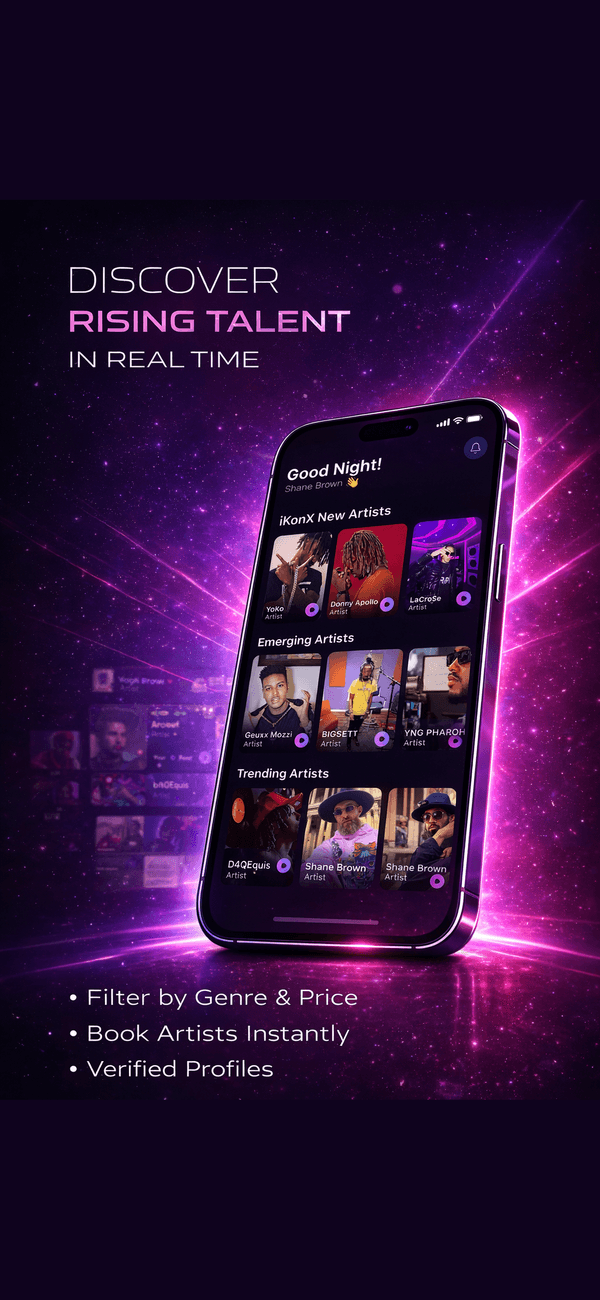
That second track is where the platform matters. In open DMs or through a publicist chain, the artist, the conversation, and any payment all live in different places, so something always slips. iKonX is built for music, so you reach the artist directly, lock the booking, and handle a paid appearance in one place instead of stitching together a calendar app, a payment app, and a separate contract. And when money does change hands, the economics are honest: the artist earns 100 percent of the price they set and iKonX takes 0 percent platform commission, while the buyer pays a flat 10 percent on top. No broker takes a cut of the booking, and no gatekeeper decides whether your show is big enough to talk to. iKonX is free to download and explore, so you can start sourcing guests before you have spent a dollar on gear.
The whole network lives in one app.
iKonX puts every side of the music business in your pocket. Artists set their own price and keep 100% of it · iKonX takes 0% platform commission. Browse, message, and book straight from the app.

The best guest isn't the most famous · it's the one your audience discovers here first.
How to start a music interview podcast, step by step
How do small podcasts land notable guests without a booking agent or a budget?
- Pick a narrow angle, not just "music interviews." The shows that survive are specific: unsigned hip-hop in one city, the business behind a record deal, producers on the song that broke them. A tight angle makes you easier to recommend and gives every artist a clear reason to say yes, because they know exactly what the conversation is about.
- Buy a starter kit, not a studio. A full beginner setup runs roughly 100 to 250 dollars: a USB mic like the Samson Q2U, a pair of under-50-dollar over-ear headphones, and free editing software. Technique and a quiet, soft-furnished room beat expensive gear every time, since a cheap mic in a good space sounds better than a pro mic in an echoey one.
- Choose your editing and recording tools. Edit in Audacity (free) or Descript, which lets you edit audio like a text document. For remote guests, use a browser-based tool that records each side locally so a bad connection never ruins the take, and so you get a clean separate track per person for post.
- Pick a hosting platform and lock your feed. Your host puts the show on Apple, Spotify, and the rest through one RSS feed. Buzzsprout, Captivate, and Transistor all start around 19 dollars a month, and Buzzsprout and Riverside both have a free tier you can launch on. Pick one, claim your show name, and submit the feed once.
- Build a guest pipeline before episode one. Do not book one guest, book a list. Source artists who fit your angle, reach them directly rather than through a gatekeeper, and aim to confirm three to five guests before you launch so the calendar never empties. On iKonX you reach the artist directly, which is the difference between a show with a pipeline and a show chasing one yes at a time.
- Book each guest clean: date, fee, release. Confirm the date, time, and timezone in writing, decide the fee question on purpose (most music guests appear free for the exposure and a plug), and send a guest release form before you record. Where a fee applies, settle it up front. A paid booking on iKonX runs in-app, so the artist keeps 100 percent of their price and the money is handled before you start.
- Ship episode one, then promote the artist as hard as the episode. Record, edit lightly, and publish, perfect is the enemy of shipped. Then clip the best moment, tag the artist, and hand them assets to reshare. A guest you make look good refers the next three, which turns your first booking into a renewable pipeline.
What it actually takes to launch a music interview podcast: the honest comparison
| What you need | Built for music? | What it costs you |
|---|---|---|
| iKonX (find and book the guests) | Yes · reach the artist directly, book and pay in one place | 0% platform commission · the artist keeps 100% of their price · buyer pays a flat 10% on top · free to download |
| Starter gear (mic, headphones, software) | n/a · same kit any show uses | ~$100 to $250 one time for a beginner setup (2025); $0 to $30 on a phone |
| Buzzsprout (hosting) | No · general podcast hosting | Free tier (episodes deleted after 90 days) · paid $19 / $39 / $79 per month (Apr 24, 2026) |
| Captivate / Transistor (hosting) | No · general podcast hosting | Both start at $19/month; Transistor includes unlimited shows (2026) |
| Riverside (remote recording) | No · general video/audio recording | Free tier (2 hrs multi-track) · Pro $24/month with 4K and separate tracks (2026) |
| Open DMs + a publicist chain (the guests) | n/a · you chase the gatekeeper | $0 but a low hit rate and everything lives in different places, so guests slip |
Beginner gear range ($100 to $250 for a USB mic, headphones, and free software; $0 to $30 on a phone) is from 2025 podcast equipment guides (Descript). Buzzsprout tiers (free plus $19/$39/$79 per month, free-tier episodes deleted after 90 days) are from a CostBench profile last verified April 24, 2026. Captivate and Transistor entry pricing (~$19/month; Transistor unlimited shows) is from 2026 hosting roundups. Riverside pricing (free 2-hour multi-track tier; Pro $24/month with up to 4K and separate per-participant tracks) is from Riverside's 2026 pricing page. Hosting and recording tools are general-purpose, not music-specific. The only fixed claim is the iKonX model: on a paid appearance the artist keeps 100% of the price they set, iKonX takes 0% platform commission, and the buyer pays a flat 10% on top. iKonX is free to download and explore, with full access to paid features a flat $9.99/month, and the only payout deduction is a low, sub-5% withdrawal fee, below the industry standard.
Direct contact. No publicist. The artist keeps 100%.
Starting a music interview podcast FAQ
How much does it cost to start a music interview podcast?
A solid beginner setup runs about 100 to 250 dollars one time for a USB mic, over-ear headphones, and free editing software, and you can start for as little as zero to 30 dollars on a phone with earbuds. On top of that, hosting runs around 19 dollars a month, with free tiers available on Buzzsprout and Riverside. The real cost is not gear, it is the time it takes to build a steady guest pipeline, which is why reaching artists directly on a music-specific platform matters more than the mic you buy.
What equipment do I need to start a music podcast in 2026?
Three things cover a beginner interview show: a USB microphone such as the Samson Q2U, a pair of over-ear headphones under 50 dollars, and free editing software like Audacity or Descript. For remote guests, add a browser-based recording tool that captures each side locally so a weak connection never ruins the take. Technique and a quiet, soft-furnished room matter more than expensive gear, since a cheap mic in a good space beats a pro mic in an echoey one.
How do I get musicians on my podcast when I have no audience?
Start with a narrow angle so artists know exactly what the conversation is, then reach them directly instead of through a manager or publicist who screens by show size. Lead with what the artist gets, a real chance to plug a single, release, or tour to an audience that cares about their lane. Building a list of three to five guests before you launch keeps the calendar full. On iKonX you reach the artist directly, which removes the gatekeeper that usually stops a small show cold.
What is the best hosting platform for a music interview podcast?
There is no music-only host, so the practical choice is a reliable general platform. Buzzsprout, Captivate, and Transistor all start around 19 dollars a month and distribute to Apple, Spotify, and the rest through one RSS feed, and Buzzsprout has a free tier you can launch on with the limit that episodes are deleted after 90 days. Pick one, claim your show name, and submit the feed once. The host handles distribution; your job is the angle and the guests.
Do I have to pay musicians to be guests on my podcast?
Usually no. Most podcast guests, musicians included, appear for free in exchange for exposure and a dedicated plug, so free is a fair default. Some hosts choose to pay, and where money changes hands the range runs from the low hundreds on a small show to a few thousand on a top show. Decide your model on purpose and settle any number in writing before you record. On iKonX a paid booking is handled in-app and the artist keeps 100 percent of the price they set, with iKonX taking 0 percent platform commission.
How do I record a remote interview with an artist who lives somewhere else?
Use a browser-based remote recording tool that captures each participant locally and uploads the files afterward, so a shaky connection never costs you the recording and you get a clean separate track per person. Riverside and SquadCast both work this way and offer free tiers to start, with paid plans around 24 dollars a month for higher hours and 4K video. Send the join link in your booking confirmation, test it once, and add a one-line prep note with the angle and rough topics.
Explore the connected sides of the network
Your next guest is one message away.
Pick your angle, set up the gear, and fill the calendar with real artists. Download iKonX and reach the guests directly, where the publicist chain used to stand.

DOWNLOAD THE FREE PDF TODAY:
The Music-Guest Booking Kit
Outreach DM templates + a sound-fit guest-vetting checklist for landing music artists as podcast guests.
Get the free PDF ->