How to split revenue with an artist as a manager
Music managers typically split revenue by taking 15 to 20 percent of the artist's gross income from defined sources, written into a management agreement with a clear scope and a sunset clause. Developing managers usually sit at 15 to 20 percent; established artists negotiate down to 10 to 15. The cleanest setup is one where each booking pays out the split automatically, so you are not invoicing your own artist. On iKonX the artist keeps 100 percent of the listed price and the platform takes 0 percent commission, which leaves your management split as a clean, separate agreement on top. iKonX takes 0 percent platform commission, the artist keeps 100 percent of the listed price, and the buyer pays a flat 10 percent on top. Membership is $9.99 a month with a sub-5 percent withdrawal fee; viewing and downloading are free.
The fastest way to poison a management relationship is a fuzzy revenue split. You agreed to 20 percent, but 20 percent of what. The features the artist booked themselves before you signed. The merch. The shoutout money that lands in their personal Cash App. When the scope was never defined, every payday becomes a negotiation, and the artist starts feeling like you are taxing work you did not touch.
Collection makes it worse. Even with a clear percentage, a lot of managers end up chasing their own client for their cut, because the money lands in the artist's account first and then has to be split by hand. That is awkward at best and a relationship-ender at worst, and it is entirely avoidable with the right structure.
A clean split has two parts: a defined percentage of defined income, and a payout that happens without you invoicing. The standard is 15 to 20 percent of gross income from the sources named in your agreement, with a term, a sunset clause for deals you sourced, and explicit exclusions for income that predates you or sits outside your scope.
The structural fix is to manage an artist who earns on a platform that does not also take a cut. On iKonX the artist keeps 100 percent of every listed price and the platform charges 0 percent commission, so your management percentage is the only split on the artist's earnings, not a third slice fighting the platform's. That keeps the math honest and the relationship clean, because the artist can see exactly where every dollar goes. iKonX takes 0 percent platform commission, the artist keeps 100 percent of the listed price, and the buyer pays a flat 10 percent on top. Membership is $9.99 a month with a sub-5 percent withdrawal fee; viewing and downloading are free.
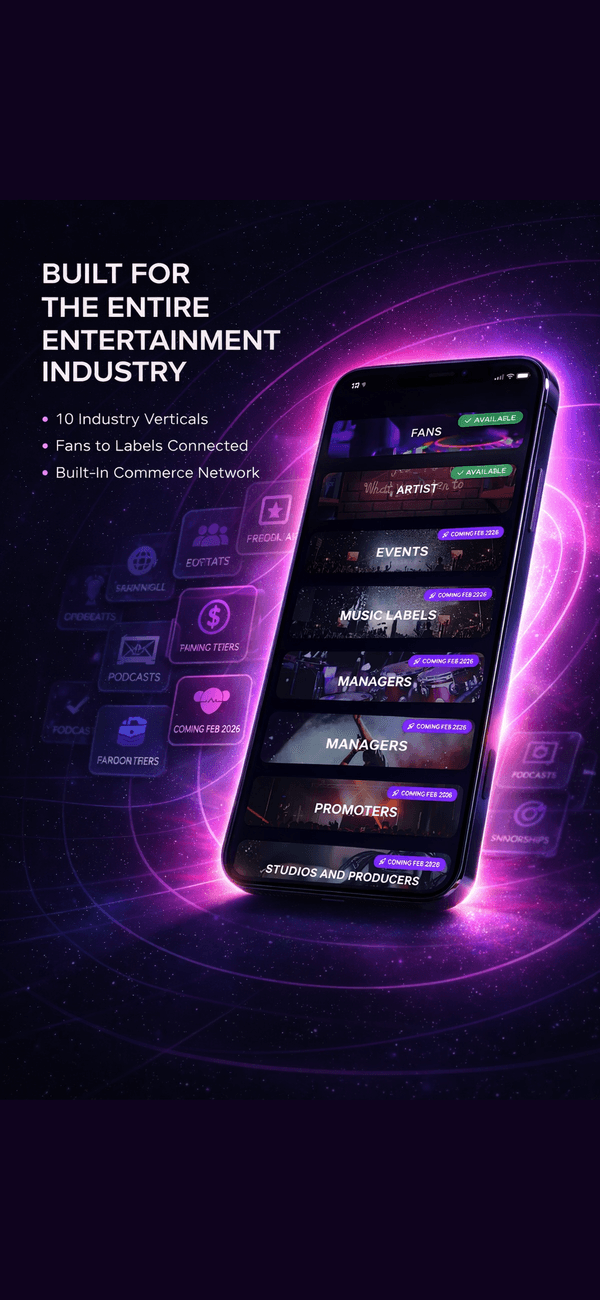
The whole network lives in one app.
iKonX puts every side of the music business in your pocket. Artists set their own price and keep 100% of it · iKonX takes 0% platform commission. Browse, message, and book straight from the app.

- Pick a percentage in the standard band. 15 to 20 percent of gross income is the developing-manager norm; established artists negotiate 10 to 15. Anchor at 15 to 20 if you are building the roster and earning the trust, and be ready to justify it with the value you bring.
- Define exactly what income you commission. Name the sources: features, bookings, shoutouts, sponsorships, whatever you actively work. Exclude income the artist had before you signed and anything outside your scope. The clarity here prevents every future argument.
- Write the term and a sunset clause. How long the agreement runs, and what happens to deals you sourced after it ends. A sunset clause pays you a declining percentage on deals you originated, which is fair to both sides and standard in real management contracts.
- Put it in a signed agreement. Scope, commission, term, and termination are the must-have clauses. A handshake split is the thing that blows up; a one-page signed agreement is the thing that holds.
- Automate the payout so you never invoice your artist. The healthiest split is one neither of you thinks about. When earnings run through a platform where the math is transparent and the artist keeps 100 percent before your agreed split, you stop being the person chasing your own client for money.
Scout
Browse verified, unsigned artists by genre and stage · the discovery layer the labels gatekeep.
Shortlist
Save and tag prospects into a working roster you can compare side by side.
Contact
Message verified talent direct · the artist keeps 100%, iKonX takes 0% platform commission.
Where a manager's cut sits in the stack, and what the platform takes first
| Setup | What the platform takes first | What is left to split |
|---|---|---|
| iKonX + your management deal | 0% platform commission | 100% of the listed price, then your agreed 15 to 20% |
| Generic freelance marketplace + management deal | 20% seller commission | 80%, then your split comes out of a smaller base |
| SoundBetter + management deal | About 5% platform commission | Roughly 95%, then your split |
| Pay-after, no platform | Nothing, but no protection | Whatever you can collect, then chase your own cut |
Competitor figures are sourced and dated: managers standardly commission 15 to 20 percent of gross income (orphiq.com, May 2026 / sonicbids.com, 2025). Booking agents add 10 to 20 percent (matadortalent.com, 2025). Fiverr takes a 20 percent seller commission (fiverr.com, 2026); SoundBetter about 5 percent (soundbetter.com, 2025). iKonX takes 0 percent platform commission, so your management split sits on the full price, not a reduced one.
Talent does not wait for permission.
When Managers opens, you will scout, shortlist and message verified talent from one console · before the labels ever see them.
What percentage should a manager take from an artist?
The standard is 15 to 20 percent of gross income from the sources named in the agreement. Developing managers anchor at 15 to 20; established artists negotiate down to 10 to 15. The percentage matters less than defining clearly what income it applies to.
What income should a manager commission?
Only the income you actively work, named explicitly in the agreement: features, bookings, sponsorships, and similar. Exclude income the artist earned before you signed and anything outside your scope. Undefined scope is the single biggest cause of management disputes.
What is a sunset clause and do I need one?
A sunset clause pays the manager a declining percentage on deals they sourced after the agreement ends, then phases out. It rewards the work you actually did without binding the artist forever, and it is standard in real management contracts.
How do I avoid chasing my own artist for my cut?
Structure the earnings so the split is transparent and automatic rather than collected by hand after the fact. When the artist earns on a platform where they keep 100 percent before your agreed split, with no hidden platform cut, the math is visible and the relationship stays clean.
Does iKonX take a cut of what the manager earns?
No. iKonX charges the artist 0 percent platform commission; the artist keeps 100 percent of their listed price and the buyer pays a flat 10 percent on top. Your management percentage is a separate agreement between you and the artist, sitting on the full price.
Should the split be in writing if we are friends?
Especially if you are friends. The friend-to-manager transition is where most splits go unwritten and then go wrong. A one-page signed agreement protects the friendship by removing the part that turns into an argument.
Built for the people who run the careers.
Manage artists who keep 100 percent of what they earn, so your split is clean, visible, and easy to collect. Download iKonX and build a roster on honest math.


DOWNLOAD THE FREE PDF TODAY:
The Manager's Roster Starter
A working template for building and tracking a shortlist of unsigned talent · the operator's first roster.
Get the free PDF ->