The room already pulled. Career-stage matched, verified, reachable direct.
How to find artists to sign on YouTube
To find artists to sign on YouTube in 2026, scout Shorts, cover videos, and the Suggested and Home feeds filtered by genre, read momentum signals like view velocity, comment and share rate, and subscriber growth over raw subscriber count, then shortlist the accelerating, still-unsigned acts and reach them direct on a music network like iKonX before another label makes the introduction.
YouTube is where an unsigned artist proves the two things a deal can never manufacture at once: that they can actually perform, and that people show up to watch. That is exactly what makes scouting it hard. In a Viberate survey of 125 music professionals, most of them label managers and A&Rs, YouTube ranked as the number two talent-discovery source behind only Spotify, ahead of SoundCloud and every social platform. The talent is there, on camera, with a public view count attached. The problem is that everyone else is watching the same feed, and YouTube was built to keep people watching, not to hand a label a scouting queue.
The famous discoveries set the expectation and hide the grind. Justin Bieber was found on YouTube posting covers from a bedroom before a manager ever called, the entire wave of cover artists and Shorts-native singers built real audiences one upload at a time, and a single Short set to an original snippet has launched more than one signing conversation. But for every one of those, thousands of accelerating channels autoplay past unscouted because no one was watching the right genre feed in the right week. The job in 2026 is not access. The job is reading momentum before the introduction happens.
The data tools that surface that momentum are priced for incumbents. Chartmetric, which A&R teams use to track breakout acts across YouTube, TikTok, and streaming, lists its professional tiers at 117 dollars per month for Premium and 150 dollars per month for Ultra, with API access starting at 350 dollars per month. Demo routes punish a small label first: across the industry only about 2 percent of unsolicited demos ever get a response from a major. So a small label is squeezed between data seats it cannot justify and an inbox that filters for who paid, not for who is actually rising on YouTube right now.
The fix is to scout YouTube where the signal shows first, read view velocity instead of subscriber count, and reach the artist before anyone makes an introduction. Working A&Rs do this by hand: they live in Shorts and the Home and Suggested feeds tuned to what they sign, search covers and originals by genre and scene, watch which channels the algorithm is starting to push, and reach out the moment a video starts moving. YouTube is the number two A&R discovery source for a reason, and the acts building an audience there are disproportionately unsigned and early, because YouTube is where they grow the audience before the deal exists.
The trail is readable if you know what to weight. The signal A&R tools value most in 2026 is velocity, how fast something is accelerating over a 7 to 14 day window. On YouTube that means a video whose views are climbing faster than the channel size should allow, a high comment and share rate on an upload that is only days old, watch-through that keeps the algorithm feeding it, and subscriber growth that is bending upward, not flat. View velocity beats subscriber count every time: a 3,000-subscriber artist whose new Short is pulling six figures of views is a stronger find than a 500,000-subscriber channel whose uploads land flat. A polished video with dead engagement is not the signal. Acceleration on its own, before any push, is the tell.
iKonX is built so a label can act on that signal directly. Labels are a roadmap side of the network, and here is the honest version: once that side is live, instead of buying queue-skips or paying for an introduction, you will find verified, career-stage-matched unsigned artists and message them directly, in the same place you read the signal. And the model is artist-first by design. The artist earns 100 percent of the price they set and iKonX takes 0 percent platform commission, the buyer pays a flat 10 percent on top, the only deduction is a low, sub-5 percent withdrawal fee when an artist transfers earnings out. iKonX is free to download and explore, and full access across all ten sides of the network is a flat 9.99 dollars a month. We built it so discovery and contact live in the same place, instead of scattered across a feed, a channel About page, and a data seat you are paying for separately.
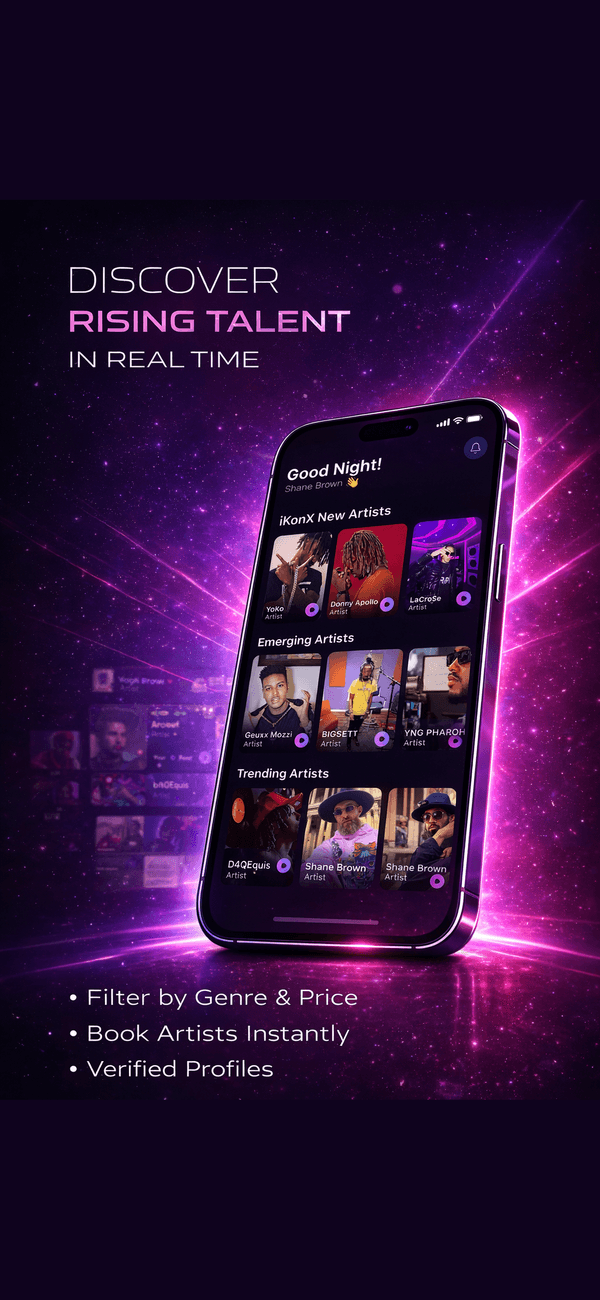
The whole network lives in one app.
iKonX puts every side of the music business in your pocket. Artists set their own price and keep 100% of it · iKonX takes 0% platform commission. Browse, message, and book straight from the app.

How to find artists to sign on YouTube, step by step
- Scout Shorts, Home, and Suggested by what you sign. Shorts and the Home and Suggested feeds are the closest thing YouTube gives you to a live A&R feed, and all three lean on watch-time and engagement to decide what to surface. Train them: search and watch the genres, sounds, and scenes you sign, subscribe to and engage with the right acts, and YouTube will start feeding you more like them. Focus on who is climbing this week, not the channels everyone already follows.
- Search covers, originals, and genre keywords, then read the newest uploads. Cover videos and original uploads searched by genre, city, and scene are a hand-built shortlist of artists actively performing on camera. Sort by upload date or filter to recent uploads and dig into the smaller channels whose newest video is outperforming their size. An artist whose original snippet is starting to spread across Shorts, often before a full release exists, is the find.
- Read view velocity, not subscriber count. Weight momentum and engagement over channel size: a video whose views climb faster than the subscriber count should allow, a high comment and share rate on an upload only days old, strong watch-through, and subscriber growth that is bending upward. The signal A&R tools value most in 2026 is acceleration over a 7 to 14 day window. A 3,000-subscriber artist whose newest Short is accelerating on its own beats a 500,000-subscriber channel with dead comments every time.
- Cross-check against TikTok and streaming. A YouTube Short that is also moving as a TikTok sound, or a channel whose growth lines up with rising Spotify saves, is a much stronger signal than any single platform alone. The breakout pattern in 2026 is cross-platform. If you can afford a seat, a tool like Chartmetric, Soundcharts, or Viberate Analytics lets you watch that movement in one view; if you cannot, read the surfaces by hand.
- Reach the artist direct, fast. Once a channel is accelerating, speed is the whole game, because every other A&R watching the same genre feed is one message behind you. YouTube comments and the email on a channel About page work, but a rising artist's inbox is buried, and the message that lands is the one that arrives somewhere they actually check. Reaching a verified artist on a music network like iKonX, where contact and the deal live in the same place, beats waiting on a demo reply, only about 2 percent of unsolicited demos get a major-label response at all.
Filter the deck to artists at the same rung as your label, so a signing fits where you are now, not where you wish you were.
No demo pile, no inbox gatekeeper. You contact a verified profile straight from the deck and start the conversation on your terms.
Where labels actually find YouTube talent: the honest comparison
| How you find and reach the artist | What it surfaces | What it costs the label |
|---|---|---|
| iKonX (labels side, roadmap) | Verified, stage-matched unsigned artists you can message direct | 0% platform commission on the artist's price · the artist keeps 100% of what they set · free to download, $9.99/mo full access |
| YouTube Shorts + Suggested + comments (by hand) | Rising channels and viral videos by genre, but contact is scattered across comments and About pages | Free to browse · your time, and you still chase contact separately |
| A&R data tool (Chartmetric-style) | YouTube and TikTok momentum signal, but no built-in way to make contact | $117/mo Premium · $150/mo Ultra · API from $350/mo |
| A&R data tool (Viberate-style) | Cross-platform charts with an unsigned-artist filter | About $19.90/mo for Analytics · still find and reach the artist separately |
| Paid demo / submission platform (SubmitHub-style) | Whoever paid to reach your inbox, not who is rising on YouTube | Roughly $0.80 to $1.00 per credit · $10 / 10 credits, $80 / 100 |
Data-tool and submission figures are from named, dated sources (see the sources list): Chartmetric live-verified plan prices (Premium $117/mo, Ultra $150/mo, API from $350/mo, verified 2026-06-01), Viberate Analytics at about $19.90/mo (2026-06-02), and SubmitHub credit pricing (2025). YouTube discovery ranking and the A&R survey figures are from the Viberate survey of 125 music professionals (2025). The iKonX labels side is on the roadmap, not live yet; the fee model shown (artist keeps 100 percent, iKonX 0 percent commission, buyer 10 percent on top, sub-5 percent withdrawal) is the platform standard across the network.
Finding artists to sign on YouTube FAQ
Is YouTube still good for finding artists to sign in 2026?
Yes. In a Viberate survey of 125 music professionals, most of them label managers and A&Rs, YouTube ranked as the number two talent-discovery source behind only Spotify, ahead of SoundCloud and every social platform. YouTube is where an artist proves both that they can perform on camera and that people show up to watch, which is exactly what a deal cannot manufacture. Acts from Justin Bieber onward built their first real audience on covers and uploads before a label called. The platform still surfaces unsigned talent early, which is why you have to read view velocity fast and reach the artist before the introduction happens.
Where on YouTube do A&Rs actually look for unsigned artists?
Working A&Rs live in Shorts and the Home and Suggested feeds tuned to what they sign, search covers and originals by genre, city, and scene, sort by recent uploads to catch the newest movers, and watch which channels the algorithm is starting to push. The trick is to check those surfaces on a fixed schedule, train the algorithm by subscribing to and engaging with the right acts, and focus on who is climbing this week, especially the smaller channels, rather than who already has the subscribers.
What signals tell me a YouTube artist is about to break?
Weight view velocity over subscriber count. On YouTube that means a video whose views climb faster than the channel size should allow, a high comment and share rate on an upload only days old, strong watch-through that keeps the algorithm feeding it, and subscriber growth that is bending upward. The signal A&R tools value most in 2026 is acceleration over a 7 to 14 day window. A YouTube Short that is also moving as a TikTok sound or lining up with rising Spotify saves is the strongest tell of all. A big subscriber count with dead engagement is not.
How do I find YouTube artists to sign without a big data budget?
Lead with signal, not spend. You do not need a $117 to $150 per month data seat to start. Read the free surfaces directly, Shorts, the Home and Suggested feeds, and genre and cover searches sorted by recent uploads, then cross-check the rising names against TikTok and streaming by hand. On iKonX, once the labels side is live, you will be able to find verified, career-stage-matched unsigned artists and message them directly, so a small label competes on ear and timing instead of budget.
Are demo submissions or paid submission platforms worth it for finding YouTube talent?
They filter for who paid, not for who is actually rising on YouTube. Across the industry only about 2 percent of unsolicited demos get a response from a major, and submission platforms like SubmitHub charge roughly $0.80 to $1.00 per credit. They can have a place, but reading public YouTube view velocity and reaching artists directly is faster and surfaces talent the paid inbox misses entirely, including artists who have an audience but have never sent a demo to anyone.
Does iKonX take a commission when an artist sells through the platform?
No. The artist earns 100 percent of the price they set and iKonX takes 0 percent platform commission. The buyer pays a flat 10 percent on top. The only deduction is a low, sub-5 percent withdrawal fee when an artist transfers earnings out, below the industry standard and a standard bank and transfer cost, never a commission on the sale. iKonX is free to download and explore, and full access to paid features across all ten sides of the network is a flat $9.99 a month. The labels side is on the roadmap.
Labels is coming to The Network
Scouting opens soon. Be first to the deck when it goes live · no pressure, just a seat held.
Explore the connected sides of the network
Find the talent first. Sign on your terms.
Spot the talent on YouTube, then reach out on your terms. Download iKonX and start where the gatekeepers used to stand.
DOWNLOAD THE FREE PDF TODAY:
The Indie Label A&R Scouting Playbook
A modern A&R checklist for finding, career-stage-matching, and signing unsigned artists in 2026.
Get the free PDF ->